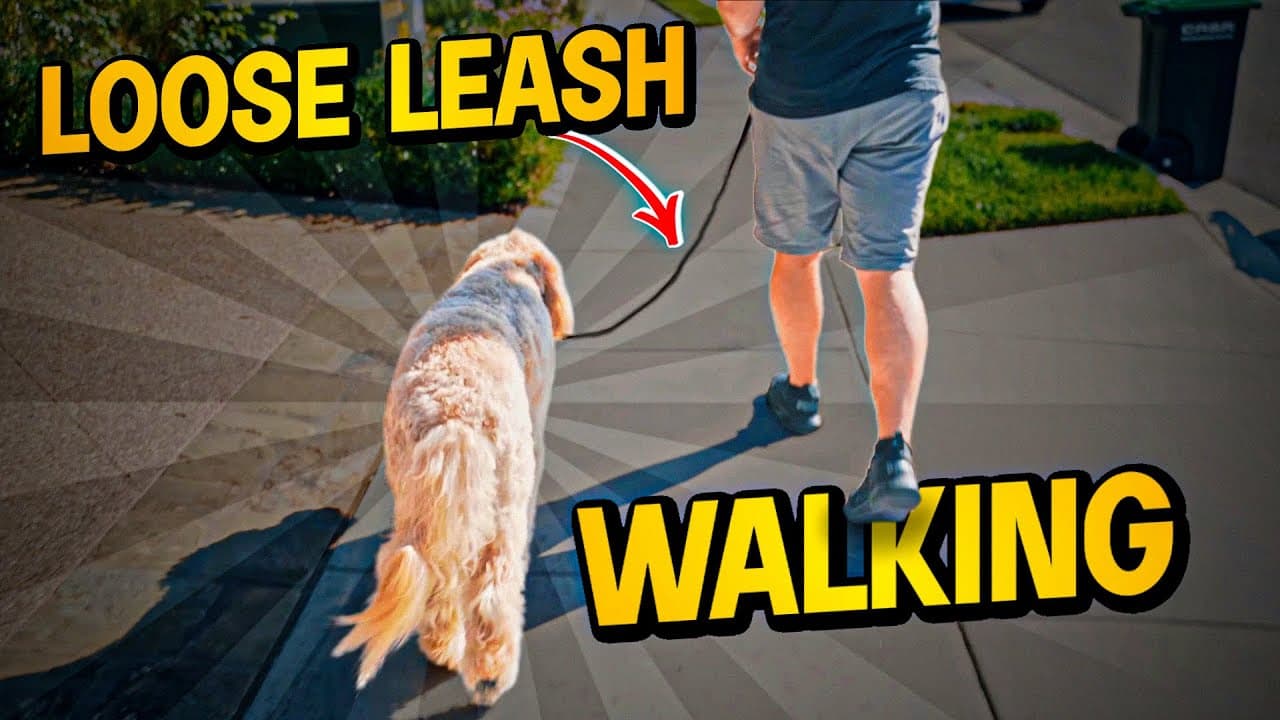
Loose Leash Walking Made Easy with Nate Schoemer
TL;DR
Learn how to teach your dog loose leash walking effectively.
Transcript
you want to see your pup run up and down with excitement every month then look no further than barkbox a barkbox subscription turns things super fun around the house for owners and pups everywhere these customized doggy gift boxes include awesome items you simply cannot find anywhere else from special treats they've never tasted before to hilarious... Read More
Key Insights
- BarkBox offers a monthly subscription service tailored for dogs, providing unique toys and treats made from whole ingredients, ensuring no artificial additives.
- To teach loose leash walking, emphasize verbal commands before physical cues to prevent overshadowing, ensuring the dog responds to verbal commands alone.
- An automatic sit when halted can be taught by consistently commanding the dog to sit every time you stop, using food lures or leash guidance.
- Praise is crucial in training; provide verbal encouragement when the dog maintains the correct position and go silent when they deviate.
- The 'wrong' command signals the dog to return to the heel position, using gentle leash pressure to guide them back before the leash gets tight.
- For dogs that lag behind, increase your pace to encourage them to keep up, preventing them from falling behind during walks.
- Gradually phase out treats as the dog masters commands, transitioning to verbal praise and eventually silence to maintain behavior.
- Proactive training involves rewarding spontaneous good behavior with treats, reinforcing the idea that desired actions lead to rewards.
Install to Summarize YouTube Videos and Get Transcripts
Explore YouTube Video Summarizer or Get YouTube Transcript Extractor
Questions & Answers
Q: How can I ensure my dog responds to verbal commands during loose leash walking?
To ensure your dog responds to verbal commands, always say the command before performing any physical action. This prevents overshadowing, where the dog focuses on the physical cue rather than the verbal command. Consistent practice and reinforcement will help the dog associate the command with the desired action.
Q: What is the significance of the 'wrong' command in training?
The 'wrong' command is used to signal the dog to return to the heel position. It is followed by gentle leash pressure to guide the dog back before the leash gets tight. This command helps the dog understand when they have deviated from the desired behavior, allowing for correction without harshness.
Q: How can I teach my dog to automatically sit when I stop walking?
Teaching an automatic sit involves consistently commanding the dog to sit every time you stop. You can use food lures or leash guidance to reinforce this behavior. With repetition, the dog will learn to anticipate the sit command upon stopping, eventually doing it automatically without a verbal cue.
Q: Why is praise important during dog training?
Praise is crucial as it reinforces positive behavior, letting the dog know they are performing correctly. Verbal encouragement motivates the dog to maintain the correct position. When the dog deviates, silence signals the need for correction, helping them understand the difference between desired and undesired actions.
Q: What should I do if my dog lags behind during walks?
If your dog lags behind, increase your pace to encourage them to keep up. This prevents them from falling behind and reinforces the expectation that they should maintain the pace set during the walk. This approach helps the dog learn to match your speed consistently.
Q: How should I transition from treat rewards to verbal praise?
Transitioning from treat rewards to verbal praise involves gradually reducing the frequency of treats as the dog masters commands. Initially, provide verbal praise alongside treats, then slowly phase out treats while maintaining verbal encouragement. Eventually, you can reduce verbal praise, offering it intermittently to maintain behavior.
Q: What is proactive training and how does it benefit my dog?
Proactive training involves rewarding spontaneous good behavior with treats, reinforcing the idea that desired actions lead to rewards. This approach encourages the dog to repeat positive behaviors, as they learn that their actions can result in treats appearing. It promotes an attentive and well-behaved dog.
Q: How can I use barriers to assist in heel position training?
Using barriers can help guide the dog into the heel position by providing a physical reference point. Position the dog next to a barrier, such as a wall, to limit their movement and encourage them to stay close to you. This helps the dog learn the correct positioning and reinforces the behavior through repetition.
Summary & Key Takeaways
-
BarkBox provides a unique monthly subscription service for dogs, offering exclusive toys and treats made from whole ingredients to ensure health and safety. Each box is customized based on the dog's profile, ensuring a tailored experience.
-
Teaching loose leash walking involves using verbal commands before physical cues to prevent overshadowing. Praise is essential when the dog maintains the correct position, while silence signals deviation.
-
The automatic sit when halted can be taught through consistent commands, food lures, or leash guidance. Gradually reduce treat rewards as the dog masters commands, transitioning to verbal praise and eventually silence.
Read in Other Languages (beta)
Share This Summary 📚
Summarize YouTube Videos and Get Video Transcripts with 1-Click
Try YouTube Summary with ChatGPT & Claude or YouTube Transcript Generator
Explore More Summaries from Nate Schoemer 📚

Summarize YouTube Videos and Get Video Transcripts with 1-Click
Try YouTube Summary with ChatGPT & Claude or YouTube Transcript Generator