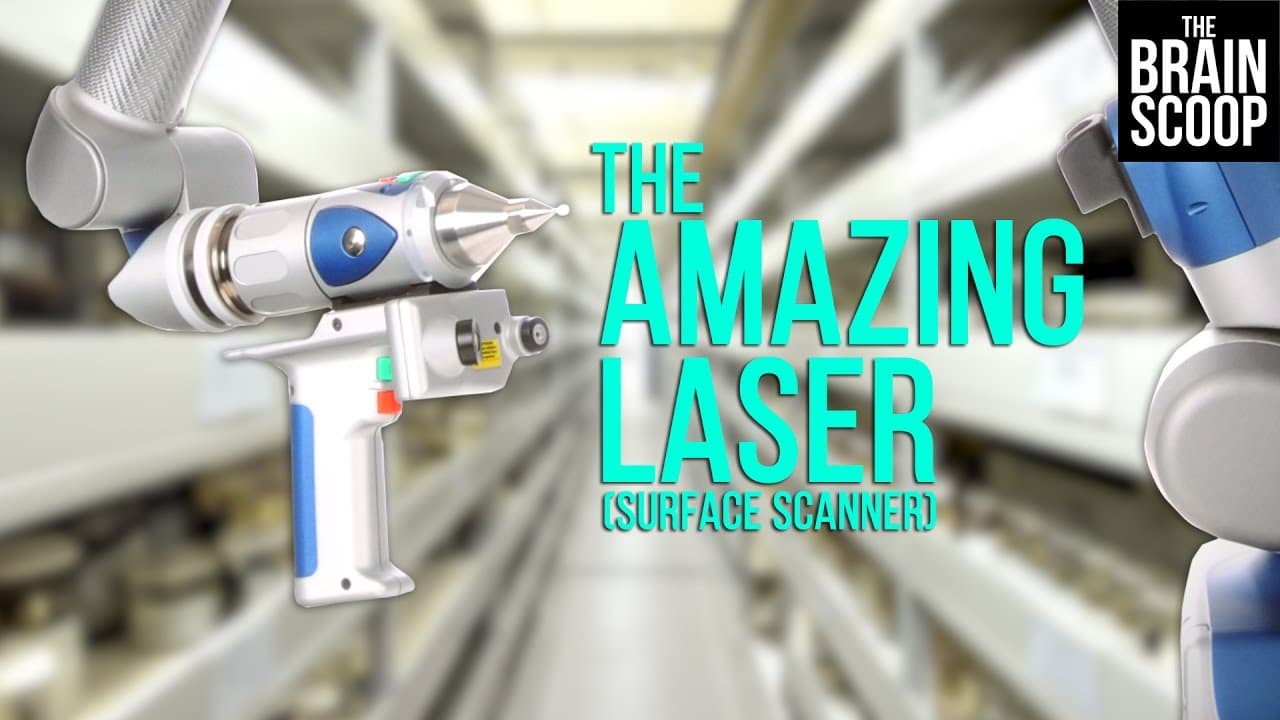
The Amazing Laser
TL;DR
Researchers at the Field Museum are utilizing a 3D surface scanner, called the amazing laser, to create high-resolution digital representations of skeletal anatomy, allowing for detailed measurements and analysis.
Transcript
since the field museum opened in 1894 this institution and many like ours have seen an incredible rise in technological advancements we now have computers and cameras and a youtube show and a digital database that can be searched from any computer on the planet but recently I got the chance to talk with Ryan Felice who's a researcher at University ... Read More
Key Insights
- 💨 Technological advancements, such as the 3D surface scanner, have revolutionized the way museums gather and analyze data related to skeletal anatomy.
- 👻 The ability to create high-resolution digital representations of specimens saves time and allows for more extensive analysis.
- 💨 The digital models obtained through scanning provide a way to quantify anatomy and understand how skeletal diversity has evolved over time.
- 👨🔬 While the technology is impressive, it cannot replace the importance of having physical specimens for research and repeatability.
- 😒 The use of digital models contributes to scientific progress by providing new opportunities for analysis and comparison in anatomical science.
- 👶 The ongoing development of technology will likely bring new tools and techniques in the future, enhancing our understanding of skeletal anatomy.
- ℹ️ Museum collections continue to be a vital source of data for researchers studying skeletons and paleontology.
Install to Summarize YouTube Videos and Get Transcripts
Explore YouTube Video Summarizer or Get YouTube Transcript Extractor
Questions & Answers
Q: How does the amazing laser work?
The amazing laser uses a laser emitter and a camera to measure depth information, which is combined with spatial information to recreate the shape of a specimen in a computer.
Q: What is the purpose of scanning specimens with the 3D surface scanner?
The goal is to understand how skeletal diversity has evolved across various land animals and to quantify anatomy in complex ways. The digital models allow for detailed measurements and analysis.
Q: Can the technology replace physical specimens in museums?
While the scanner provides new opportunities for research, it cannot fully replace having the actual bones in hand. Internal structures and the ability to repeat studies are still crucial aspects of anatomical science.
Q: How does the use of digital models contribute to scientific progress?
Digital models provide a way to analyze and measure specimens in great detail. Researchers can work on the digital files for extended periods, allowing for in-depth study and comparison.
Summary & Key Takeaways
-
The Field Museum is using a 3D surface scanner, known as the amazing laser, to scan a wide range of specimens in order to gather information about various living organisms.
-
Previously, researchers relied on photographs, calipers, and rulers for skeletal analysis, but the new technology provides highly detailed and instantaneous recreations.
-
The digital models obtained through the scanner allow for detailed shape analysis and provide a faster and more efficient way to gather data.
Read in Other Languages (beta)
Share This Summary 📚
Summarize YouTube Videos and Get Video Transcripts with 1-Click
Try YouTube Summary with ChatGPT & Claude or YouTube Transcript Generator
Explore More Summaries from thebrainscoop 📚



Summarize YouTube Videos and Get Video Transcripts with 1-Click
Try YouTube Summary with ChatGPT & Claude or YouTube Transcript Generator