The facial prosthetics of World War I
TL;DR
Sculptors crafted facial prosthetics for WWI soldiers with severe injuries.
Transcript
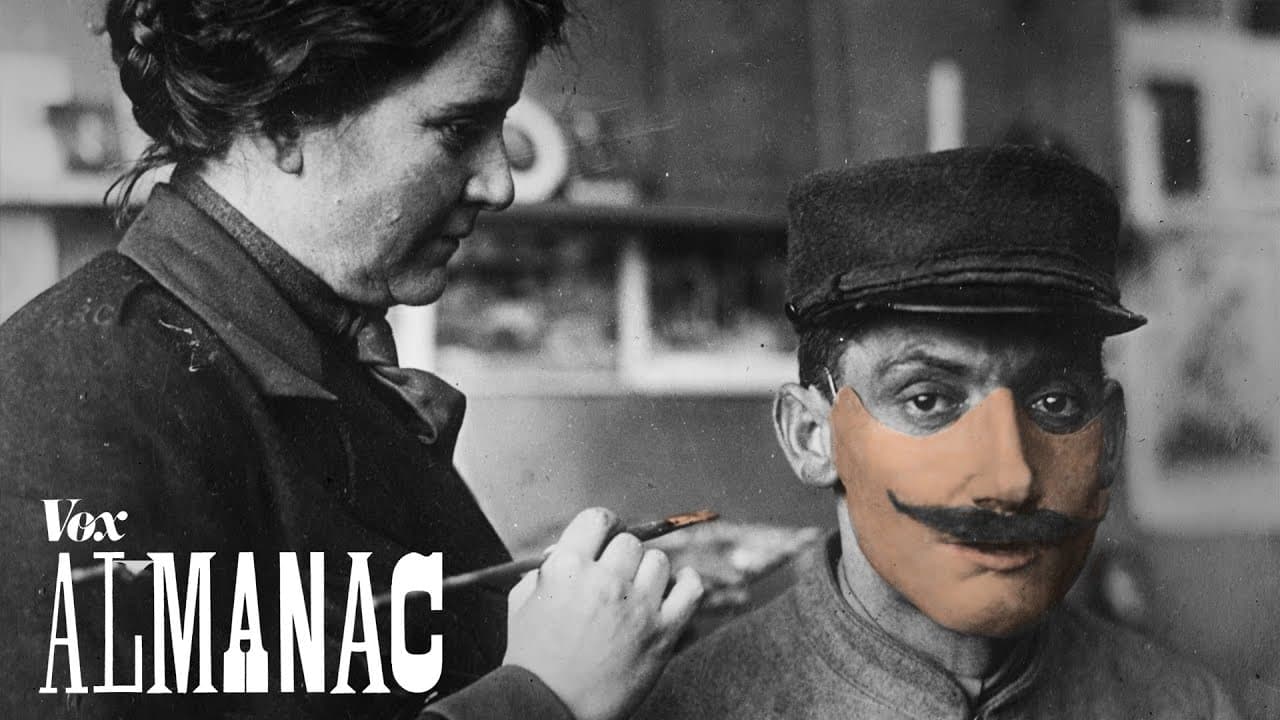
At first, these World War I era photos look unextraordinary. Medals. Jackets with large buttons. Some bandages. But look at the glasses. None of them are for vision. They were for support. Through this passageway and inside a studio, sculptors created the best possible way to conceal some of the war’s most significant facial injuries. World War I i... Read More
Key Insights
- World War I introduced unprecedented facial injuries due to artillery, necessitating innovative medical and artistic solutions for disfigurement.
- Plastic surgery advancements post-WWI included groundbreaking techniques like cartilage insertion and skin grafting, yet some injuries required further innovation.
- Anna Coleman Ladd, inspired by Francis Derwent Wood, established a studio in France to create facial prosthetics for injured soldiers.
- The process involved making casts of injured faces, sculpting restorations, and creating copper-plated attachments painted to match skin tones.
- Prosthetic masks were supported by glasses or ties, restoring a semblance of normalcy to over 150 soldiers during and after the war.
- Ladd's work in facial prosthetics influenced her post-war art, including a controversial war memorial depicting the futility and hope in war.
- The facial prosthetics, though not restorative, provided psychological comfort and a return to societal participation for injured soldiers.
- Ladd's memorial art in America reflected a duality of war's horrors and the potential for renewal, embodying her wartime experiences.
Install to Summarize YouTube Videos and Get Transcripts
Explore YouTube Video Summarizer or Get YouTube Transcript Extractor
Questions & Answers
Q: What prompted the creation of facial prosthetics during World War I?
The unprecedented number of facial injuries caused by artillery during World War I prompted the creation of facial prosthetics. Traditional plastic surgery techniques were insufficient for the severity of the injuries, leading to innovative solutions involving sculptors who could create realistic prosthetic masks to restore some semblance of normalcy to the wounded soldiers.
Q: Who was Anna Coleman Ladd and what was her role in World War I?
Anna Coleman Ladd was an American sculptor and writer who played a significant role in World War I by creating facial prosthetics for soldiers with severe facial injuries. Inspired by the work of Francis Derwent Wood, she established a studio in France under the American Red Cross, where she and her team crafted over 150 masks to help injured soldiers regain their dignity and societal participation.
Q: How were the facial prosthetics created for injured soldiers?
Facial prosthetics for injured soldiers were created by first making casts of the wounded faces. Sculptors then crafted restored facial features onto these casts, which were used to produce thin copper-plated attachments. These attachments were painted to match the soldier's skin tone and were supported by glasses or ties, providing a realistic appearance and psychological comfort to the wearer.
Q: What impact did Anna Coleman Ladd's work have on her post-war art?
Anna Coleman Ladd's work in facial prosthetics deeply influenced her post-war art. Her experiences with the horrors and recovery of war led her to create memorials that depicted both the futility and hope of war. Her controversial World War I memorial in Manchester, Massachusetts, exemplified this duality, showcasing a skeleton trapped in barbed wire and the dawn of a new day, reflecting her wartime experiences.
Q: What techniques were used in plastic surgery during World War I?
During World War I, plastic surgery techniques included groundbreaking methods such as cartilage insertion in the nose and skin grafting to the ear. These techniques were pioneering for the time and laid the foundation for modern reconstructive surgery, although they were not always sufficient for the most severe facial injuries, which required additional artistic solutions like facial prosthetics.
Q: How did facial prosthetics benefit injured soldiers psychologically?
Facial prosthetics provided significant psychological benefits to injured soldiers by restoring a semblance of normalcy and allowing them to reintegrate into society with dignity. The realistic appearance of the prosthetics helped reduce the stigma associated with facial disfigurement, improving the soldiers' self-esteem and mental well-being despite the non-restorative nature of the masks.
Q: What were the challenges faced in creating facial prosthetics during WWI?
Creating facial prosthetics during World War I posed several challenges, including the need for precise craftsmanship to ensure a realistic appearance and the technical difficulty of matching skin tones with paint. Additionally, the prosthetics had to be lightweight and comfortable for the wearer, requiring innovative solutions like using glasses or ties for support without causing further discomfort.
Q: What was the significance of Anna Coleman Ladd's war memorial in Manchester, Massachusetts?
Anna Coleman Ladd's war memorial in Manchester, Massachusetts, was significant for its portrayal of both the horrors and hope of war. The memorial featured a skeleton trapped in barbed wire, representing the futility and devastation of war, while the opposite side depicted dawn, symbolizing renewal and the potential for a better future. This duality reflected Ladd's wartime experiences and her belief in the enduring power of the human spirit.
Summary & Key Takeaways
-
World War I caused severe facial injuries due to artillery, prompting the need for innovative medical and artistic solutions. Sculptors like Anna Coleman Ladd created facial prosthetics to provide comfort and normalcy to injured soldiers, using techniques that involved making casts and copper-plated attachments.
-
Anna Coleman Ladd, inspired by Francis Derwent Wood, led efforts in creating facial prosthetics for WWI soldiers. She established a studio in France, where over 150 masks were made, allowing soldiers to reintegrate into society despite their injuries.
-
Ladd's work in facial prosthetics significantly influenced her post-war art, as seen in her controversial memorials depicting war's futility and hope. Her efforts highlighted the psychological impact of facial injuries and the importance of innovative solutions in restoring dignity to affected soldiers.
Read in Other Languages (beta)
Share This Summary 📚
Summarize YouTube Videos and Get Video Transcripts with 1-Click
Try YouTube Summary with ChatGPT & Claude or YouTube Transcript Generator
Explore More Summaries from Vox 📚


Summarize YouTube Videos and Get Video Transcripts with 1-Click
Try YouTube Summary with ChatGPT & Claude or YouTube Transcript Generator