What Went Wrong with Pakistan's Indus River Management?
TL;DR
The extensive redesign of Pakistan's Indus River system has led to catastrophic water scarcity and severe flooding. Over-engineered canals and barrages prioritized agricultural productivity while neglecting natural flooding processes, resulting in widespread environmental destruction and inequality in water access. A more inclusive, sustainable approach is needed to address these crises.
Transcript
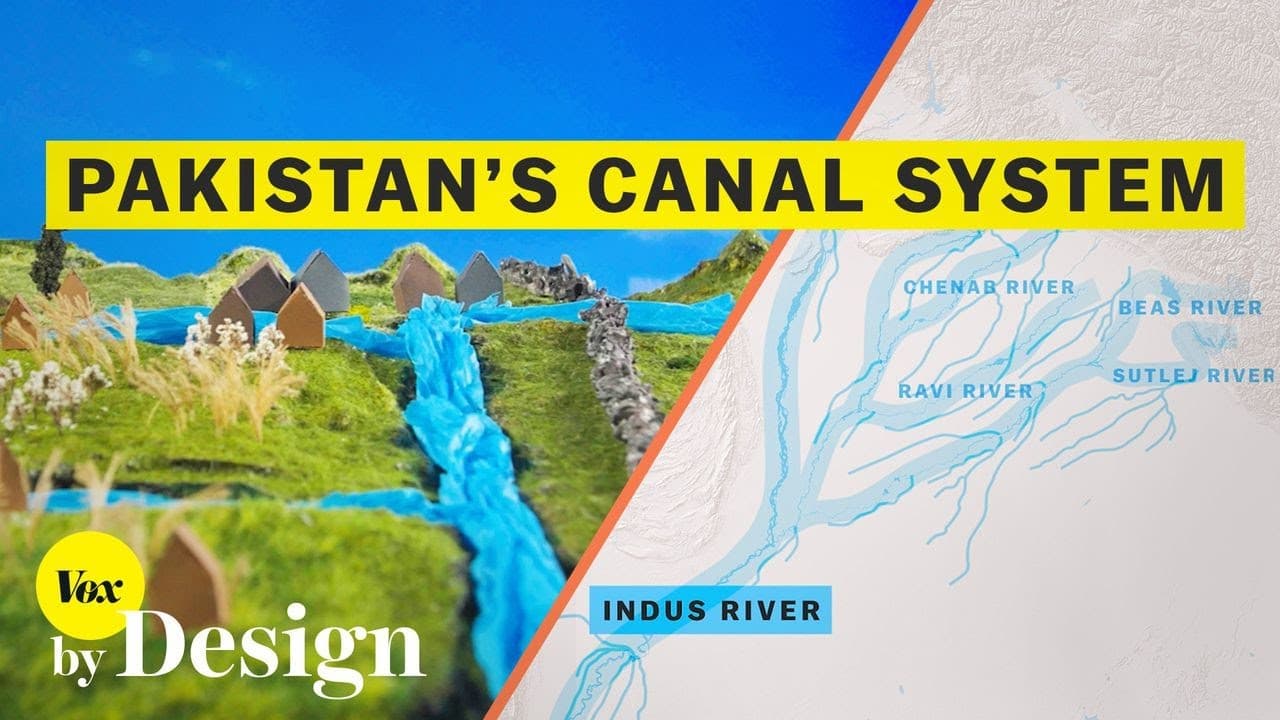
[build, rhythmic music] This is a model of a part of the Indus River Basin in Pakistan that we built for this story. Obviously not exactly the scale. Here you can see the Indus River itself... which flows roughly from north to south... some farmland and a lot of water infrastructure. Like canals, dams, and embankments. It's a system that's transfor... Read More
Key Insights
- 🌊 The Indus River Basin in Pakistan has been transformed through water infrastructure, creating farmland and increasing agricultural productivity.
- 🌎 Pakistan's population has increased significantly while water availability per capita is decreasing, leading to a predicted water scarcity crisis by 2025.
- ⚡️ The region faces severe flooding due to monsoon rains, causing destruction and loss of life.
- 🏞️ Before British colonization, the region was inhabited by agro-pastoralists who relied on the fluctuating flow of the Indus River for their livelihoods.
- 🔒 British colonization brought about major changes in the water infrastructure, with the construction of canals, embankments, and barrages to control the flow of the river and support agriculture.
- 🌾 The canal system in Pakistan is the largest contiguous canal system in the world, transforming the country's landscape, economy, and population growth.
- 😔 The canal system has had catastrophic consequences, leading to destructive floods, water scarcity, and the destruction of land and water sources.
- 🌍 There is inequality in water access, with the rich and those at the head of canals having better water availability compared to those at the end of the canals, exacerbating existing inequalities.
- 💡 Slow and sustained changes to water policy, including incorporating indigenous knowledge systems, can help mitigate the negative impacts of the canal system and work towards more sustainable water management.
Install to Summarize YouTube Videos and Get Transcripts
Explore YouTube Video Summarizer or Get YouTube Transcript Extractor
Questions & Answers
Q: How has the over-engineering of the Indus River Basin contributed to water scarcity in Pakistan?
The extensive canal system, embankments, and barrages have disrupted the natural flow of the river, diminishing water availability and causing water scarcity in certain regions. Additionally, breaches in embankments and the diversion of water to favor certain landowners exacerbate the problem.
Q: What are the consequences of the over-engineering for the environment and agriculture?
The extensive infrastructure has destroyed wetlands, forests, and biodiversity, leading to ecological degradation. In the lower Indus Delta, vast areas of land are no longer suitable for agriculture. Sea water intrusion and diminished water sources have harmed millions of acres of farmland.
Q: How has the over-engineering exacerbated flooding events in Pakistan?
The canal system and embankments built parallel to the river have hindered the natural drainage of floodwater back into the Indus. Breaching of embankments by landowners and the control of barrages have led to intentional flooding in some areas while sparing others. This has caused prolonged flooding, disease, and displacement.
Q: How is inequality in water access perpetuated in the over-engineered system?
The richer landowners and upstream provinces have better access to water, while those at the end of canals and downstream suffer from water scarcity. This inequality mirrors the distribution of water access during British colonial rule, where rewards were given to those who favored the empire.
Q: Are there proposed solutions to address the negative impacts of over-engineering?
Some proposed solutions include preventing further development in floodplains, improving drainage pathways, and involving local communities in water policy decisions. These changes aim to reduce the negative impacts of the system and promote a more democratic and sustainable approach to water management.
Q: How does the post-colonial mindset perpetuate the over-engineering of the Indus River Basin?
The mindset inherited from the British colonial era continues to emphasize engineered solutions as the primary approach to managing the river basin. This approach often overlooks indigenous knowledge systems and the need for more sustainable and community-focused water management strategies.
Summary & Key Takeaways
-
The British colonization of the Indus River Basin in the 1800s marked the beginning of the extensive water infrastructure that transformed the region into farmland.
-
The canal system, embankments, and barrages built during British rule and continued after Pakistan's independence have led to catastrophic consequences, including water scarcity and destructive flooding.
-
Inequality in water access is built into the system, with richer landowners and upstream provinces having better access to water, while those at the end of canals and downstream suffer from water scarcity.
Read in Other Languages (beta)
Share This Summary 📚
Summarize YouTube Videos and Get Video Transcripts with 1-Click
Try YouTube Summary with ChatGPT & Claude or YouTube Transcript Generator
Explore More Summaries from Vox 📚



Summarize YouTube Videos and Get Video Transcripts with 1-Click
Try YouTube Summary with ChatGPT & Claude or YouTube Transcript Generator