Ortho Meta Para Directors - Activating and Deactivating Groups
TL;DR
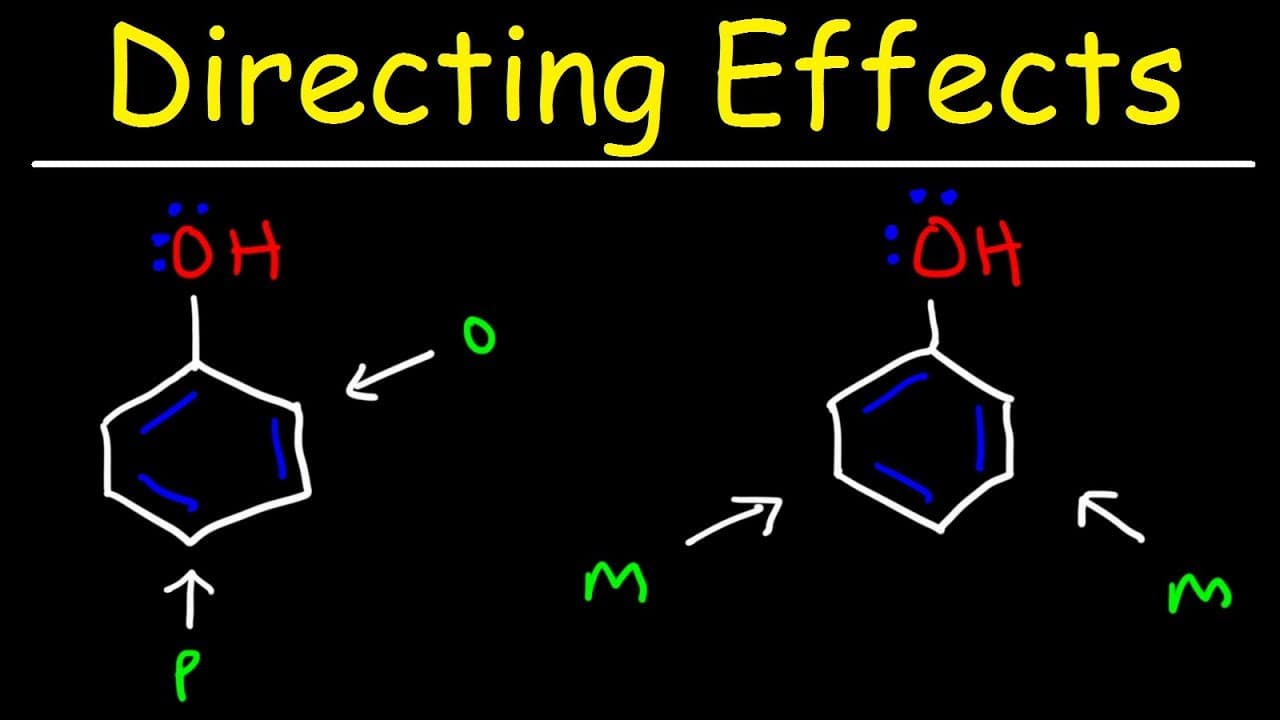
This video explains the concept of ortho meta para directors and their impact on electrophilic aromatic substitution reactions.
Transcript
in this video we're going to go over the ortho meta para directors that you need to know when dealing with electrophilic aromatic substitution reactions so first let's talk about the strongly activating groups the first one is the amine or it could be in this form nhr and alcohol is a strongly activating group or an ether these strongly activating ... Read More
Key Insights
- 👥 Strongly activating groups like amines and alcohols are ortho para directors due to resonance donation.
- 👥 Moderately activating groups, such as amides and esters, are also ortho para directors but less effective in electron donation.
- 👥 Weakly activating groups like alkyl groups cannot donate electrons through resonance but can through inductive effects, making them ortho para directors.
- 👥 Weakly deactivating groups, including halogens, withdraw more electrons than they donate, making them weakly deactivating and ortho para directors through resonance donation.
- 👥 Moderately deactivating groups like aldehydes, ketones, and esters (attached to the carbonyl group) are meta directors that withdraw electron density through resonance.
Install to Summarize YouTube Videos and Get Transcripts
Explore YouTube Video Summarizer or Get YouTube Transcript Extractor
Questions & Answers
Q: Why are strongly activating groups considered ortho para directors?
Strongly activating groups, like amines and alcohols, can donate electrons through resonance, putting a negative charge on the orthocarbon or paracarbon. This makes them ortho para directors, as they increase nucleophilicity at those positions.
Q: What distinguishes moderately activating groups from strongly activating groups?
Moderately activating groups, such as amides and esters, have a less effective resonance donation due to the carbonyl group's pull on lone pairs. They can still donate electrons, making them ortho para directors, but they are not as strongly activated as amines and alcohols.
Q: How does the methyl group act as an ortho para director?
The methyl group, a weakly activating group, cannot donate electrons through resonance. However, it can donate electron density through inductive effects, making the ortho and para positions more nucleophilic and reactive.
Q: Why are halogens considered weakly deactivating groups?
Halogens can withdraw electrons through the inductive effect but can donate electrons through resonance. However, their withdrawal effect exceeds their donation effect, making them weakly deactivating. They are still ortho para directors due to resonance donation.
Summary & Key Takeaways
-
Strongly activating groups, such as amines, alcohols, and ethers, make the aromatic ring more nucleophilic and reactive in electrophilic aromatic substitution reactions.
-
Moderately activating groups, like amides and esters, also donate electron density to the ring, but less effectively than strongly activating groups.
-
Weakly activating groups, including alkyl groups and aromatic rings, are weakly activated and cannot donate electrons through resonance, only through inductive effects.
-
Weakly deactivating groups, like halogens, donate and withdraw electrons from the ring, but their withdrawal effect is greater, making them weakly deactivating.
-
Moderately deactivating groups, such as aldehydes, ketones, and esters (attached to the carbonyl group), are meta directors and withdraw electron density from the ring.
-
Strongly deactivating groups, like nitro and sulfonic acid groups, are also meta directors and significantly withdraw electrons through resonance effects.
Read in Other Languages (beta)
Share This Summary 📚
Summarize YouTube Videos and Get Video Transcripts with 1-Click
Try YouTube Summary with ChatGPT & Claude or YouTube Transcript Generator
Explore More Summaries from The Organic Chemistry Tutor 📚


Summarize YouTube Videos and Get Video Transcripts with 1-Click
Try YouTube Summary with ChatGPT & Claude or YouTube Transcript Generator