Why Trump's Tariffs Were Ruled Illegal
TL;DR
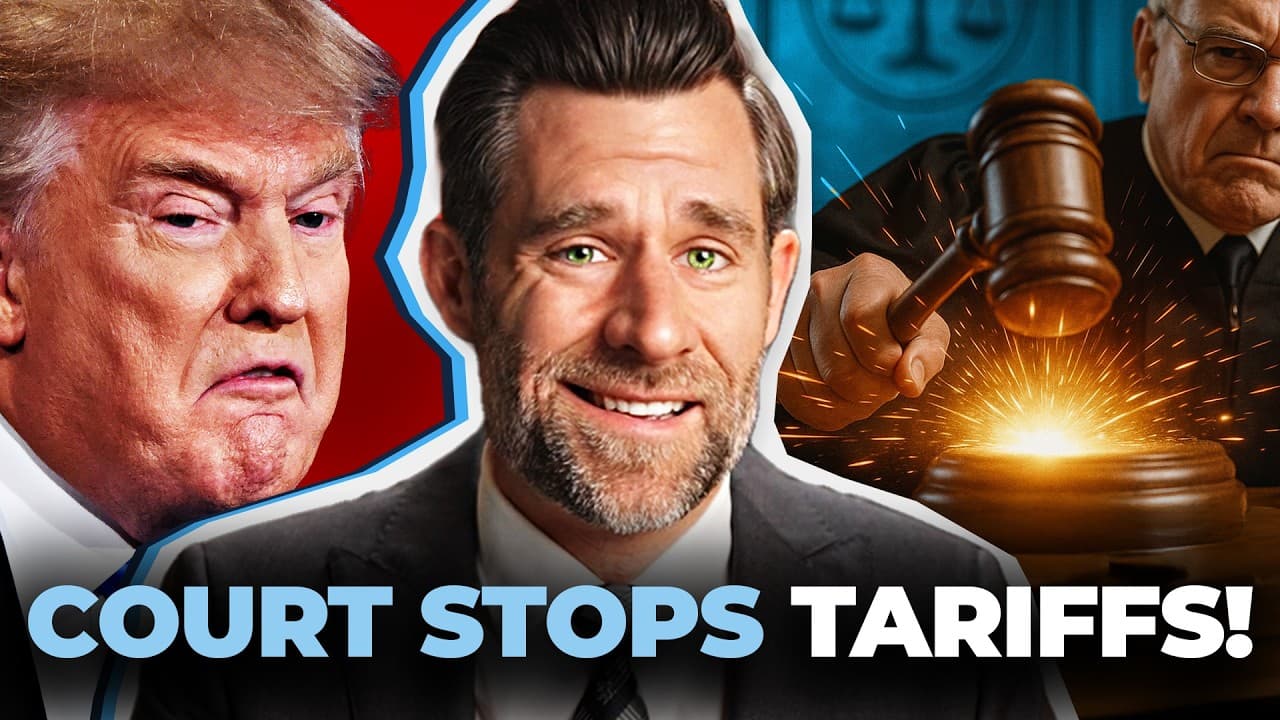
A federal court struck down President Trump's tariffs, ruling they exceeded his authority under the International Emergency Economic Powers Act. The court found that the tariffs were not justified as a national emergency and violated the Constitution, which grants Congress the exclusive power to impose tariffs. The decision highlights the limits of executive power in trade policy.
Transcript
The illegal tariffs are illegal. A federal court just struck down President Trump's quote unquote liberation day tariff orders on the grounds that screaming quote unquote emergency is not a cheat code that allows him to act without congressional approval. The ruling deals another blow to Trump's signature strategy of running around like Chicken Lit... Read More
Key Insights
- A federal court ruled that President Trump's tariffs were illegal, exceeding his authority under AIPA.
- The court found that Trump's use of AIPA to impose tariffs was not justified as a national emergency.
- The Constitution grants Congress the exclusive power to impose tariffs, not the President.
- The decision emphasizes the limits of executive power in trade policy and the importance of the separation of powers.
- The court used doctrines like non-delegation and major questions to interpret the limits of AIPA.
- The ruling could have significant implications for future executive actions on trade and tariffs.
- The court's decision can be appealed, and the ultimate outcome may depend on higher courts.
- The case illustrates the ongoing tension between executive authority and legislative powers in the U.S.
Install to Summarize YouTube Videos and Get Transcripts
Explore YouTube Video Summarizer or Get YouTube Transcript Extractor
Questions & Answers
Q: Why were Trump's tariffs ruled illegal?
Trump's tariffs were ruled illegal because they exceeded the authority granted to the President under the International Emergency Economic Powers Act (AIPA). The court found that the tariffs were not justified as a national emergency and violated the Constitution, which grants Congress the exclusive power to impose tariffs. This ruling emphasizes the separation of powers and limits executive influence in trade policy.
Q: What is the International Emergency Economic Powers Act?
The International Emergency Economic Powers Act (AIPA) is a U.S. federal law that grants the President certain powers to regulate international commerce in response to unusual or extraordinary foreign threats. However, these powers are limited and must be exercised in response to a genuine national emergency. The court ruled that Trump's tariffs did not meet these criteria, leading to their invalidation.
Q: How does the court's decision impact executive power?
The court's decision limits executive power by reinforcing the constitutional principle that Congress holds the exclusive authority to impose tariffs. It underscores the importance of the separation of powers and restricts the President's ability to unilaterally dictate trade policy under the guise of national emergencies. This ruling could influence future executive actions and legislative challenges.
Q: What are the implications of the court's ruling on future tariffs?
The ruling sets a precedent that could restrict future presidential attempts to impose tariffs without congressional approval. It emphasizes the need for a clear and genuine national emergency to justify such actions under AIPA. This decision may lead to more scrutiny of executive claims of emergency powers in trade matters, potentially shaping future legal and legislative approaches.
Q: What role does Congress play in trade policy?
Congress holds the constitutional authority to regulate commerce with foreign nations, including the power to impose tariffs. This legislative power is a fundamental aspect of the separation of powers in the U.S. government. The court's ruling against Trump's tariffs reaffirms Congress's exclusive role in trade policy and limits the executive branch's ability to bypass legislative processes.
Q: What doctrines did the court use to interpret AIPA?
The court used the non-delegation doctrine and the major questions doctrine to interpret the limits of AIPA. The non-delegation doctrine asserts that Congress cannot transfer its legislative powers to another branch without clear limits. The major questions doctrine suggests that courts should not assume Congress granted broad authority on significant issues without explicit direction. These doctrines guided the court's decision to invalidate Trump's tariffs.
Q: How might this case affect future legal challenges to executive actions?
This case could serve as a benchmark for future legal challenges to executive actions, particularly those involving claims of emergency powers. It highlights the judiciary's role in ensuring that executive actions align with constitutional and statutory limits. Future cases may reference this decision when assessing the validity of executive orders and the scope of presidential authority in trade and other areas.
Q: What are the next steps following the court's ruling?
Following the court's ruling, the Trump administration filed a notice of appeal, and the Federal Circuit issued an administrative stay, temporarily pausing the enforcement of the decision. The appeals process will continue, potentially reaching higher courts, including the Supreme Court. The outcome of these appeals will determine the final status of the tariffs and the broader implications for executive authority in trade policy.
Summary & Key Takeaways
-
A federal court struck down Trump's tariffs, deeming them illegal under the International Emergency Economic Powers Act. The court ruled that the tariffs exceeded the President's authority and violated the Constitution, which reserves tariff powers for Congress. This decision underscores the separation of powers and limits executive influence in trade policy.
-
The court's ruling against Trump's tariffs highlights the misuse of emergency powers under AIPA. The decision emphasizes that trade policy should be legislated by Congress, not dictated by presidential orders. This case could set a precedent for future challenges to executive overreach in trade matters.
-
The decision against Trump's tariffs demonstrates the judiciary's role in checking executive power. By ruling the tariffs unconstitutional, the court reaffirmed Congress's exclusive authority over trade. This outcome may influence how future administrations approach trade and emergency powers.
Read in Other Languages (beta)
Share This Summary 📚
Summarize YouTube Videos and Get Video Transcripts with 1-Click
Try YouTube Summary with ChatGPT & Claude or YouTube Transcript Generator
Explore More Summaries from LegalEagle 📚



Summarize YouTube Videos and Get Video Transcripts with 1-Click
Try YouTube Summary with ChatGPT & Claude or YouTube Transcript Generator