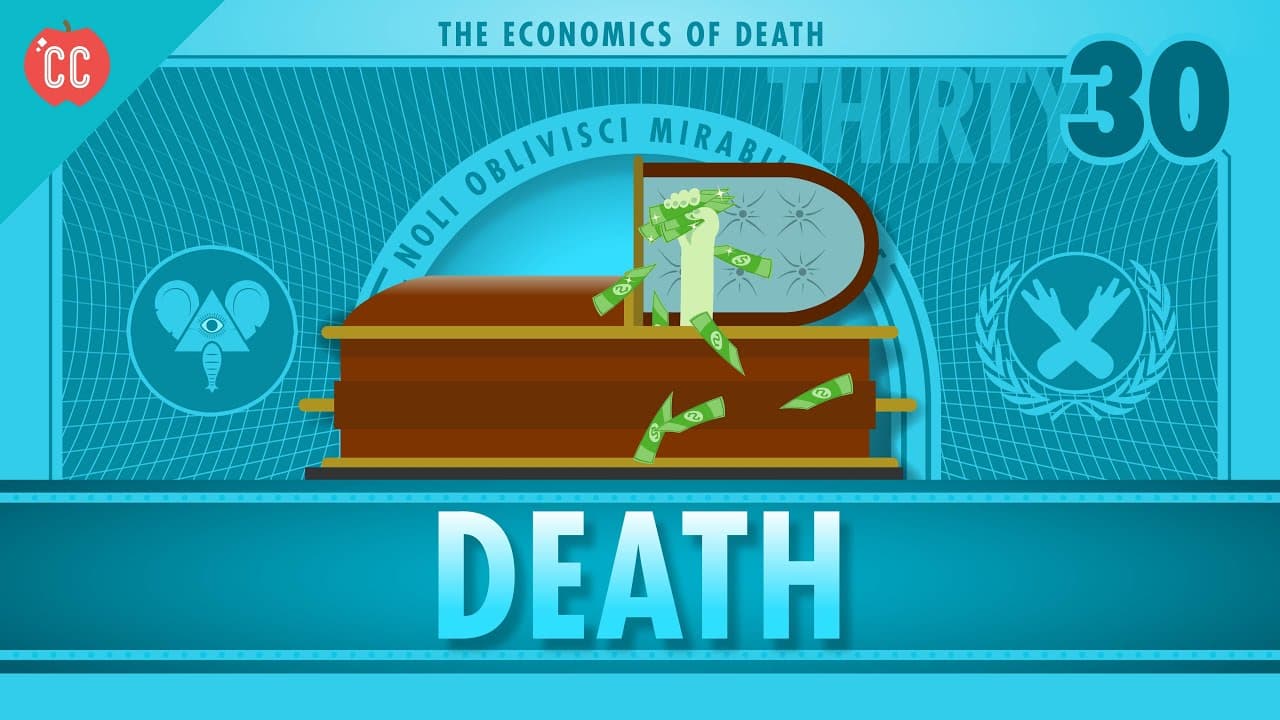
The Economics of Death: Crash Course Economics #30
TL;DR
Explores the economic impact of death and dying in the U.S.
Transcript
Hi, I’m Adriene Hill, this is Crash Course Economics, and today, we need to have a little talk about a subject that most people try to avoid. Death. We’re all going to die. Now, I know from our demographic analytics that most of you are young, and you’re statistically likely to live quite a bit longer. But it’s still going to happen someday. And ho... Read More
Key Insights
- Life expectancy globally has increased, but disparities exist, with Africa having significantly lower averages than North America.
- In the U.S., income levels greatly affect life expectancy, with richer individuals living longer and collecting more government benefits.
- Longer lifespans contribute to economic growth but also lead to increased healthcare costs, especially for age-related diseases like Alzheimer's.
- End-of-life care is costly, with a significant portion of Medicare spending dedicated to patients in their final months.
- Hospice and palliative care can reduce end-of-life costs by focusing on symptom management rather than prolonging life.
- Funeral costs in the U.S. are substantial, with median prices for services and burial reaching thousands of dollars.
- Advance planning, such as creating a will and purchasing life insurance, can help manage the financial burden of death.
- Debt obligations after death vary by state, and family members may not always be responsible for a deceased relative's debts.
Install to Summarize YouTube Videos and Get Transcripts
Explore YouTube Video Summarizer or Get YouTube Transcript Extractor
Questions & Answers
Q: How does income level affect life expectancy in the U.S.?
Income level significantly affects life expectancy in the U.S. Upper-income individuals tend to live longer than lower-income individuals. For example, in 2010, an upper-income man was expected to live to age 89, whereas a lower-income man would live to 76. This disparity impacts the amount of government benefits received over a lifetime.
Q: What are the economic impacts of increased life expectancy?
Increased life expectancy has mixed economic impacts. On one hand, it can contribute to economic growth as people have more years to consume goods and services. On the other hand, it leads to higher healthcare costs, especially due to age-related illnesses like Alzheimer's, which require expensive long-term care.
Q: What is the role of hospice and palliative care in end-of-life costs?
Hospice and palliative care play a crucial role in reducing end-of-life costs by focusing on managing symptoms and providing comfort rather than prolonging life through extensive medical procedures. This approach can improve the quality of life for terminally ill patients and decrease the financial burden associated with aggressive treatments.
Q: How expensive is dying in the U.S.?
Dying in the U.S. is quite expensive. The median cost of a funeral with burial is over $7,000, and this does not include additional expenses like a burial plot or headstone. Combined with end-of-life healthcare costs, the financial burden can be substantial, highlighting the importance of advance planning to manage these expenses.
Q: What measures can individuals take to reduce the costs of dying?
Individuals can reduce the costs of dying by engaging in advance planning. This includes creating advance directives for medical care, writing a will, purchasing life insurance, and discussing end-of-life wishes with family members. These steps can help ensure that personal preferences are respected and financial burdens are minimized.
Q: What happens to a person's debt after they die?
After a person dies, their debt is typically paid from their estate. If the estate cannot cover the debt, family members are generally not responsible unless they co-signed the debt. However, state laws vary, and creditors may still attempt to collect from relatives, so it's important to understand local regulations.
Q: Why is planning for death important from an economic perspective?
Planning for death is crucial economically as it helps manage the significant costs associated with dying, such as medical expenses, funeral costs, and potential debts. Proper planning ensures that personal wishes are honored, financial burdens on family members are reduced, and assets are distributed according to one's desires.
Q: How does the U.S. government regulate funeral costs?
The U.S. government regulates funeral costs through the Federal Trade Commission, which enforces strict rules on what funeral providers can charge. These regulations ensure transparency and prevent unnecessary charges, helping consumers make informed decisions and potentially reducing the financial burden of funeral expenses.
Summary & Key Takeaways
-
The episode discusses the economic implications of death, focusing on the U.S. It highlights the rising life expectancy, income disparities, and the significant costs associated with aging and end-of-life care.
-
Funeral expenses are examined, with the median cost of a burial and associated services reaching over $7,000. Planning ahead, including having a will and life insurance, is recommended to mitigate these costs.
-
The video emphasizes the importance of advance directives and financial planning to ease the burden on families and ensure personal wishes are respected, while also addressing potential debt issues after death.
Read in Other Languages (beta)
Share This Summary 📚
Summarize YouTube Videos and Get Video Transcripts with 1-Click
Try YouTube Summary with ChatGPT & Claude or YouTube Transcript Generator
Explore More Summaries from CrashCourse 📚





Summarize YouTube Videos and Get Video Transcripts with 1-Click
Try YouTube Summary with ChatGPT & Claude or YouTube Transcript Generator