What Does SCOTUS Deportation Ruling Mean?
TL;DR
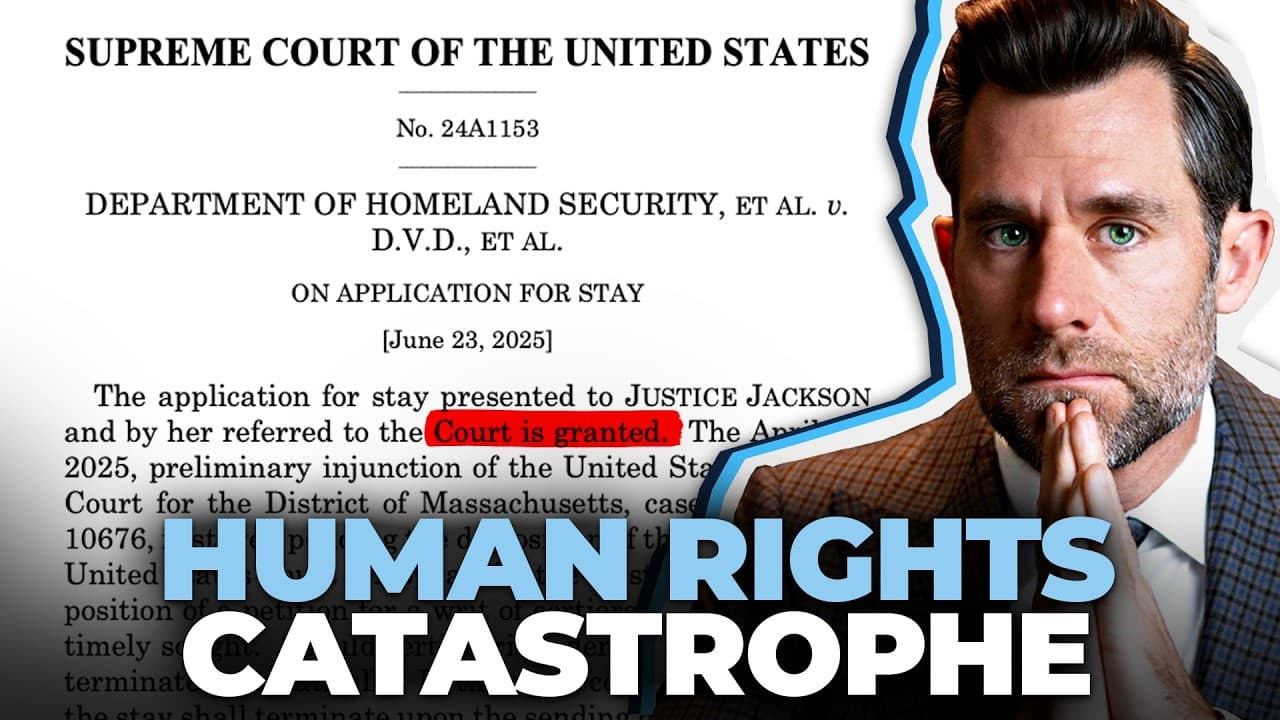
The Supreme Court has allowed the US government to deport individuals to third countries without due process, even if they face potential harm. This decision, made via the shadow docket, undermines judicial authority and due process protections, raising serious concerns about human rights and the rule of law.
Transcript
Imagine being picked up by ICE and told you're being deported, but not to your home country, but to a place you've never been before. A country where you don't speak the language, a country torn apart by war. And worst of all, you don't even get to argue your case in front of a judge before you're shipped off. This week, in a stunning shadow docket... Read More
Key Insights
- The Supreme Court's ruling permits deportations to third countries without due process.
- The decision was made on the shadow docket, lacking full transparency.
- The ruling allows deportations even if individuals face torture or death.
- District court judges' authority is undermined by this decision.
- The shadow docket is used for emergency orders without full briefing or opinions.
- Justice Sotomayor's dissent highlights the erosion of the rule of law.
- The decision impacts thousands, exposing them to potential violence.
- The ruling favors executive power over judicial oversight and due process.
Install to Summarize YouTube Videos and Get Transcripts
Explore YouTube Video Summarizer or Get YouTube Transcript Extractor
Questions & Answers
Q: What is the shadow docket?
The shadow docket refers to the Supreme Court's use of emergency orders and summary decisions issued without full briefing, oral argument, or signed opinions. It allows the Court to make significant decisions with limited transparency and explanation, often bypassing the usual judicial processes.
Q: Why is the Supreme Court's decision controversial?
The decision is controversial because it permits deportations to third countries without due process, even if individuals face potential harm. It was made on the shadow docket, undermining judicial authority and due process protections, and raising serious concerns about human rights and the rule of law.
Q: What does Justice Sotomayor's dissent highlight?
Justice Sotomayor's dissent highlights the erosion of the rule of law and the disregard for due process protections. She criticizes the majority for enabling executive power to override judicial oversight, exposing individuals to potential harm without proper legal procedures.
Q: How does the ruling affect deportation proceedings?
The ruling affects deportation proceedings by allowing the government to deport individuals to third countries without prior notice or a chance to contest, even if they might face torture or death. This undermines due process protections and judicial authority in immigration cases.
Q: What are the implications of the ruling for human rights?
The ruling has significant human rights implications, as it allows for deportations to potentially dangerous countries without due process. This exposes individuals to risks of torture or death and undermines the legal protections designed to safeguard human rights in deportation cases.
Q: What is the role of district courts in deportation cases?
District courts are responsible for conducting thorough fact-finding and ensuring due process in deportation cases. However, the Supreme Court's decision undermines their authority, allowing the government to bypass judicial oversight and make deportation decisions without proper legal procedures.
Q: How does the ruling impact the balance of equities in legal cases?
The ruling impacts the balance of equities by favoring the government's power to deport individuals without due process over the potential harm to deportees. Justice Sotomayor criticizes this approach, emphasizing the need to consider the severe consequences faced by individuals at risk of deportation.
Q: What concerns does the shadow docket raise about judicial transparency?
The shadow docket raises concerns about judicial transparency because it allows the Supreme Court to make significant legal decisions without full briefing, oral arguments, or signed opinions. This lack of transparency can undermine public trust in the judicial process and obscure the reasoning behind critical rulings.
Summary & Key Takeaways
-
The Supreme Court's decision allows the US government to deport individuals to third countries without prior notice or a chance to contest, even if they might face torture or death. This ruling was made on the shadow docket, bypassing full judicial scrutiny and undermining district courts' authority.
-
Justice Sotomayor's dissent criticizes the decision for eroding the rule of law and ignoring due process protections. The ruling exposes thousands to potential harm and favors executive power over judicial oversight, raising serious human rights concerns.
-
The decision has broad implications, enabling the government to deport individuals to dangerous countries without due process. This undermines judicial authority and due process protections, highlighting the controversial use of the shadow docket for significant legal decisions.
Read in Other Languages (beta)
Share This Summary 📚
Summarize YouTube Videos and Get Video Transcripts with 1-Click
Try YouTube Summary with ChatGPT & Claude or YouTube Transcript Generator
Explore More Summaries from LegalEagle 📚





Summarize YouTube Videos and Get Video Transcripts with 1-Click
Try YouTube Summary with ChatGPT & Claude or YouTube Transcript Generator