Dave Collins on Sports Psychology & Talent Development
TL;DR
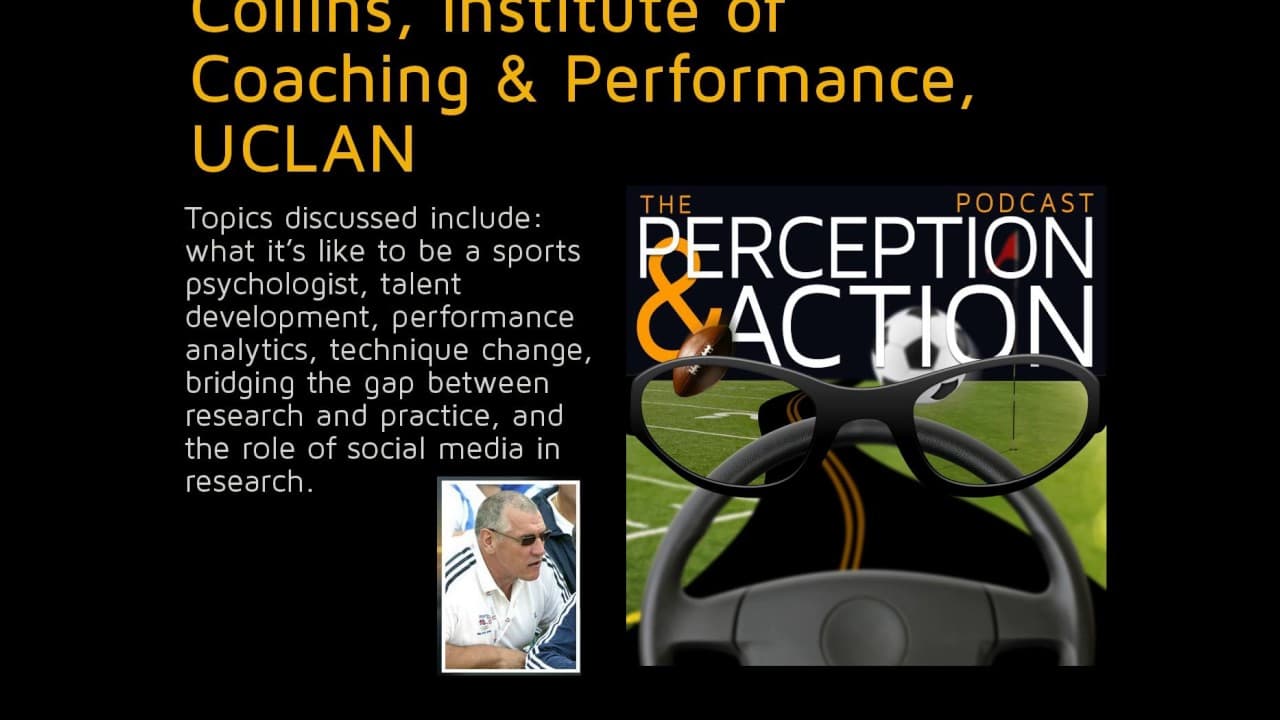
Dave Collins, a leading figure in sports psychology, discusses the balance between research and practical application in sports. He emphasizes the importance of psychological traits in talent development and the role of performance analytics. Collins also explores the challenges of technique change and the influence of social media on research dissemination.
Transcript
this is Rob Gray from ASU and perception action.com today on the perception and action podcast my interview with Dave Collins professor and director of The Institute of coaching and performance University of Central Lancashire in the UK hi everyone welcome to the perception and action podcast where I discuss how psychological research can be applie... Read More
Key Insights
- Dave Collins is a professor and director at the Institute of Coaching and Performance at the University of Central Lancashire.
- He has extensive experience in both academic research and practical application with elite athletes.
- Collins emphasizes the importance of psychological characteristics in developing talent, distinguishing between 'gifted' and 'talented' individuals.
- He argues that early challenges and failures can contribute to long-term success if properly managed.
- Collins is critical of the over-reliance on performance analytics, advocating for a balanced approach that includes qualitative insights.
- Technique change in athletes is a complex process that requires careful planning and time to ensure lasting improvements.
- He stresses the need for bridging the gap between research and practice, advocating for 'pracademics' who understand both fields.
- Collins is an active proponent of using social media for research dissemination but warns against it being the sole source of information.
Install to Summarize YouTube Videos and Get Transcripts
Explore YouTube Video Summarizer or Get YouTube Transcript Extractor
Questions & Answers
Q: How do psychological traits influence talent development in sports?
Psychological traits are crucial in talent development as they differentiate 'gifted' individuals with natural abilities from 'talented' ones who have developed the necessary psychological skills. Traits like work ethic, attitude, and resilience can significantly impact an athlete's ability to succeed at elite levels.
Q: What challenges are involved in changing an athlete's technique?
Changing an athlete's technique is challenging because it requires breaking down existing habits and building new ones, which can be time-consuming and requires careful planning. It involves a structured approach to ensure that the new technique is consistently applied under pressure.
Q: Why is there a gap between research and practice in sports psychology?
The gap exists because research often focuses on theoretical aspects, while practitioners need practical solutions. Bridging this gap requires 'pracademics' who understand both research and practical application, ensuring that findings are relevant and applicable to real-world situations.
Q: What role does social media play in sports psychology research?
Social media plays a significant role in disseminating research findings and facilitating discussions among professionals. However, it should not be the sole source of information, as it can lead to oversimplification and misrepresentation of complex research topics.
Q: How can early challenges impact an athlete's development?
Early challenges can positively impact an athlete's development by building resilience and problem-solving skills. However, the key is in how these challenges are managed; successful navigation and learning from these experiences are crucial for long-term development.
Q: What is Dave Collins' view on performance analytics?
Dave Collins is critical of the over-reliance on performance analytics, advocating for a balanced approach that includes qualitative insights. He emphasizes that while analytics provide valuable data, they should be complemented by qualitative assessments to fully understand an athlete's performance.
Q: What is the difference between 'gifted' and 'talented' individuals in sports?
'Gifted' individuals possess natural abilities or physical traits that make them stand out, while 'talented' individuals have developed the psychological skills necessary to succeed. Talent involves a combination of natural ability and psychological traits like resilience and work ethic.
Q: How does Dave Collins suggest bridging the gap between research and practice?
Collins suggests bridging the gap by promoting 'pracademics' who are knowledgeable in both research and practical application. This involves developing professionals who can translate research findings into actionable insights for coaches and athletes, ensuring that research is relevant and applicable.
Summary & Key Takeaways
-
Dave Collins discusses his dual role in academia and applied sports psychology, highlighting the importance of psychological traits in talent development. He differentiates between 'gifted' individuals with natural abilities and 'talented' ones who have developed necessary psychological skills.
-
Collins critiques the overemphasis on performance analytics and stresses the importance of qualitative data in athlete development. He also explores the challenges of changing athlete techniques, emphasizing the need for a structured, time-intensive approach.
-
The conversation addresses the gap between research and practice in sports psychology, advocating for 'pracademics' who can navigate both realms. Collins also discusses the role of social media in research dissemination, promoting its use while cautioning against over-reliance.
Read in Other Languages (beta)
Share This Summary 📚
Summarize YouTube Videos and Get Video Transcripts with 1-Click
Try YouTube Summary with ChatGPT & Claude or YouTube Transcript Generator
Explore More Summaries from Rob Gray 📚
Summarize YouTube Videos and Get Video Transcripts with 1-Click
Try YouTube Summary with ChatGPT & Claude or YouTube Transcript Generator