Open Space 45: Exomoons and the Terrascope with Professor David Kipping
TL;DR
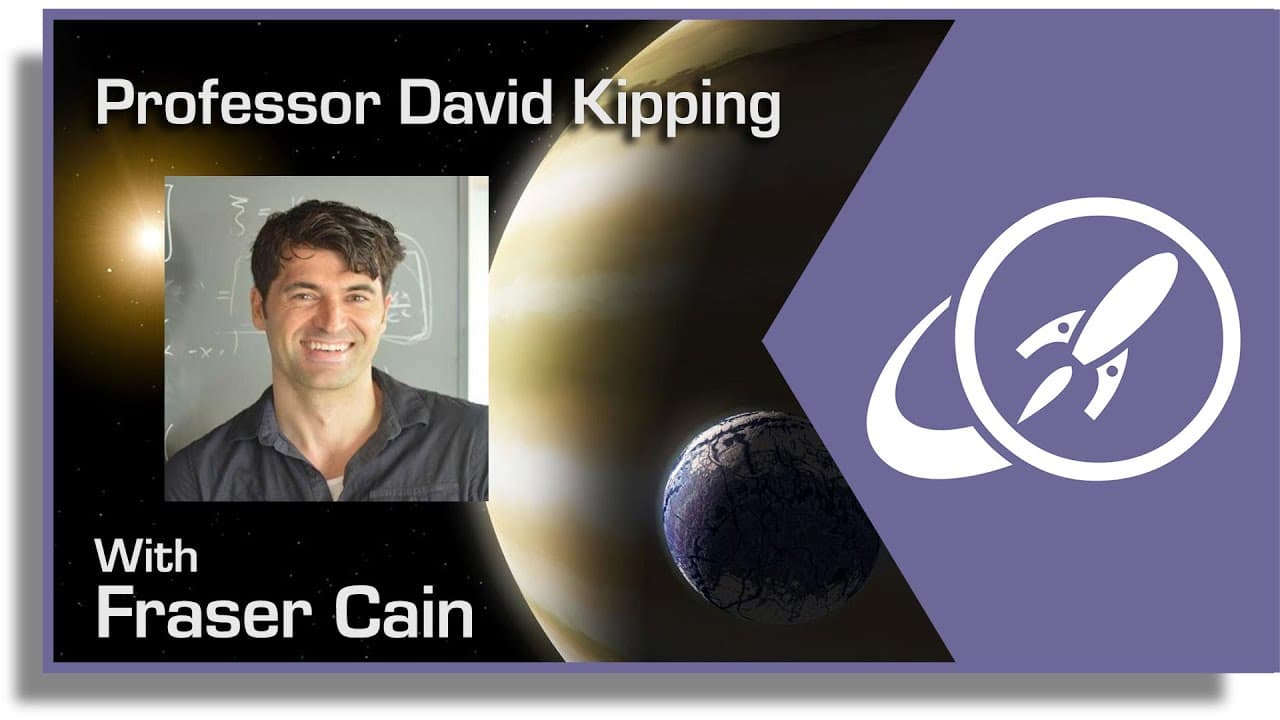
Dr. David Kipping, an assistant professor at Columbia University, discusses his research on exomoons and his passion for exploring new scientific ideas in an engaging interview.
Transcript
me stuff let me know I mean cool alright yeah I'm perfectly happy to help out in any way I can yeah doctor okay I think we will be live in a moment the stream has apparently started and so of course for the benefit of the people who are listening to this as a podcast this is a this is open space for September 23rd my live interview with dr. profess... Read More
Key Insights
- 👨🔬 The search for exomoons is still in its early stages, and scientists are working to improve methods for detecting and studying them.
- 💦 Exomoons that are located in the habitable zone and have the right conditions for liquid water are of particular interest in the search for life.
- 👨🔬 Citizen scientists and amateur astronomers play an important role in exoplanet and exomoon research, contributing to discoveries and follow-up observations.
- 👨🔬 The James Webb Space Telescope is highly anticipated for its potential to revolutionize exoplanet research, but competition for observing time is fierce.
- 👨🔬 The future of exoplanet research may involve direct imaging and potentially even sending spacecraft to visit exoplanets.
Install to Summarize YouTube Videos and Get Transcripts
Explore YouTube Video Summarizer or Get YouTube Transcript Extractor
Questions & Answers
Q: What are the challenges in finding exomoons and what techniques are being used?
One challenge is the lack of statistical data, as exomoons are still being discovered and it is difficult to confirm their existence with just one observation. Various techniques, such as radial velocities and microlensing, are being used to search for exomoons.
Q: What makes exomoons interesting in the search for potential life?
Exomoons that are located in the habitable zone of their star and have the right conditions for liquid water are of particular interest, as they could potentially support life. These exomoons could have advantages over larger planets in terms of habitability.
Q: How are scientists adapting their techniques to search for exomoons?
Scientists have proposed various methods for detecting exomoons, such as using radial velocities, microlensing, and transits. Dr. Kipping's lab focuses primarily on transit observations, which have been successful in finding many exoplanets.
Q: How does Dr. Kipping balance his research and outreach efforts?
Dr. Kipping finds a balance by spending 40% of his time on risky, innovative research ideas and 40% on conventional research. He also enjoys engaging with the public through his YouTube channel and other outreach activities.
Summary & Key Takeaways
-
Dr. Kipping is a professor at Columbia University and leads the Cool Worlds Lab, which focuses on researching exoplanets and exomoons.
-
He is particularly interested in the search for exomoons, having spent a significant portion of his career studying this topic.
-
The interview explores the current state of exomoons research and the challenges involved in finding and studying them.
Read in Other Languages (beta)
Share This Summary 📚
Summarize YouTube Videos and Get Video Transcripts with 1-Click
Try YouTube Summary with ChatGPT & Claude or YouTube Transcript Generator
Explore More Summaries from Fraser Cain 📚


Summarize YouTube Videos and Get Video Transcripts with 1-Click
Try YouTube Summary with ChatGPT & Claude or YouTube Transcript Generator