Waterworlds. Can There Be Life Without Land?
TL;DR
Exoplanets come in a wide variety of forms, including super-Earths, mini-Neptunes, and potentially habitable water worlds.
Transcript
One of the longstanding questions astronomers have had is, are we normal? Is our Solar System a template for what we might expect to see as we look out into the Milky Way at other star systems? As the data continues to come in, the answer to that question really seems to be no, we’re not normal. Star systems seem to have a huge variety of planets o... Read More
Key Insights
- 🧡 Exoplanets display a wide range of sizes and compositions, indicating the diversity of planetary systems in the universe.
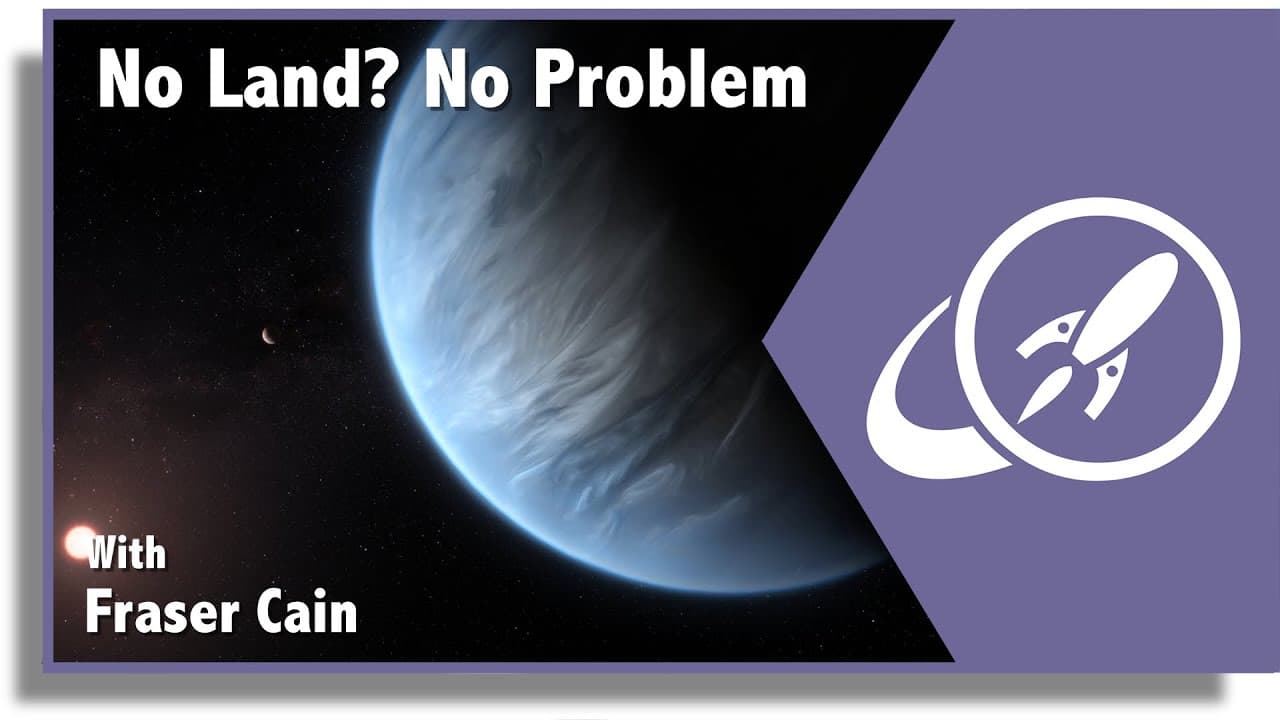
- 💦 The discovery of water vapor in the atmosphere of exoplanet K2-18b suggests the presence of water on its surface, raising questions about habitability.
- 🌊 Astronomers propose that many exoplanets may be composed primarily of water surrounding a rocky core, opening the possibility of habitable ocean worlds.
- 💦 Climate simulations indicate that some water worlds could maintain stable temperatures and cycling of carbon dioxide, potentially supporting life.
- 💦 The presence of water on exoplanets and the prevalence of water worlds suggest that habitable environments could be more common than previously thought.
- 💦 The Earth itself may have been a water world for long periods of time in its history, without any solid continents.
- 🛟 The formation of life on Earth in a purely aquatic environment supports the possibility of finding life on other ocean worlds in the universe.
Install to Summarize YouTube Videos and Get Transcripts
Explore YouTube Video Summarizer or Get YouTube Transcript Extractor
Questions & Answers
Q: How do exoplanets differ from planets in our own Solar System?
Exoplanets show a wide range of sizes and compositions, including super-Earths, mini-Neptunes, and potentially water worlds, which are not commonly found in our Solar System.
Q: Is K2-18b habitable?
While K2-18b is located in the habitable zone and contains water vapor in its atmosphere, its thick hydrogen and helium atmosphere, as well as its radiation exposure from a flaring red dwarf star, make it unlikely to be habitable.
Q: What are the possible compositions of K2-18b?
Astronomers have proposed three possibilities for K2-18b's composition: a rocky world with little water and a thick hydrogen and helium atmosphere, a mini-Neptune with an Earth-like core and significant water content, or a water world with a small rocky core and a large amount of water.
Q: Can water worlds be habitable?
Recent studies suggest that water worlds with deep oceans and a rocky seafloor, but no continents, could still be habitable. These planets could have stable temperatures and cycling of carbon dioxide between the air and water.
Summary & Key Takeaways
-
Astronomers have discovered a wide variety of planets orbiting stars, including terrestrial, gas, and ice worlds, as well as super-Earths, mini-Neptunes, and potentially habitable water worlds.
-
The exoplanet K2-18b, located in the habitable zone of its star, has been found to contain water vapor in its atmosphere, suggesting the presence of water on its surface.
-
Astronomers have proposed that many exoplanets could be mostly made of water surrounding a rocky core, creating the possibility of habitable ocean worlds.
Read in Other Languages (beta)
Share This Summary 📚
Summarize YouTube Videos and Get Video Transcripts with 1-Click
Try YouTube Summary with ChatGPT & Claude or YouTube Transcript Generator
Explore More Summaries from Fraser Cain 📚


Summarize YouTube Videos and Get Video Transcripts with 1-Click
Try YouTube Summary with ChatGPT & Claude or YouTube Transcript Generator