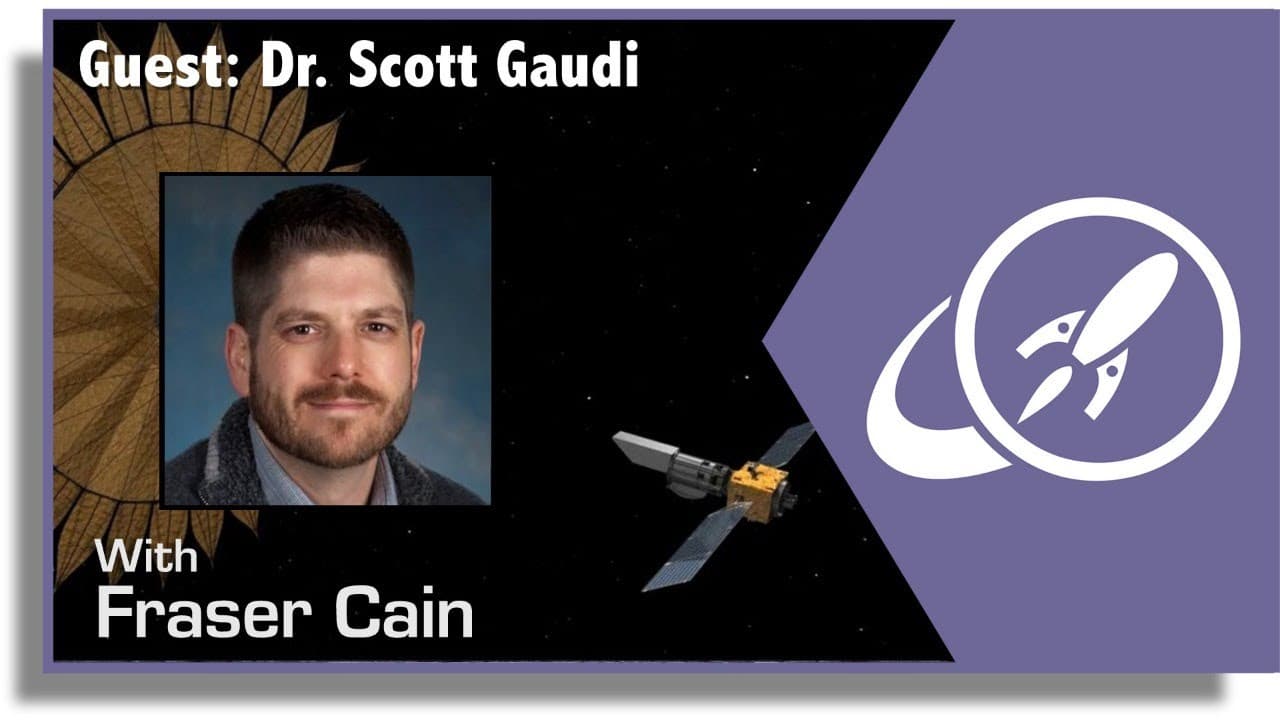
Open Space 89: Scott Gaudi and the HabEx Mission
TL;DR
"Habex is a mission concept that aims to detect and characterize Earth-like exoplanets using advanced telescopes and star shades."
Transcript
we will theoretically i think we're live hey everyone welcome to another uh randomly generated open space uh guest interview uh here on my channel uh and this week i'm joined by scott gowdy from ohio state university scott good to talk to you again uh good to see you and good to talk to you and thanks for inviting me hey thanks for thanks for being... Read More
Key Insights
- 🤩 Habex is a mission concept designed to detect and characterize Earth-like exoplanets using advanced telescopes and star shades.
- 💁 The mission has the potential to detect and study about 10 exoplanets in the habitable zone, providing crucial information about their potential habitability.
- 🤩 The star shade technology employed by Habex allows for precise observations of exoplanet atmospheres and increases the chances of detecting biosignatures.
Install to Summarize YouTube Videos and Get Transcripts
Explore YouTube Video Summarizer or Get YouTube Transcript Extractor
Questions & Answers
Q: What is Habex and how does it fit into the search for exoplanets?
Habex is a mission concept that aims to detect and characterize Earth-like exoplanets. It combines advanced telescopes and star shades to study habitable exoplanets.
Q: How many exoplanets can Habex potentially detect and characterize?
Habex will focus on detecting and characterizing about 10 exoplanets in the habitable zone. While the numbers are limited, the mission will provide crucial information about the potential habitability of these planets.
Q: What is the main goal of Habex in terms of exoplanet research?
The main goal of Habex is to search for signs of life on exoplanets. By studying the atmospheric composition and other characteristics, Habex aims to identify biosignatures and provide insights into the potential habitability of these worlds.
Q: How does the star shade technology work in conjunction with telescopes like Habex?
The star shade is a large disc-like structure that blocks the star's light, allowing telescopes to focus on the exoplanet. This technology enables precise measurements and observations of the exoplanet's atmosphere, increasing the chances of detecting signs of life.
Summary & Key Takeaways
-
Habex is one of the four mission concepts proposed by NASA for the next decade, aiming to study and explore exoplanets.
-
The mission will use a combination of advanced telescopes and star shades to detect and characterize Earth-like exoplanets.
-
Scott Gowdy, a professor at Ohio State University, discusses the advancements in exoplanet research and the significance of Habex in the search for habitable exoplanets.
Read in Other Languages (beta)
Share This Summary 📚
Summarize YouTube Videos and Get Video Transcripts with 1-Click
Try YouTube Summary with ChatGPT & Claude or YouTube Transcript Generator
Explore More Summaries from Fraser Cain 📚





Summarize YouTube Videos and Get Video Transcripts with 1-Click
Try YouTube Summary with ChatGPT & Claude or YouTube Transcript Generator