Q&A 13: Where Could We Hide From an Asteroid Strike and More...
TL;DR
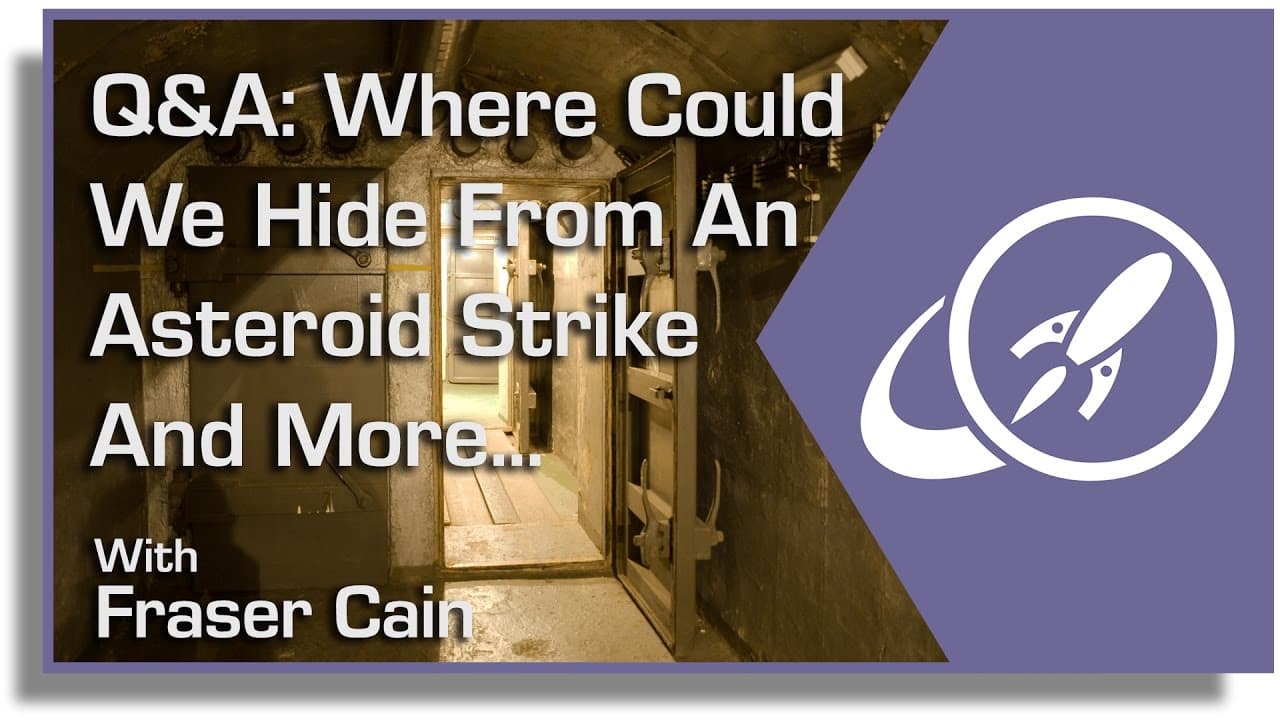
Fraser Kane answers a range of space-related questions, including what happens to a black hole with no matter around it, the possibility of surviving an asteroid impact, microbes surviving in space, and the shape of the universe.
Transcript
questions time your questions my answers go to any video on my channel put in any questions you want about space and astronomy I'll find them answer them here Here We Go the guardian wants to know what happens to a black hole when there's no more matter around it most of the time most black holes have no matter around them they've consumed all the ... Read More
Key Insights
- 🖤 Black holes without matter still receive energy and particles from the universe.
- 🌥️ Survival in the event of a large asteroid impact is challenging due to debris and atmospheric effects.
- 🌍 Earth microbes have shown the ability to survive in the vacuum of space.
- 🧑🌾 Humans could potentially be unable to return home if they traverse far enough into an expanding universe.
- 🏛️ Building a bunker deep enough to survive an asteroid impact may not be possible.
- 🫓 The shape of the universe is thought to be flat or very close to flat.
- 🎟️ Future exploration missions should include Uranus, Neptune, Titan, Europa, and Ganymede.
Install to Summarize YouTube Videos and Get Transcripts
Explore YouTube Video Summarizer or Get YouTube Transcript Extractor
Questions & Answers
Q: What happens to a black hole when there is no more matter around it?
Most black holes do not have matter around them. The absence of matter means they are not consuming material, but energy and particles from the universe still fall into them.
Q: Could humanity build a bunker deep enough to survive a large asteroid impact?
If within the impact zone, building a bunker would not be feasible due to the carving out of kilometers of rock. Additionally, the material kicked up by the impact would pose a threat to survival.
Q: Do microbes have to survive the freezing, radiated vacuum of space on their journey to other planets?
Earth microbes have been found to survive in the extreme conditions of space, such as on the moon's surface. Tardigrades and other organisms can endure the cold vacuum and may survive the journey to other planets.
Q: If the universe is expanding, could we eventually move away from Earth and be unable to return home?
As the universe expands, objects further away from Earth will move faster. If humans were to travel to distant galaxies, it is possible that the expanding universe would make it impossible to return to Earth.
Summary & Key Takeaways
-
Black holes without matter around them still have energy and particles falling into them from the background of the universe.
-
In the event of a large asteroid impact, building a bunker deep enough to survive may not be possible due to debris and atmospheric effects.
-
Earth microbes have been found to survive on the moon's surface, suggesting that some Earth life can endure the freezing, vacuum conditions of space.
Read in Other Languages (beta)
Share This Summary 📚
Summarize YouTube Videos and Get Video Transcripts with 1-Click
Try YouTube Summary with ChatGPT & Claude or YouTube Transcript Generator
Explore More Summaries from Fraser Cain 📚

Summarize YouTube Videos and Get Video Transcripts with 1-Click
Try YouTube Summary with ChatGPT & Claude or YouTube Transcript Generator