Q&A 116: When Will the Cosmic Microwave Fade Away? And More... Featuring James Davenport
TL;DR
Astronomer Fraser Cain answers viewer questions on a range of topics including the expansion of the universe, the potential loudness of space sounds, the search for exoplanets, the classification of Pluto, and the challenges of finding objects in our own solar system.
Transcript
it's question show time your questions my answers as always wherever you are on our channel question pops in your brain just write it down but gather them all up and I'll answer them here it's times like this that I am reminded that I do live in Canada and not in the Florida of Canada like I always seem to say so it just stops snowing but it might ... Read More
Key Insights
- ⌛ The wavelength of cosmic microwave background radiation emitted by the early universe has stretched out over time due to the expansion of the universe.
- 🔉 The universe is silent to us because there is no medium for sound to travel through, even if space could be making noise.
- 🤩 Detecting planets in other star systems is challenging, with current methods favoring larger planets closer to their star, but advancements in technology and different observing techniques offer hope for discovering more diverse planetary systems.
- 🪐 The classification of Pluto as a dwarf planet is due to its failure to clear its orbit of other objects, a criterion for being a planet.
- 🤨 The concept of the "Great Filter" suggests that there may be a future event that prevents intelligent civilizations from exploring the universe, posing a paradox and raising questions about the fate of advanced civilizations.
- 🛐 Placing telescopes on ships or in the ocean is not ideal due to the stability needed for observations and the interference of Earth's atmosphere.
- 🌍 The transmission of diseases between worlds could become a significant challenge in the future as exploration expands, potentially limiting the ability for Martians to visit Earth.
- 🙂 Detecting objects within our solar system is more challenging compared to exoplanets due to the lack of emitted light and reliance on the reflection of sunlight.
Install to Summarize YouTube Videos and Get Transcripts
Explore YouTube Video Summarizer or Get YouTube Transcript Extractor
Questions & Answers
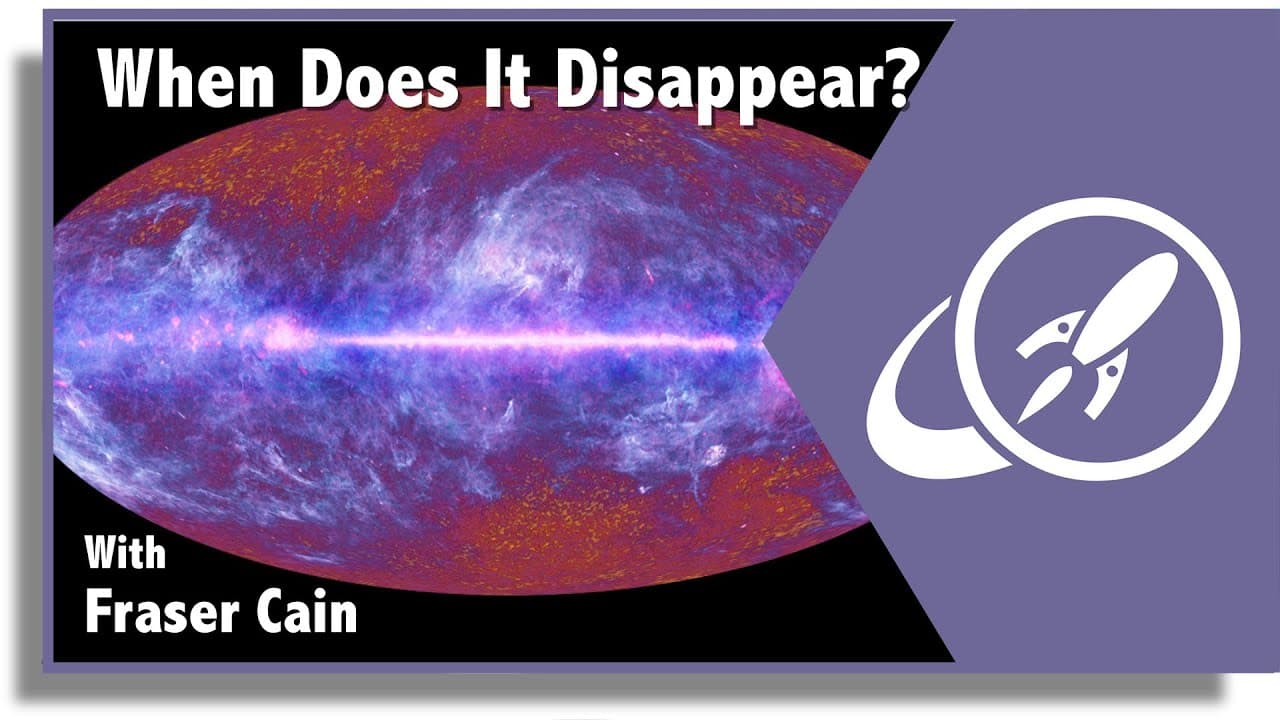
Q: How long will it take for the wavelength of the cosmic microwave background radiation emitted from the Big Bang to turn into radio waves?
The wavelength of cosmic microwave background radiation has stretched out over time and will continue to do so for billions of years until it becomes undetectable.
Q: How loud would space be if we could hear sounds and they dimmed in volume over distance?
The universe would be very loud if we could hear sounds, with the Sun alone producing noise equivalent to an outboard motor, but luckily space is silent due to the lack of a medium for sound to travel through.
Q: Why do we detect more exoplanets than objects in our own solar system?
Exoplanets are easier to detect as they emit their own light, while objects within our solar system only reflect sunlight, making them more challenging to observe.
Q: Why was Pluto reclassified as a dwarf planet?
Pluto was reclassified because it did not meet the criteria of clearing its orbit of other objects, which is one of the requirements for being classified as a planet.
Q: Will there be an interstellar World Health Organization to prevent the spread of diseases between different worlds?
While the idea of an interstellar World Health Organization is intriguing, the transmission of diseases between worlds could become a significant problem in the future as exploration expands.
Q: Why do smaller stars have longer lifespans compared to larger stars?
Smaller stars burn their fuel much more slowly, akin to sipping fuel over time, which allows them to live longer even with less fuel to burn, while larger stars burn their fuel at a faster rate and have shorter lifespans.
Summary & Key Takeaways
-
Cain explains that the wavelength of cosmic microwave background radiation emitted by the early universe has stretched out over time, and will continue to do so until it becomes undetectable billions of years from now.
-
He discusses the loudness of space sounds, stating that while the universe could be making noise, there is no medium in space to transmit sound waves, rendering it silent to us.
-
Cain delves into the challenges and limitations in detecting planets in other star systems, as current methods favor larger and closer planets. However, he mentions the use of other techniques, such as astrometry and direct imaging, to expand our knowledge of planetary formation.
-
He addresses the definition of a planet and why Pluto is considered a dwarf planet, explaining that the criteria include not only orbiting the Sun and having enough gravity to be spherical, but also clearing its orbit of other objects.
-
Cain discusses the concept of the "Great Filter," which suggests that there may be an event in the future that prevents intelligent civilizations from exploring the universe, and how it relates to the Fermi paradox.
-
He explains why putting giant telescopes on ships or in the ocean is not ideal due to the stability needed for observations and the interference of the Earth's atmosphere.
-
Cain discusses the possibility of the development of an interstellar World Health Organization to prevent the spread of diseases between different worlds, noting the challenges of disease transmission and the need for precautions.
-
He explains why it is more challenging to detect objects within our solar system compared to exoplanets, as the latter emit their own light, while objects within our solar system only reflect sunlight.
-
Cain includes a guest answer from James Davenport, an astronomer, who explains why smaller stars can have longer lifespans compared to larger stars due to their slower fuel-burning process.
Read in Other Languages (beta)
Share This Summary 📚
Summarize YouTube Videos and Get Video Transcripts with 1-Click
Try YouTube Summary with ChatGPT & Claude or YouTube Transcript Generator
Explore More Summaries from Fraser Cain 📚

Summarize YouTube Videos and Get Video Transcripts with 1-Click
Try YouTube Summary with ChatGPT & Claude or YouTube Transcript Generator