Output Power of Four Cavity Klystron - Microwave Linear Beam Tubes O Type - Microwave Engineering
TL;DR
This video is a lecture on Chapter 2 of Microwave Engineering, focusing on the concept of the multi-cavity Klystron amplifier and its working and parameters.
Transcript
click the bell icon to get latest videos from equator hello Prince I welcome you all to this video here we are with chapter 2 of microwave engineering the very popular too tramatic last one is covered and we started the concept of extended interaction to how improvement in to the efficiency and the gain with the help of multi cavities hence the dev... Read More
Key Insights
- ✖️ Extended interaction improves the efficiency and gain of the multi-cavity Klystron amplifier.
- ❓ The structural diagram includes the buncher cavity, velocity modulation, and catcher cavity.
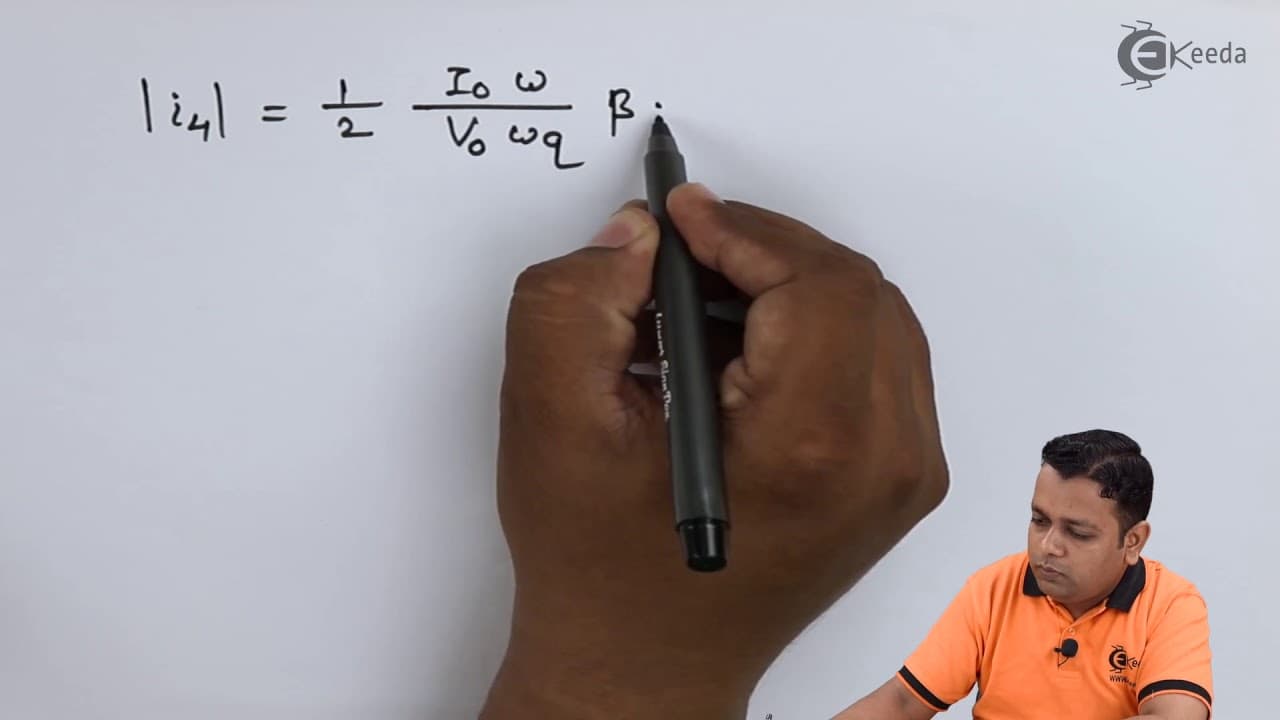
- ✊ Formulas are provided for convection current and output power calculation.
- 🔠 Input and output reentrant cavities in this amplifier are identical.
Install to Summarize YouTube Videos and Get Transcripts
Explore YouTube Video Summarizer or Get YouTube Transcript Extractor
Questions & Answers
Q: What is the purpose of the buncher cavity in a multi-cavity Klystron amplifier?
The buncher cavity is the first cavity in the amplifier and is responsible for velocity modulation, which helps improve the amplification of the RF input.
Q: How is the output power of a multi-cavity Klystron amplifier calculated?
The output power can be calculated using the formula P_UT = (I_4)^4 * R_SH, where I_4 is the fundamental component of the current for the output cavity and R_SH is the shunt resistance.
Q: Are the input and output reentrant cavities the same in a multi-cavity Klystron amplifier?
Yes, in this type of amplifier, the input and output reentrant cavities are identical, and the beam coupling coefficient for both cavities is the same.
Q: What is the significance of the shunt resistance in the output power formula?
The shunt resistance, denoted as R_SH, includes the external loading and plays a role in determining the output power of the multi-cavity Klystron amplifier.
Summary & Key Takeaways
-
The video discusses the concept of extended interaction and how it improves the efficiency and gain of the multi-cavity Klystron amplifier.
-
It covers the structural diagram of the amplifier, including the buncher cavity, velocity modulation, and catcher cavity.
-
The video provides formulas for output power and convection current for each cavity, taking into account parameters such as electron beam current, potential, plasma frequency, and coupling coefficient.
Read in Other Languages (beta)
Share This Summary 📚
Summarize YouTube Videos and Get Video Transcripts with 1-Click
Try YouTube Summary with ChatGPT & Claude or YouTube Transcript Generator
Explore More Summaries from Ekeeda 📚



Summarize YouTube Videos and Get Video Transcripts with 1-Click
Try YouTube Summary with ChatGPT & Claude or YouTube Transcript Generator