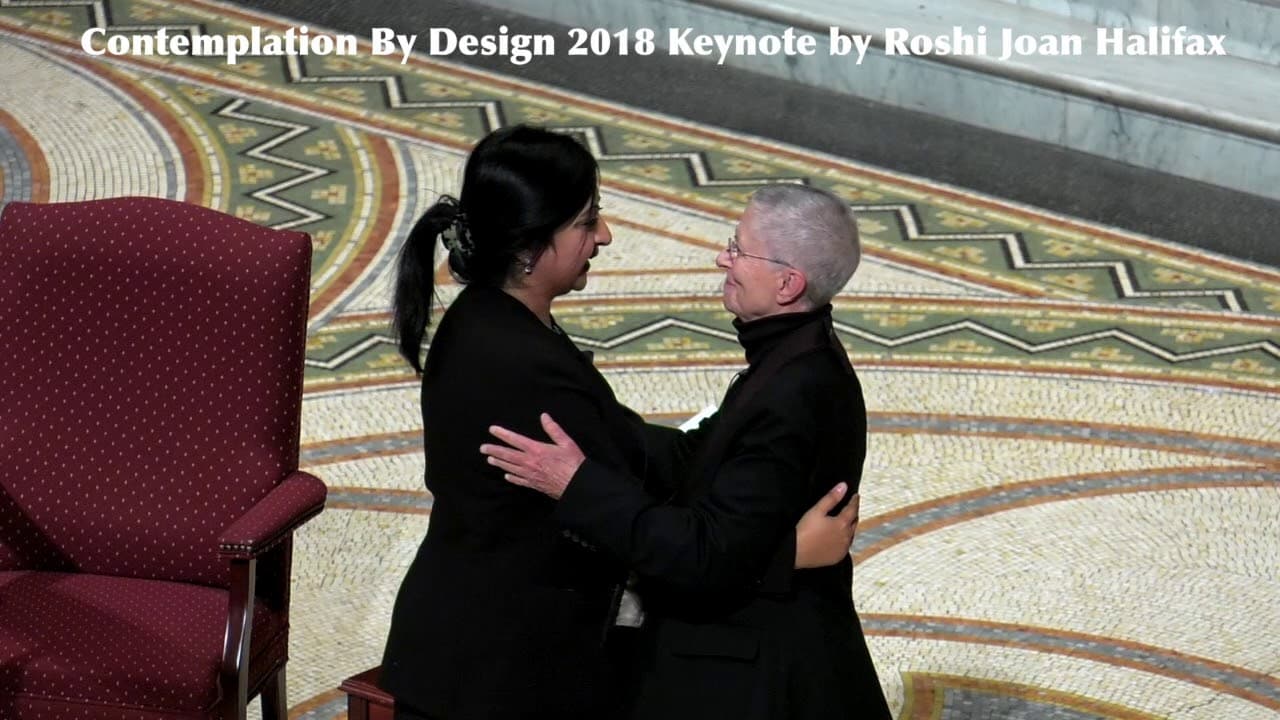
Roshi Joan Halifax, Contemplation By Design 2018 keynote, The Strange and Necessary Case for Hope
TL;DR
Wise hope, rooted in radical uncertainty and the unknown, empowers us to take action and make a difference, even in the face of futility and suffering.
Transcript
Stanford University good evening my name is Sora Ahmed and I am one of the associate Dean's here at the office for religious life welcome to Memorial Church one of three spaces that we at the office for religious life regularly welcome people to for meditation for prayer for contemplation or just for social engagement I say just that's an incredibl... Read More
Key Insights
- 🤞 Wise hope is rooted in radical uncertainty and embraces impermanence and the unknown.
- 🤞 Living by vow and embodying one's deepest values are essential in cultivating wise hope.
- 🤞 Wise hope empowers individuals to confront suffering, injustice, and futility with integrity and compassion.
- 😀 Maintaining hope in the face of opposition and challenges requires recognizing the suffering in oneself and others and finding common ground.
Install to Summarize YouTube Videos and Get Transcripts
Explore YouTube Video Summarizer or Get YouTube Transcript Extractor
Questions & Answers
Q: What is wise hope and how does it differ from conventional hope?
Wise hope is rooted in radical uncertainty and the recognition that we cannot know the outcome of our actions. It involves embracing impermanence and the unknown while taking meaningful and compassionate action. Conventional hope, on the other hand, is often based on desire and attachment to a specific outcome, which can lead to suffering and disappointment.
Q: How can individuals cultivate wise hope in their lives?
Cultivating wise hope involves living by vow and embodying one's deepest values. It requires recognizing the truth of impermanence and interdependence, and being open to surprise and the possibility of change. It also involves developing moral sensitivity, integrity, and the courage to confront suffering and injustice.
Q: How can wise hope be maintained in the face of futility and opposition?
Wise hope acknowledges the reality of suffering, futility, and opposition, but still chooses to act with integrity and compassion. It involves finding common ground, connecting with others, and recognizing the suffering in oneself and others. By staying aligned with one's values and vows, individuals can maintain hope and make a difference, even in challenging circumstances.
Q: How does wise hope relate to personal transformation and world transformation?
Wise hope begins with self-transformation, as individuals cultivate qualities such as compassion, altruism, kindness, and ethical behavior. However, self-transformation is not separate from world transformation, as wise hope recognizes the interconnectedness of all beings and seeks to alleviate suffering both within oneself and in the world. Personal transformation is the foundation for meaningful and impactful actions that can bring about positive change.
Summary & Key Takeaways
-
Roshi Joan Halifax discusses the concept of wise hope, which embraces the truth of impermanence and the unknown while empowering individuals to take meaningful action.
-
She challenges conventional hope, which is often based on desire and attachment to a specific outcome, and emphasizes the importance of living by vow and embodying our deepest values.
-
Halifax explores how integrity, compassion, and wise hope can guide our actions and help us navigate through challenging times, fostering a connection with others and a commitment to making positive change in our world.
Read in Other Languages (beta)
Share This Summary 📚
Summarize YouTube Videos and Get Video Transcripts with 1-Click
Try YouTube Summary with ChatGPT & Claude or YouTube Transcript Generator
Explore More Summaries from Stanford 📚




Summarize YouTube Videos and Get Video Transcripts with 1-Click
Try YouTube Summary with ChatGPT & Claude or YouTube Transcript Generator