Depressed dogs, cats with OCD -- what animal madness means for us humans | Laurel Braitman
TL;DR
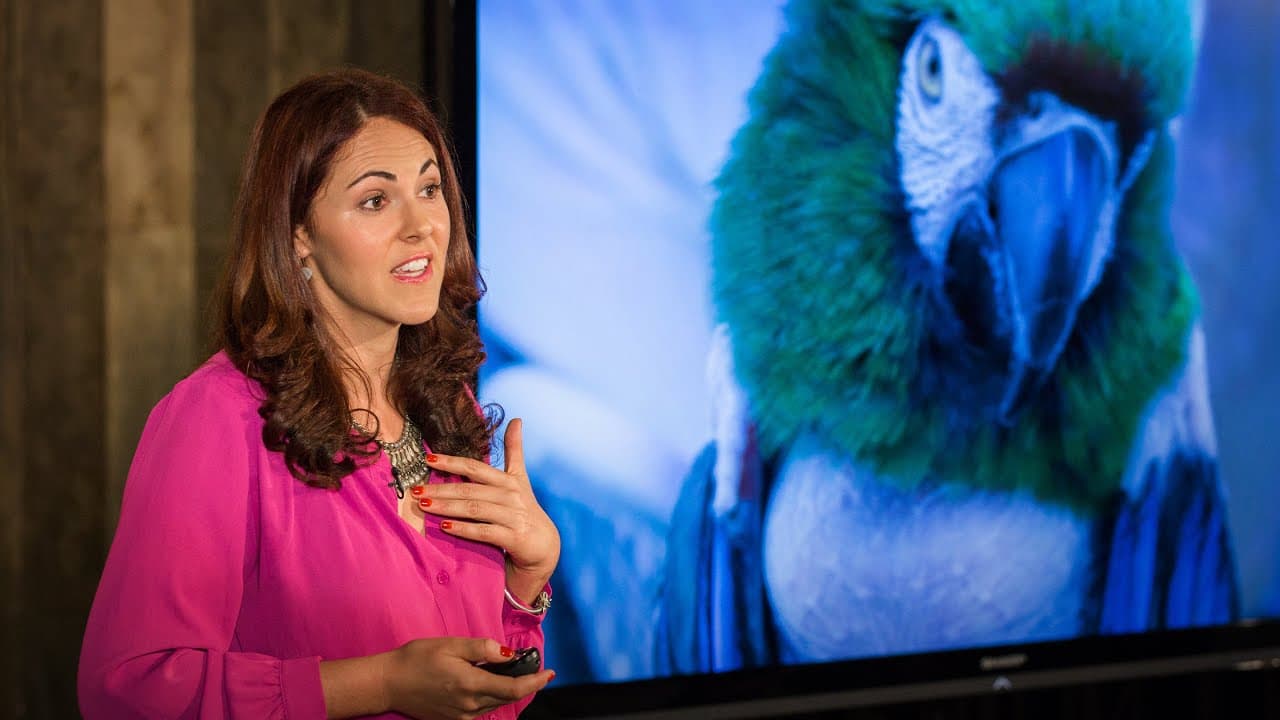
This content explores the concept of mental illness in animals, highlighting the similarities between humans and other species.
Transcript
Oliver was an extremely dashing, handsome, charming and largely unstable male that I completely lost my heart to. (Laughter) He was a Bernese mountain dog, and my ex-husband and I adopted him, and about six months in, we realized that he was a mess. He had such paralyzing separation anxiety that we couldn't leave him alone. Once, he jumped out of o... Read More
Key Insights
- 🐶 Animals, like humans, can suffer from mental illness such as anxiety disorders and mood disorders, and it is important to recognize and understand these conditions.
- 🧠 Many mental disorders in animals mirror human mental disorders, such as fear and anxiety disorders, mood disorders, and obsessive-compulsive disorders.
- 🌍 Observing animal behavior and identifying mental illness in them can help us better understand ourselves and be better friends to them.
- 🐱 Stereotypic behaviors, such as shadow-chasing and tail-chasing in dogs or plucking in birds, can be indicators of mental illness in animals.
- 💊 Animals, like humans, are sometimes prescribed psychopharmaceutical drugs to treat their mental illnesses, and these drugs are often tested on animals before being used on humans.
- 🐰 Spending time with other social animals can be a therapeutic intervention for animals with mental illness, just as it can be for humans.
- ♀️ Anthropomorphizing animals, or attributing human characteristics to them, can be a way to understand their emotional experiences and improve our relationships with them.
- 🌍 Empathy and understanding are key in recognizing and addressing mental illness in animals, as well as in humans.
Install to Summarize YouTube Videos and Get Transcripts
Explore YouTube Video Summarizer or Get YouTube Transcript Extractor
Questions & Answers
Q: What type of animal did the speaker adopt?
The speaker adopted a Bernese mountain dog named Oliver.
Q: How did the speaker realize that Oliver had issues?
The speaker realized that Oliver had issues when he exhibited extreme separation anxiety, jumped out of their third-floor apartment, and engaged in destructive behavior such as eating fabric and recyclables.
Q: What is the speaker's background in?
The speaker has a Ph.D. in the history of science from MIT and studied biology.
Q: What has the speaker spent the last seven years doing?
The speaker has spent the last seven years researching mental illness in animals and exploring the topic of diagnosing and understanding mental illness in non-human animals.
Q: How does the speaker believe humans and animals can be better friends to each other?
The speaker believes that by understanding and identifying mental illness in animals, humans can become better friends to them. This knowledge can also help humans better understand themselves. Animals can benefit from a combination of behavior therapies and medications, similar to how humans with mental illness are treated.
Summary & Key Takeaways
-
The speaker recounts her experience with her dog Oliver, who had severe separation anxiety and was diagnosed with a canine compulsive disorder.
-
She discusses the idea of animals suffering from mental illness and the importance of understanding and empathizing with their experiences.
-
The speaker emphasizes the need for both behavior therapy and psychopharmaceuticals in treating animal mental disorders, and highlights the benefits of social interactions between animals.
Read in Other Languages (beta)
Share This Summary 📚
Summarize YouTube Videos and Get Video Transcripts with 1-Click
Try YouTube Summary with ChatGPT & Claude or YouTube Transcript Generator
Explore More Summaries from TED 📚






Summarize YouTube Videos and Get Video Transcripts with 1-Click
Try YouTube Summary with ChatGPT & Claude or YouTube Transcript Generator