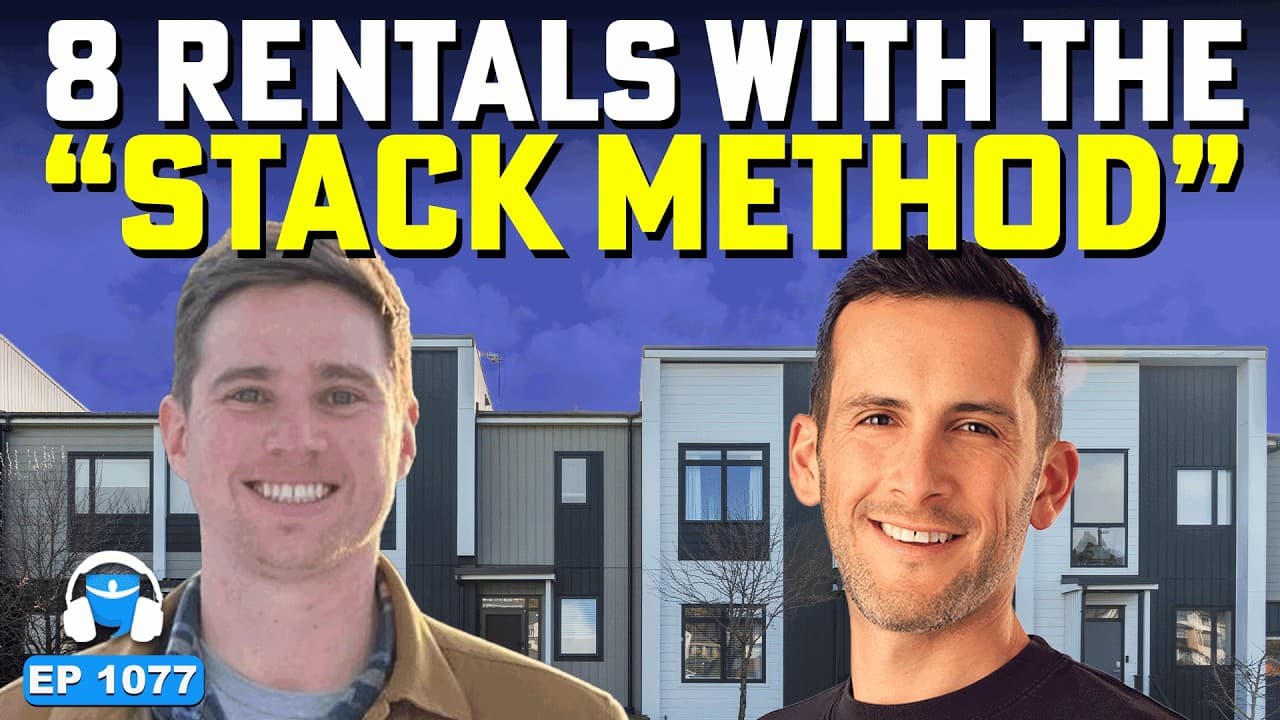
Turning $15,000 into 8 Rental Units Using “The Stack” Method
TL;DR
Connor Anderson uses 'The Stack' to grow his real estate portfolio from a condo to multi-units.
Transcript
[Applause] [Applause] you can still hustle your way into a cash flowing real estate portfolio with upside despite today's market challenges you hear me say it over and over I am long on the Midwest and I think house hacking is the best way to start investing and if you haven't heard of the stack method it still works to exponentially scale within j... Read More
Key Insights
- Connor Anderson started his real estate journey with just $15,000, using innovative strategies like house hacking to maximize returns.
- The Stack Method is a scalable way to build a real estate portfolio by progressively acquiring larger properties with low-money-down loans.
- Connor leveraged relationships and off-market opportunities to find deals in a competitive market, demonstrating the importance of networking.
- Transitioning from a W2 to a 1099 employee made financing more challenging for Connor, highlighting the importance of stable income for real estate investors.
- Connor's strategy involved house hacking, living in his properties while renting out portions to cover mortgage costs, allowing him to save and reinvest.
- The Midwest, particularly areas like Grand Rapids, Michigan, offers affordable real estate opportunities with strong demand and limited supply.
- Connor's experience as a real estate agent helped him identify and capitalize on investment opportunities, emphasizing the value of market knowledge.
- Connor plans to expand into short-term rentals, seeking properties in desirable locations to enjoy both personal use and rental income.
Install to Summarize YouTube Videos and Get Transcripts
Explore YouTube Video Summarizer or Get YouTube Transcript Extractor
Questions & Answers
Q: What is the Stack Method in real estate investing?
The Stack Method is a strategy for building a real estate portfolio by gradually acquiring larger properties. It typically starts with a single-family home or condo and progresses to duplexes and fourplexes. This method allows investors to scale their portfolio using low-money-down loans, reinvesting cash flow and equity from previous properties.
Q: How did Connor Anderson finance his first property purchase?
Connor Anderson financed his first property, a condo, with $15,000, using an FHA mortgage. He employed house hacking by renting out rooms to cover the mortgage, allowing him to save money for future investments. This initial step laid the groundwork for his subsequent properties and portfolio growth.
Q: What challenges did Connor face when transitioning to a 1099 employee?
Transitioning to a 1099 employee made financing more challenging for Connor, as lenders require a track record of stable income. Without a W2 salary, he had to wait until he could demonstrate consistent income from his real estate agent work before securing financing for additional properties. This highlights the importance of income stability in real estate investing.
Q: How did Connor find off-market real estate deals?
Connor found off-market deals by reaching out to owners of expired, withdrawn, or canceled listings. He contacted about 20 owners and received a response from one with multiple properties to sell. This proactive approach, combined with his real estate agent skills, allowed him to secure a duplex and build a relationship with the seller, leading to further transactions.
Q: Why is the Midwest a good region for real estate investment according to Connor?
Connor believes the Midwest, particularly Grand Rapids, Michigan, offers strong investment opportunities due to its affordability, demand for housing, and limited supply. The region's average home price is below the national average, attracting young professionals and ensuring a steady demand for rentals, making it a promising area for long-term growth and cash flow.
Q: What are Connor's future plans for his real estate portfolio?
Connor plans to explore the short-term rental market, aiming to acquire properties in desirable locations for both rental income and personal use. This expansion into vacation rentals will diversify his portfolio and allow him to enjoy properties in different parts of the country. He remains focused on cash flow and strategic growth.
Q: How did Connor manage renovations on his properties?
Connor managed renovations by using a HELOC from his previous property to fund the work. He hired professionals for major tasks like electrical and plumbing but also did some work himself, such as painting and installing kitchens. This hands-on approach helped control costs and improve property value, ultimately enhancing cash flow.
Q: What advice does Connor give to new real estate investors?
Connor advises new investors to focus on cash flow by ensuring a healthy spread between rental income and mortgage payments. He emphasizes the importance of market knowledge, networking, and creativity in deal-making. House hacking is a recommended strategy for reducing living expenses and saving money for future investments, facilitating portfolio growth.
Summary & Key Takeaways
-
Connor Anderson began his real estate investing journey with $15,000, purchasing a condo and using house hacking to cover costs. He followed the Stack Method, gradually acquiring larger properties, including a single-family home, duplex, and fourplex.
-
By leveraging his experience as a real estate agent, Connor found off-market deals and built a relationship with a seller, leading to multiple transactions. He emphasizes the importance of networking and market knowledge for successful investing.
-
Connor's strategy focuses on cash flow and long-term growth, choosing properties in the Midwest for their affordability and demand. He plans to explore short-term rentals, aiming to diversify his portfolio and enjoy personal use of vacation properties.
Read in Other Languages (beta)
Share This Summary 📚
Summarize YouTube Videos and Get Video Transcripts with 1-Click
Try YouTube Summary with ChatGPT & Claude or YouTube Transcript Generator
Explore More Summaries from BiggerPockets 📚


Summarize YouTube Videos and Get Video Transcripts with 1-Click
Try YouTube Summary with ChatGPT & Claude or YouTube Transcript Generator