Q&A 124: Are We Even Mentally Capable of Understanding the Universe? And More...
TL;DR
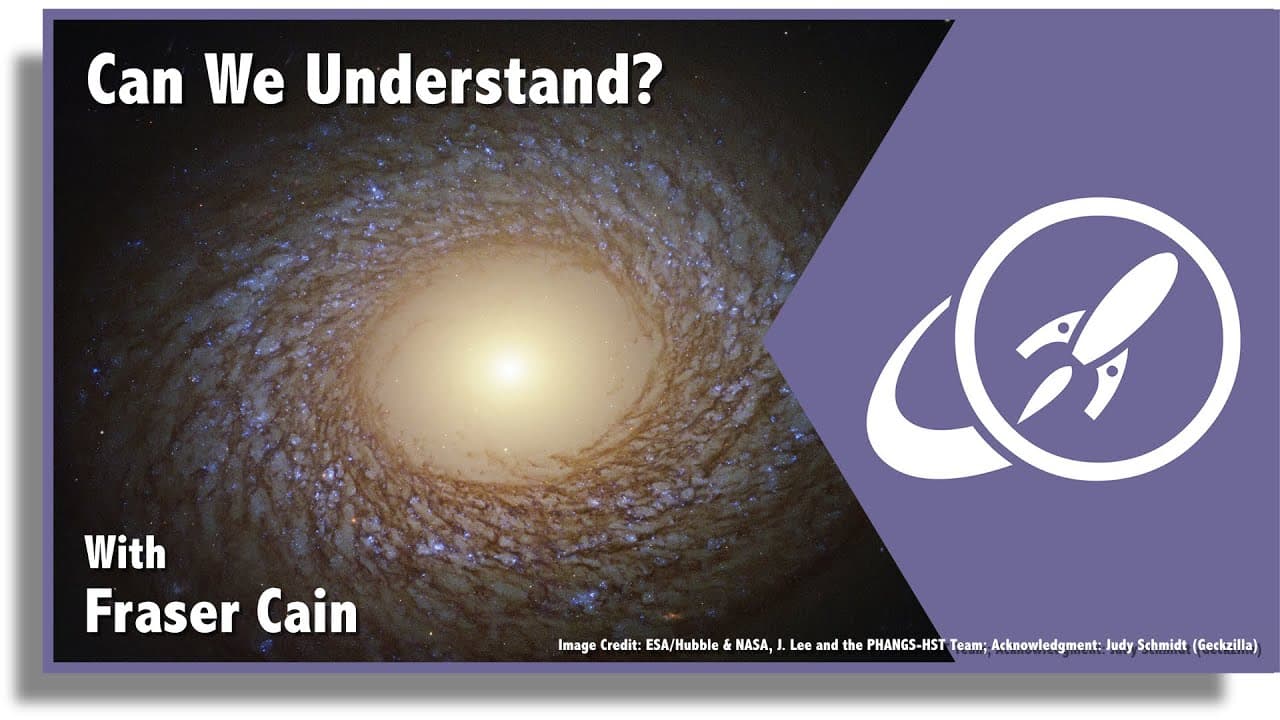
Scientific progress requires deep understanding, appreciation, and time to explore and explain the mysteries of the universe.
Transcript
it's question show time your questions my answers as always wherever you are cross my channel question pops in your brain just write it down I'll gather them up and I will answer them here before I get to the question show I want to remind you that I do a really cool weekly email newsletter it's like a magazine it's got like 20-plus stories I write... Read More
Key Insights
- ❓ Scientific progress requires observation, experimentation, and understanding of the fundamental nature of reality.
- 🥺 Appreciating scientific discoveries and terminology can lead to a deeper understanding of the complexities of the universe.
- 🤩 Studying star systems and gathering knowledge about the universe can be more practical than colonizing distant locations.
- 🖤 The chances of a black hole passing through the solar system are minuscule but would have catastrophic effects.
- 🪐 Planets with atmospheres may not have well-defined boundaries between the atmosphere and planet surface.
- 🥵 Storing photons as rocket fuel is not feasible due to heat generation, but energy storage systems like batteries and antimatter offer potential solutions.
- 🔨 Pulsars are valuable tools for studying the universe, but determining their distances requires additional methods such as Cepheid variables.
Install to Summarize YouTube Videos and Get Transcripts
Explore YouTube Video Summarizer or Get YouTube Transcript Extractor
Questions & Answers
Q: Can different methods of measuring the Hubble constant be used together? For instance, can we combine the Mazar distance technique with the observation of a type 1a supernova in the same galaxy?
Yes, astronomers can use multiple methods, such as redshift measurements of galaxies, supernovae observations, and maser distance techniques, to calibrate and validate their measurements of distance and expansion rate in the universe.
Q: Can the clouds of Jupiter agglomerate to form a moon-sized object, or is the chaotic gravity too strong?
The clouds of Jupiter cannot agglomerate into a moon-sized object due to the chaotic gravity. Objects in space may need interactions and collisions to come together to form larger bodies.
Q: What are the advantages of colonizing the Milky Way? Should we focus on settling other star systems or studying them?
Currently, colonizing the Milky Way is not practical due to the vast distances and challenges of long-term space travel. However, studying other star systems using robotic explorers and advanced technology can provide valuable knowledge about the universe.
Q: If a star goes supernova, will an adjacent star also go supernova in a chain reaction?
Supernovae can indirectly cause other stars to explode by triggering the collapse and formation of new stars. However, a direct chain reaction of multiple stars going supernova is unlikely.
Q: If a black hole came close to Earth, what would happen if it reached a distance similar to that between the Earth and the Moon?
If a black hole came close to Earth, its immense mass would disrupt the orbits of celestial objects and cause catastrophic effects. However, the chances of a black hole passing through the solar system are incredibly low.
Q: How do we define the size of planets or minor planets with atmospheres?
Planets with atmospheres are defined based on their overall mass and composition, which includes both their solid surface and gaseous envelope. The boundary between atmosphere and planet can be less distinct, especially for gas giants like Saturn and Jupiter.
Q: Could colossal amounts of photons be stored and used as rocket fuel?
Storing photons as rocket fuel is not practical because they would continuously heat up the storage arrangement, leading to melting. Energy density concepts, such as batteries or antimatter, are more efficient energy storage systems.
Q: Can we detect distant pulsars and observe changes in their timing as we receive their signals?
Pulsars are useful for determining various astrophysical properties. However, their intrinsic brightness may vary, making it challenging to precisely determine their distances based solely on their observed brightness. Other techniques, such as Cepheid variables, may be used to determine the distances to pulsars indirectly.
Summary & Key Takeaways
-
Scientific progress is a journey that requires observation, experimentation, and understanding of the basic nature of reality.
-
The terminology used by scientists may seem complex, but it is necessary to describe and explain their observations accurately.
-
While scientific discoveries may be challenging to grasp, taking the time to understand them can lead to a deeper appreciation and potential contribution to our knowledge of the universe.
Read in Other Languages (beta)
Share This Summary 📚
Summarize YouTube Videos and Get Video Transcripts with 1-Click
Try YouTube Summary with ChatGPT & Claude or YouTube Transcript Generator
Explore More Summaries from Fraser Cain 📚



Summarize YouTube Videos and Get Video Transcripts with 1-Click
Try YouTube Summary with ChatGPT & Claude or YouTube Transcript Generator