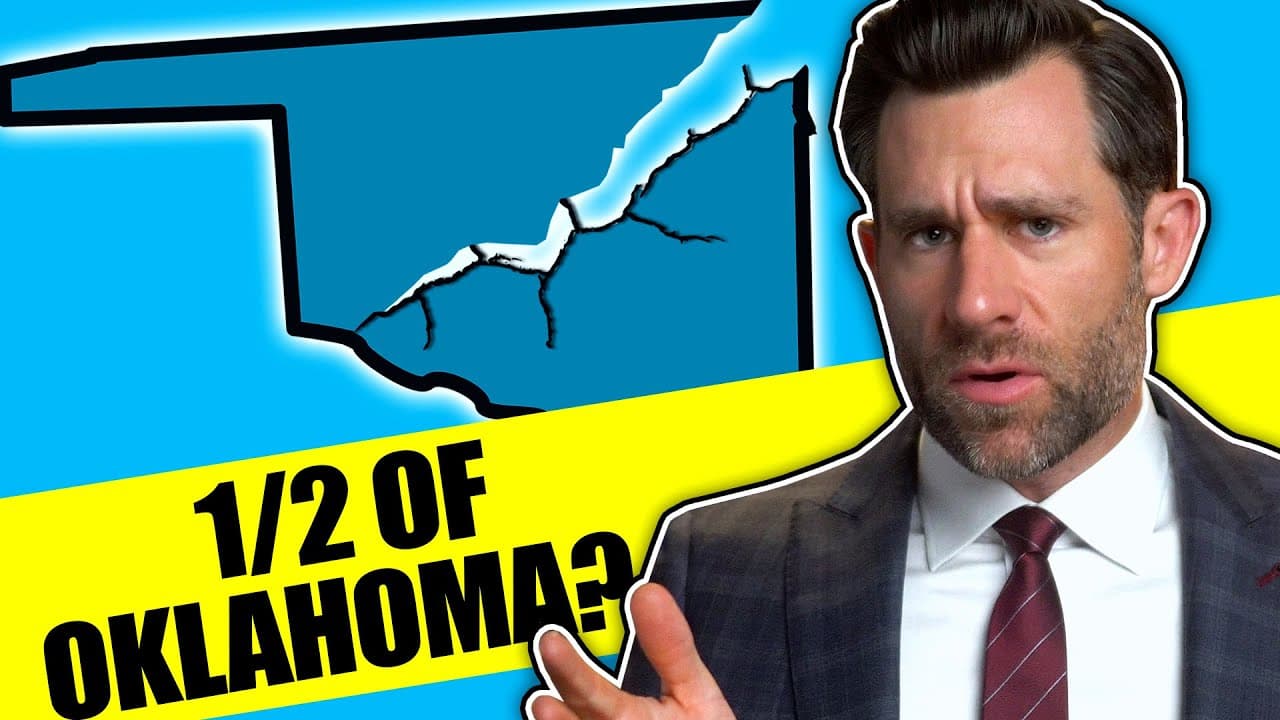
Did the Supreme Court Just Give Half of Oklahoma Away?
TL;DR
The Supreme Court ruled that Native-American reservations retain jurisdiction over most of Eastern Oklahoma, including Tulsa, based on historical treaties. This means that the state of Oklahoma lacks authority to prosecute crimes involving Native-American defendants in these areas, but it does not alter land ownership or daily life for residents.
Transcript
- Legal Eagle is coming in loud and clear thanks to Ting Mobile. Today we're talking about ♪ Oklahoma ♪ - Where the wind doesn't come sweeping down the plain and the waving wheat does not smell sweet because it appears that Oklahoma is no more. Is it possible that the Supreme Court gave away half of the state? Well, in what some people are calling ... Read More
Key Insights
- 🏈 The Supreme Court's ruling emphasizes the importance of honoring historical treaties and promises made to Native-American tribes.
- 🪡 It highlights the need for Congress to explicitly disestablish reservations rather than relying on court rulings.
- 🤨 The decision does not drastically change the everyday lives of Oklahomans, but it raises questions about jurisdictional boundaries and the relationship between tribes and the state.
Install to Summarize YouTube Videos and Get Transcripts
Explore YouTube Video Summarizer or Get YouTube Transcript Extractor
Questions & Answers
Q: What was the central issue in the McGirt vs Oklahoma case?
The central issue was whether Native-American reservations in Eastern Oklahoma, including Tulsa, still have jurisdiction over crimes committed in their territory.
Q: What did the Supreme Court decide in the case?
The Supreme Court ruled that Native-American reservations retain jurisdiction in Eastern Oklahoma based on historical treaties and the requirement for Congress to explicitly disestablish reservations.
Q: How does the decision impact Oklahoma?
The decision does not directly impact land ownership or daily life in Oklahoma. However, it raises questions about jurisdiction, taxation, and territorial rights.
Q: What are the potential implications of the ruling?
The ruling could lead to other tribes asserting their reservation rights and impacts prosecutions involving Native-Americans in Eastern Oklahoma. The establishment of a framework for shared jurisdiction and cooperation between tribes and the state is anticipated.
Summary & Key Takeaways
-
The Supreme Court decided that Native-American reservations retain jurisdiction over crimes committed in their territory in Eastern Oklahoma, including Tulsa.
-
The ruling is based on the interpretation of historical treaties and the Congressional responsibility to explicitly disestablish reservations.
-
The decision does not directly affect land ownership or daily life in Oklahoma, but it raises questions about jurisdiction, taxation, and territorial rights.
Read in Other Languages (beta)
Share This Summary 📚
Summarize YouTube Videos and Get Video Transcripts with 1-Click
Try YouTube Summary with ChatGPT & Claude or YouTube Transcript Generator
Explore More Summaries from LegalEagle 📚





Summarize YouTube Videos and Get Video Transcripts with 1-Click
Try YouTube Summary with ChatGPT & Claude or YouTube Transcript Generator