Juggling by Numbers - Numberphile
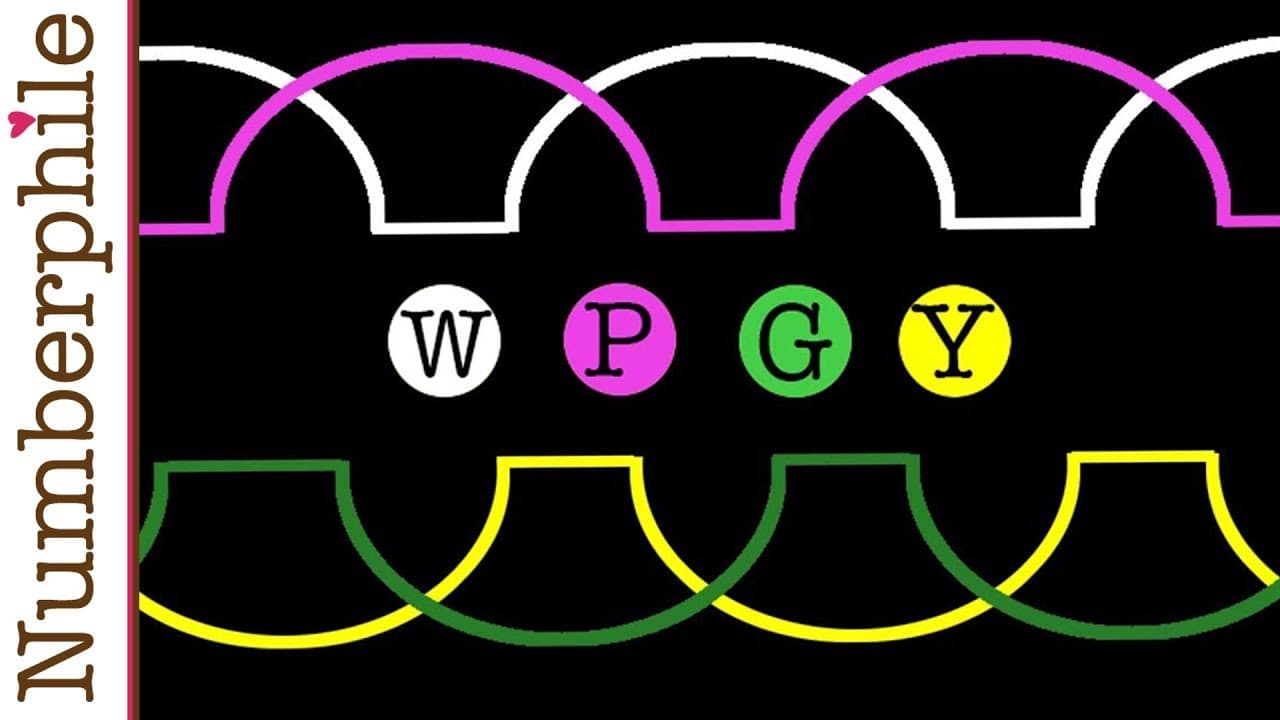
TL;DR
Juggling notation called siteswap captures juggling patterns and allows for predicting new tricks using mathematical principles.
Transcript
Just as we have a notation for music, we have a notation for language, we have a notation for dance, we came up with a notation for juggling. And the really cool thing was that there was some unexpected mathematics underneath that then let us predict the existence of juggling tricks that, as far as we knew, had never been done before. Well, the one... Read More
Key Insights
- 👻 Siteswap notation captures juggling patterns and allows for the exploration of new tricks.
- ⚾ The notation is based on mathematical principles and can be used to predict juggling patterns that have not been performed before.
- 🤹 Jugglers can manipulate the numbers in the notation to create unique and complex juggling patterns.
- 🥺 Not all juggling patterns can be directly started from the three-ball cascade, leading to excited patterns that require preparatory throws.
- ⌛ Understanding cycle time and flight time helps in analyzing juggling patterns and their rhythm.
Install to Summarize YouTube Videos and Get Transcripts
Explore YouTube Video Summarizer or Get YouTube Transcript Extractor
Questions & Answers
Q: What is siteswap notation and how does it work?
Siteswap is a system that represents juggling patterns using numbers. Each number represents the time before the next throw. For example, "3" means throwing the ball every third beat. The notation captures the rhythm and order of throws in juggling.
Q: How does siteswap notation help in predicting new juggling tricks?
Siteswap notation allows jugglers to manipulate the numbers and create different patterns. By analyzing the notation, jugglers can identify patterns that have not been done before and predict new juggling tricks.
Q: Can you explain the concept of cycle time and flight time in juggling?
Cycle time refers to the time it takes for a juggling pattern to complete one cycle. Flight time refers to the time a ball spends in the air during a juggling pattern. The flight time is usually slightly less than the cycle time to account for the time the ball spends in the juggler's hand.
Q: How do excited patterns differ from ground state patterns in juggling?
Excited patterns are juggling patterns that cannot be started directly from the three-ball cascade, while ground state patterns can be started from the cascade. Excited patterns require preparatory throws to transition into the pattern, while ground state patterns flow naturally from the cascade.
Summary & Key Takeaways
-
Juggling notation, known as siteswap, is a system used to represent juggling patterns and tricks.
-
Using the siteswap notation, jugglers can describe different juggling patterns and explore new ones.
-
Siteswap allows for the prediction of juggling tricks that have not been done before by utilizing mathematics and understanding the underlying patterns.
Read in Other Languages (beta)
Share This Summary 📚
Summarize YouTube Videos and Get Video Transcripts with 1-Click
Try YouTube Summary with ChatGPT & Claude or YouTube Transcript Generator
Explore More Summaries from Numberphile 📚




Summarize YouTube Videos and Get Video Transcripts with 1-Click
Try YouTube Summary with ChatGPT & Claude or YouTube Transcript Generator