How Does the Gecko Gripper Work in Space?
TL;DR
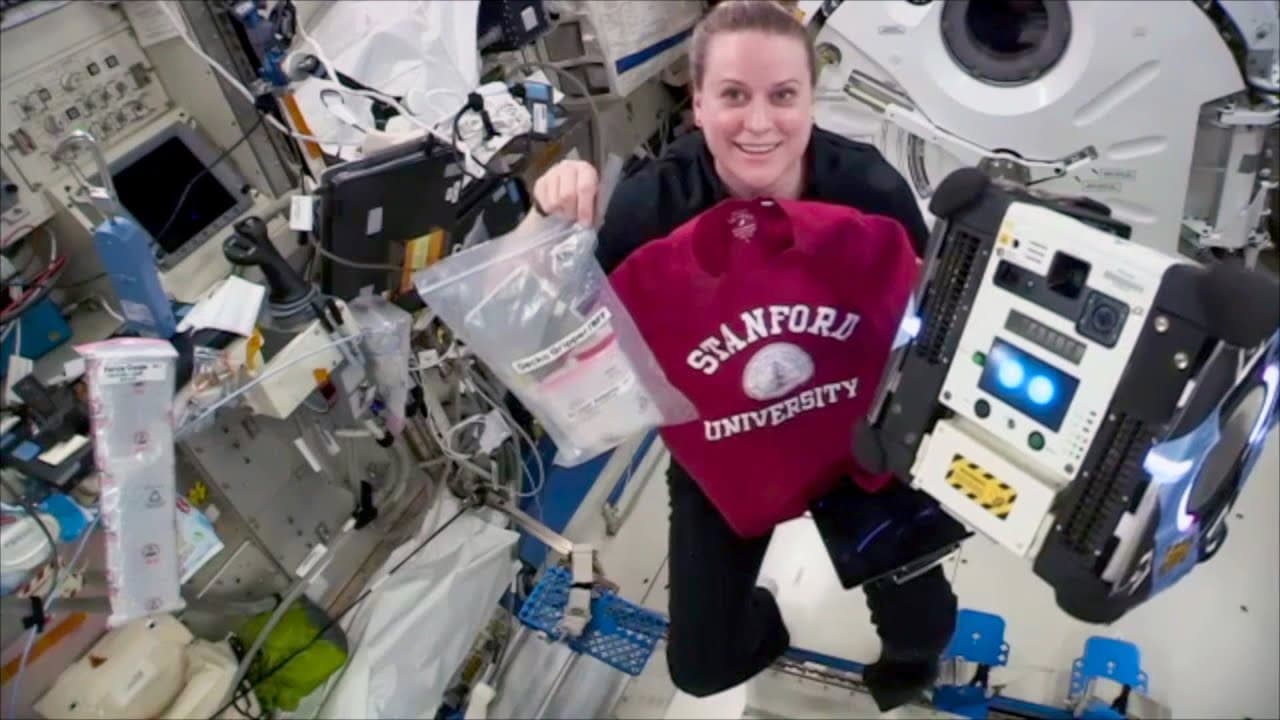
The gecko gripper uses a specially designed adhesive that mimics a gecko's ability to grip surfaces when pressure is applied, making it ideal for manipulating free-floating objects in space. Mounted on NASA's Astrobee robot aboard the International Space Station, it can perform autonomous tasks, significantly aiding in space operations where traditional methods like suction or magnets fail.
Transcript
(upbeat music) - Working on project you know one day we'll be launch into space be that far away from you, look up in the sky say; "Hey I build something that's floating up there." I think is very, very exciting but at times also very wracking, I only have one shot. (upbeat music) - This is a project about trying to grasp and manipulate objects in ... Read More
Key Insights
- 🥶 The gecko-inspired material allows for grip in space, where objects are free-floating, making it a useful technology for manipulating objects without requiring excessive adhesive strength.
- 👾 Collaboration with NASA enables researchers to develop procedures and conduct experiments using the Astrobee robot in the international space station.
- 🤱 Live video feeds and a ground station facilitate communication and visualization of operations.
- 🧑🚀 Successful perching attempts and troubleshooting efforts by astronauts demonstrate their investment in the gripper's functionality.
- 👾 Working on space applications presents significant research rewards and opportunities, not only for researchers but also for students.
Install to Summarize YouTube Videos and Get Transcripts
Explore YouTube Video Summarizer or Get YouTube Transcript Extractor
Questions & Answers
Q: How does the gecko-inspired material work?
The material has tiny sharp wedges that grip surfaces when loaded in the right way, making it useful for manipulating objects in space. Most of the time, it is not sticky but becomes sticky when needed.
Q: What is the purpose of the gripper on the Astrobee robot?
The gripper mounted on the Astrobee robot enables autonomous casting and manipulation of objects in space. It is designed to enhance the capabilities of the Astrobee within the international space station.
Q: How do researchers communicate with the astronauts during operations?
Researchers cannot directly communicate with the astronauts, so they go through their NASA partners. A ground station with software allows visualization of live video feeds to monitor and step through procedures developed with NASA collaborators.
Q: What experiments are being conducted with the gripper and Astrobee robot?
The experiments involve basic pull tests on different objects, recording the force required to make the gripper lose its grip. The next set of experiments involves autonomous gripping by the Astrobee robot, testing the reliability and tolerances of the process.
Summary & Key Takeaways
-
The gecko-inspired material, with tiny sharp wedges, allows for gripping surfaces when loaded in the right way.
-
The gripper is designed to be mounted on the Astrobee robot in the international space station for autonomous casting and manipulation of objects.
-
A ground station enables communication and visualization of live operations, involving live video feeds and procedures developed in collaboration with NASA.
Read in Other Languages (beta)
Share This Summary 📚
Summarize YouTube Videos and Get Video Transcripts with 1-Click
Try YouTube Summary with ChatGPT & Claude or YouTube Transcript Generator
Explore More Summaries from Stanford 📚
Summarize YouTube Videos and Get Video Transcripts with 1-Click
Try YouTube Summary with ChatGPT & Claude or YouTube Transcript Generator