Why Do We Pay Taxes and How Do They Work?
TL;DR
Taxes are essential for funding government services and promoting societal well-being. They can be direct or indirect, progressive or regressive, and are used to influence behavior and redistribute wealth. Understanding tax systems, including the U.S. progressive income tax, reveals complexities in balancing fairness and economic impact.
Transcript
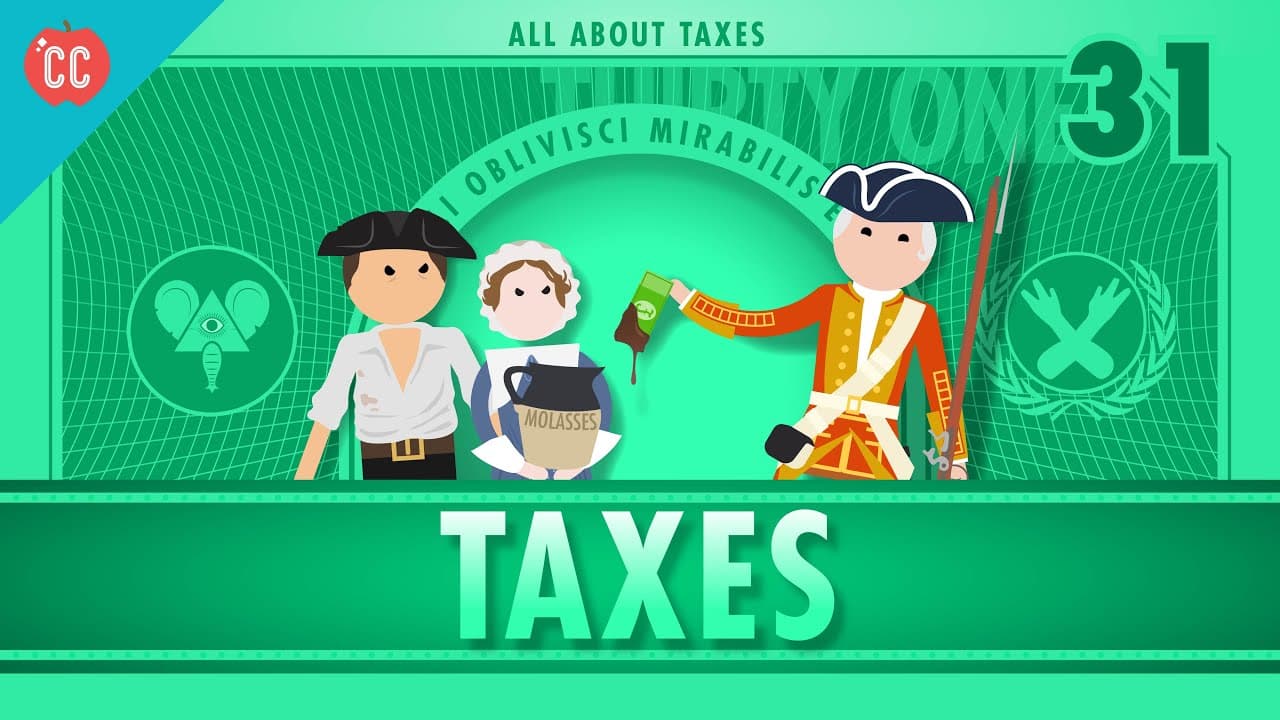
Hi I’m Adriene Hill, this is Crash Course Economics, and today we’re going to talk about taxes. We’re going to talk about why we have taxes, what they do for us, and why you should go ahead and take that raise that’s going to bump you into the next tax bracket. Also rebellions. And the British Empire’s bad judgement when it came to taxing colonies.... Read More
Key Insights
- Taxes have existed as long as organized societies, with ancient civilizations like Mesopotamia and Egypt implementing them.
- The primary goal of taxes is to fund government services that markets might not provide, such as public safety and education.
- Taxes can be used to influence behavior, such as sin taxes on cigarettes and alcohol to reduce consumption.
- Direct taxes are paid directly to the government, while indirect taxes are collected by sellers but paid by consumers.
- Regressive taxes take a higher toll on lower-income individuals, while progressive taxes shift the burden to higher-income earners.
- The U.S. uses a progressive income tax system, where marginal tax rates apply to income chunks, not the entire income.
- Proportional taxes, like a flat tax, require the same percentage from all income levels, but may not be as fair as they seem.
- Historical tax policies have led to significant events like the American Revolution and Gandhi's Salt March in India.
Install to Summarize YouTube Videos and Get Transcripts
Explore YouTube Video Summarizer or Get YouTube Transcript Extractor
Questions & Answers
Q: What are the primary goals of taxation?
The primary goals of taxation are to raise money for government services, promote societal well-being, and implement fiscal and monetary policies to foster economic growth. Taxes are also used to redistribute wealth, protect the environment, and influence consumer behavior through mechanisms like sin taxes on harmful products.
Q: How do progressive taxes work in the U.S.?
In the U.S., progressive taxes mean individuals pay more in taxes as they earn more income. The system uses marginal tax rates, where income is divided into chunks, each taxed at different rates. This means only the income above certain thresholds is taxed at higher rates, ensuring that higher earners pay a larger share of their income in taxes.
Q: What is the difference between direct and indirect taxes?
Direct taxes are paid directly to the government by individuals or organizations, such as income and property taxes. Indirect taxes, like sales and value-added taxes, are collected by sellers or producers and paid by consumers. These taxes are included in the price of goods and services, affecting all consumers regardless of income.
Q: Why are regressive taxes considered unfair?
Regressive taxes are considered unfair because they take a larger percentage of income from lower-income individuals than from higher-income earners. This disproportionate impact arises because everyone pays the same amount, but the financial burden is heavier on those with less income, as seen with sales taxes on essential goods.
Q: What are the arguments for and against a flat tax?
Proponents of a flat tax argue it is simple and fair, with everyone paying the same percentage of their income. Critics contend it is not as equitable as it seems, as it could shift the tax burden from the wealthy to lower and middle-income classes, eliminating deductions and credits that encourage beneficial economic behaviors.
Q: How have historical tax policies led to rebellions?
Historical tax policies have led to rebellions when perceived as unfair or oppressive. The American Revolution was sparked by British taxes without representation, and Gandhi's Salt March protested British salt taxes in India. These events highlight how tax policies can provoke significant political and social movements.
Q: What is the role of taxes in influencing consumer behavior?
Taxes influence consumer behavior by making certain goods and services more expensive, thereby discouraging consumption. Sin taxes on products like cigarettes and alcohol aim to reduce their use for health reasons. Similarly, carbon taxes intend to lower greenhouse gas emissions by making polluting activities costlier.
Q: Why is understanding tax systems important?
Understanding tax systems is important for making informed decisions about tax policies and reforms. Tax systems affect economic behavior, wealth distribution, and government revenue. Knowledge of how taxes work, including deductions and exemptions, helps individuals and policymakers evaluate the fairness and efficiency of tax structures.
Summary & Key Takeaways
-
Taxes are crucial for funding essential government services, promoting societal well-being, and implementing fiscal policies. They can be direct or indirect, influencing consumer behavior and redistributing wealth. Understanding the U.S. progressive income tax system, which uses marginal tax rates, reveals the complexity of balancing fairness and economic impact.
-
Regressive taxes disproportionately affect lower-income individuals, while progressive taxes shift the burden to higher-income earners. Proportional taxes, like flat taxes, seem fair but may not account for economic complexities. Historical tax policies have sparked significant events, such as the American Revolution and Gandhi's Salt March.
-
Tax systems are complex, with various deductions, credits, and exemptions affecting individual tax burdens. While no one enjoys paying taxes, they provide essential services and protections that markets cannot guarantee. Understanding different tax types and their implications is crucial for informed discussions on tax reform.
Read in Other Languages (beta)
Share This Summary 📚
Summarize YouTube Videos and Get Video Transcripts with 1-Click
Try YouTube Summary with ChatGPT & Claude or YouTube Transcript Generator
Explore More Summaries from CrashCourse 📚
Summarize YouTube Videos and Get Video Transcripts with 1-Click
Try YouTube Summary with ChatGPT & Claude or YouTube Transcript Generator