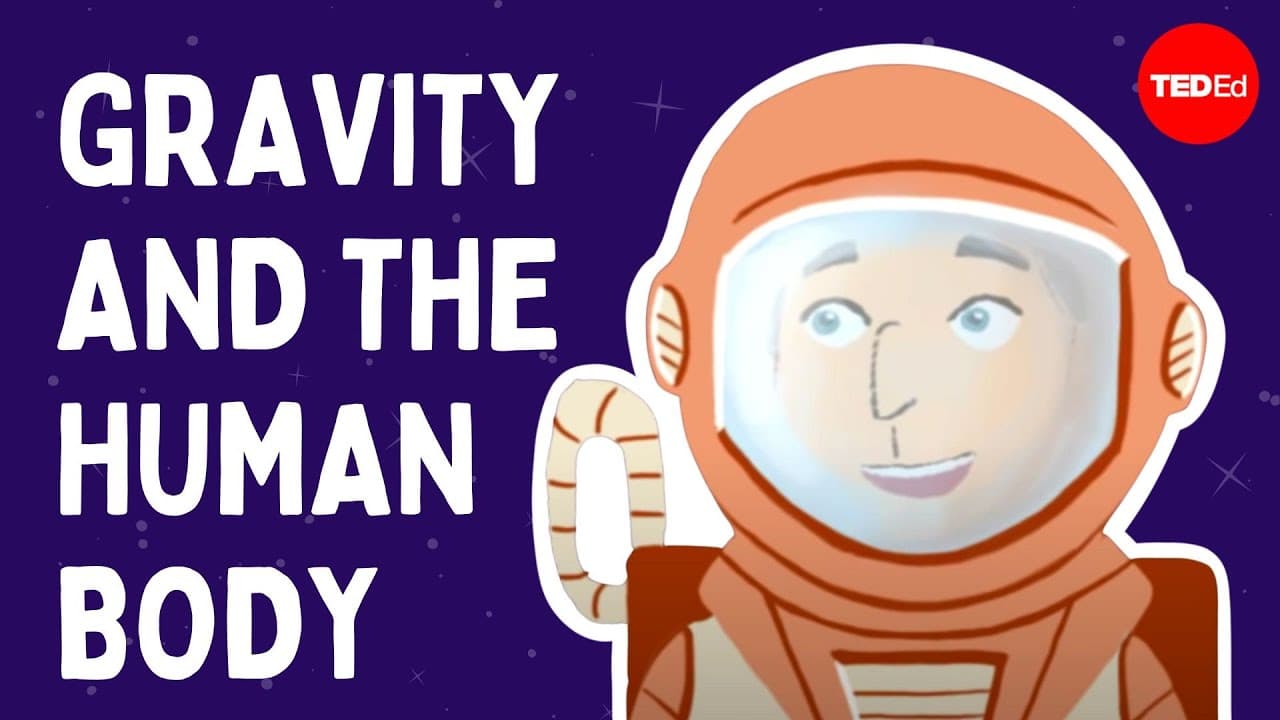
Gravity and the human body - Jay Buckey
TL;DR
Weightlessness in space can cause bone and muscle loss, changes in the cardiovascular system, and alterations to the balance system.
Transcript
Some of the issues that are important if you want to have people in space for long periods of time. One is that people will tend to lose bone and muscle mass. We know this. If you have to put a cast on your leg, and you take the cast off after a few weeks, you'll see that your muscles have shrunk in size. And if you measured the bone strength, you'... Read More
Key Insights
- ☠️ Weightlessness causes bone and muscle loss in the human body.
- 🥰 The cardiovascular system adapts to weightlessness, resulting in changes in heart function and blood vessel structure.
- ⚖️ Weightlessness affects the balance system, leading to difficulties in maintaining balance upon returning to Earth.
- 🖐️ Gravity plays a crucial role in the development of various bodily systems.
- 🧠 Adaptation to weightlessness is controlled by the brain.
- 💱 Weightlessness can result in permanent changes to the body.
- 👾 Understanding the impact of weightlessness on the human body is essential for long-term space travel.
Install to Summarize YouTube Videos and Get Transcripts
Explore YouTube Video Summarizer or Get YouTube Transcript Extractor
Questions & Answers
Q: What happens to bone and muscle mass in weightlessness?
In weightlessness, bone and muscle mass decrease as the body adapts to the lack of gravitational forces. This causes bones to weaken and muscles to shrink in size.
Q: How does weightlessness affect the cardiovascular system?
Weightlessness alters the cardiovascular system as it no longer has to work against gravity to pump blood to the head. This can lead to changes in heart function and blood vessel structure.
Q: What impact does weightlessness have on the balance system?
Weightlessness causes changes to the balance system, leading to difficulties in maintaining balance upon returning to Earth. This can result in a person experiencing trouble with their balance after being in space.
Q: Can growing up without gravity affect the development of the human body?
Growing up without gravity could potentially result in different development of systems that rely on gravity, such as muscles, the balance system, and the cardiovascular system. It remains unclear whether these systems would develop normally without the presence of gravity.
Summary & Key Takeaways
-
Weightlessness in space leads to bone and muscle loss, as the body adapts to the absence of gravitational forces.
-
The cardiovascular system also undergoes changes, as the body adjusts to maintaining blood flow against gravity.
-
The balance system is affected by weightlessness, causing difficulties in maintaining balance upon returning to Earth.
Read in Other Languages (beta)
Share This Summary 📚
Summarize YouTube Videos and Get Video Transcripts with 1-Click
Try YouTube Summary with ChatGPT & Claude or YouTube Transcript Generator
Explore More Summaries from TED-Ed 📚

Summarize YouTube Videos and Get Video Transcripts with 1-Click
Try YouTube Summary with ChatGPT & Claude or YouTube Transcript Generator