What Are Blockchain Primitives and Their Uses?
TL;DR
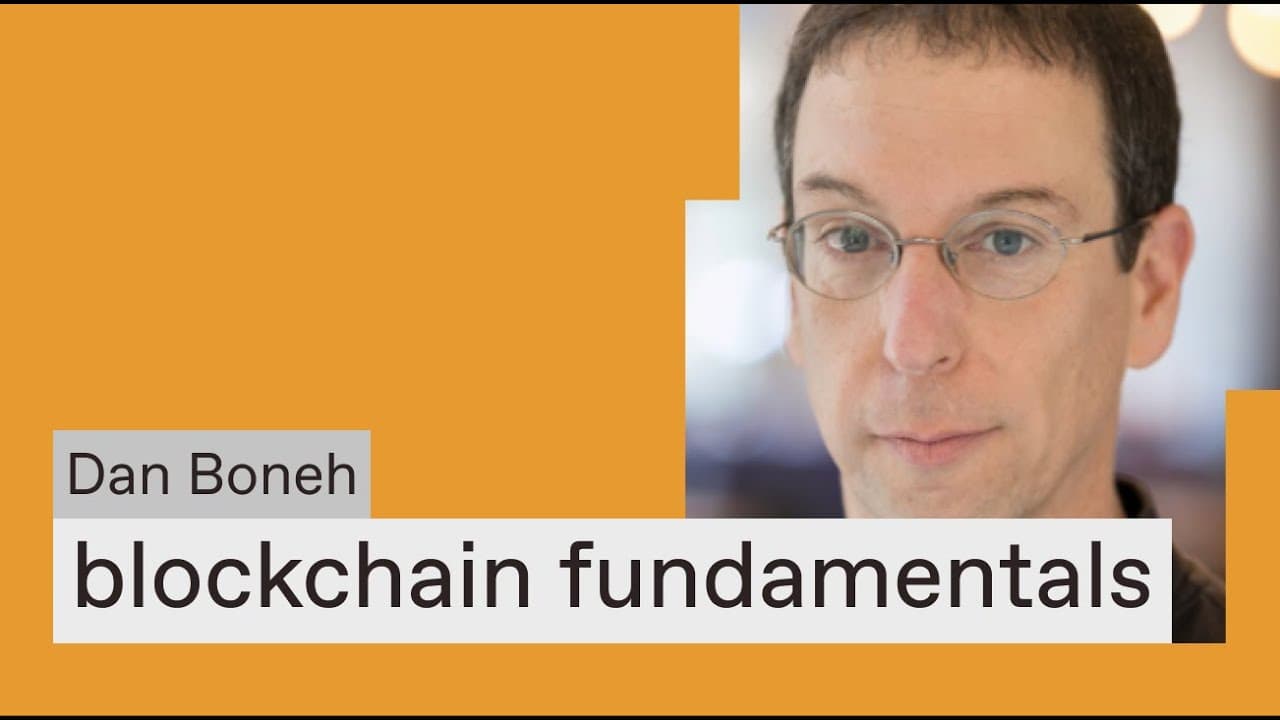
Blockchain primitives, including consensus mechanisms, compute layers, and cryptographic techniques, are fundamental to building decentralized applications. They ensure data integrity, enable efficient data storage with Merkle commitments, and allow for privacy through zero-knowledge proofs. Understanding these primitives is essential for leveraging blockchain technology effectively.
Transcript
thank you so uh welcome everybody I'm really excited that this school is happening this is an amazing opportunity I'm actually really excited to see what kind of apps you guys build and I'm looking forward to this week seven where we get to see everything you've you've designed so what I wanted to do today in the in this in the next couple in the n... Read More
Key Insights
- 🛟 Blockchain technology consists of multiple layers, each serving a specific function in the system.
- 🔒 Consensus mechanisms ensure data integrity and security in the blockchain.
- 🌥️ Merkel commitments enable efficient storage and verification of large datasets on the blockchain.
- 0️⃣ Zero-knowledge proof systems provide privacy and scalability solutions for blockchain applications.
- 📱 The blockchain ecosystem is constantly evolving, with advancements in consensus, smart contracts, and privacy capabilities.
- 😒 It is important to understand the limitations and use cases of blockchain technology to make informed decisions about its application.
- 🎙️ More videos with Dan Boneh:
Install to Summarize YouTube Videos and Get Transcripts
Explore YouTube Video Summarizer or Get YouTube Transcript Extractor
Questions & Answers
Q: What are the different layers of a blockchain?
A blockchain has four layers: consensus, compute, applications, and user-facing systems. The consensus layer ensures data consistency, the compute layer hosts the blockchain computer, the applications layer runs smart contracts, and the user-facing systems interact with the blockchain.
Q: How does consensus work in a blockchain?
Consensus ensures that all participants see the same data, provides persistence, liveness, and openness. Different consensus mechanisms like proof of work and proof of stake are used to secure the blockchain and validate transactions.
Q: What are Merkel commitments?
Merkel commitments function like envelopes that allow for efficient storage and verification of large datasets on the blockchain. They enable privacy-preserving proofs and applications like payment proofs and private databases.
Q: What are zero-knowledge proof systems (snarks)?
Zero-knowledge proof systems enable the efficient verification of complex computations without revealing sensitive data. They are used in roll-up solutions for scalability and green blockchains for privacy.
Summary & Key Takeaways
-
Blockchain has four layers: consensus, compute, applications, and user-facing systems. The consensus layer ensures data consistency, while the compute layer hosts the blockchain computer for running applications. Applications are written in languages like Solidity, and user-facing systems interact with the blockchain.
-
The consensus layer ensures that all participants see the same data, guarantees persistence, liveness, and openness. Different consensus mechanisms like proof of work and proof of stake are used to secure the blockchain.
-
Merkel commitments allow for the efficient storage and verification of large datasets on the blockchain. This is useful for applications like payment proofs and private databases.
-
Zero-knowledge proof systems (snarks) enable efficient verification of complex computations without revealing sensitive data. They are used in roll-up solutions for scalability and green blockchains for privacy.
Read in Other Languages (beta)
Share This Summary 📚
Summarize YouTube Videos and Get Video Transcripts with 1-Click
Try YouTube Summary with ChatGPT & Claude or YouTube Transcript Generator
Explore More Summaries from a16z crypto 📚
Summarize YouTube Videos and Get Video Transcripts with 1-Click
Try YouTube Summary with ChatGPT & Claude or YouTube Transcript Generator