Can Presidents Be Criminally Prosecuted for Their Actions?
TL;DR
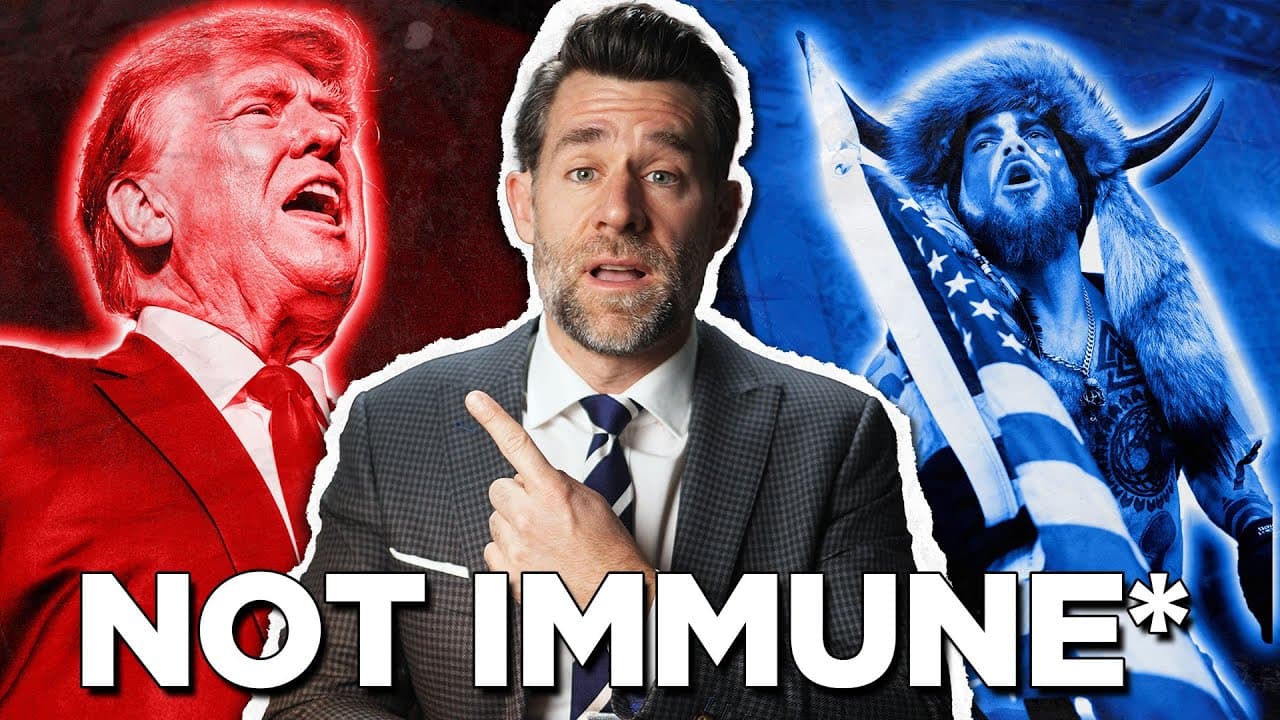
Yes, presidents can be criminally prosecuted for illegal actions taken while in office. A recent court ruling confirmed that former President Trump is not immune from prosecution, reaffirming that presidential immunity does not protect against criminal charges for acts committed during their term. This decision emphasizes the accountability of former presidents under the law.
Transcript
- [Judge] I asked you a yes or no question. Could a president who ordered SEAL Team Six to assassinate a political rival who was not impeached, would he be subject to criminal prosecution? - [D. John] If he were impeached and convicted first and so- - [Judge] So your answer is no. - Trump is not immune. No, this is not a COVID thing. It's a legal t... Read More
Key Insights
- 🧑💼 The court ruling affirms that presidents can be subject to criminal prosecution for crimes committed while in office, rejecting the idea of presidential immunity.
- 😨 The ruling highlights the separation of powers doctrine and the duty of the president to take care that the laws be faithfully executed.
- 👮 It clarifies that the Impeachment Judgment Clause does not prevent criminal prosecution of a former president and emphasizes that the public has an interest in the enforcement of criminal laws.
Install to Summarize YouTube Videos and Get Transcripts
Explore YouTube Video Summarizer or Get YouTube Transcript Extractor
Questions & Answers
Q: Can a president order the assassination of a political rival without facing criminal prosecution?
No, the recent court ruling confirms that presidents can be subject to criminal prosecution if they commit crimes, including ordering the assassination of a political rival. Presidential immunity does not protect them from criminal liability.
Q: Does the court ruling mean that former President Trump will be prosecuted for election interference?
The court ruling paves the way for the criminal case against Trump for election interference to proceed. However, further legal processes and potential appeals could impact the outcome.
Q: Can presidents claim immunity from criminal prosecution based on the Impeachment Judgment Clause?
The court ruling rejects the argument that presidents can claim immunity from criminal prosecution unless they have been impeached and convicted by Congress. Impeachment and criminal prosecution are separate processes, and the Impeachment Judgment Clause does not grant blanket immunity.
Q: What are the potential implications of the court ruling?
The court ruling establishes that presidents are not above the law and can be held accountable for their actions. It reinforces the importance of the enforcement of criminal laws and the duty of the president to faithfully execute those laws.
Summary & Key Takeaways
-
The court ruling clears the way for the criminal case against former President Donald Trump for election interference to proceed.
-
The ruling reaffirms that presidents are not immune from criminal prosecution if they break the law, even after leaving office.
-
It dismisses arguments that the judiciary has no power over executive acts and that presidential immunity is necessary to avoid a chilling effect on the president's ability to act.
Read in Other Languages (beta)
Share This Summary 📚
Summarize YouTube Videos and Get Video Transcripts with 1-Click
Try YouTube Summary with ChatGPT & Claude or YouTube Transcript Generator
Explore More Summaries from LegalEagle 📚



Summarize YouTube Videos and Get Video Transcripts with 1-Click
Try YouTube Summary with ChatGPT & Claude or YouTube Transcript Generator