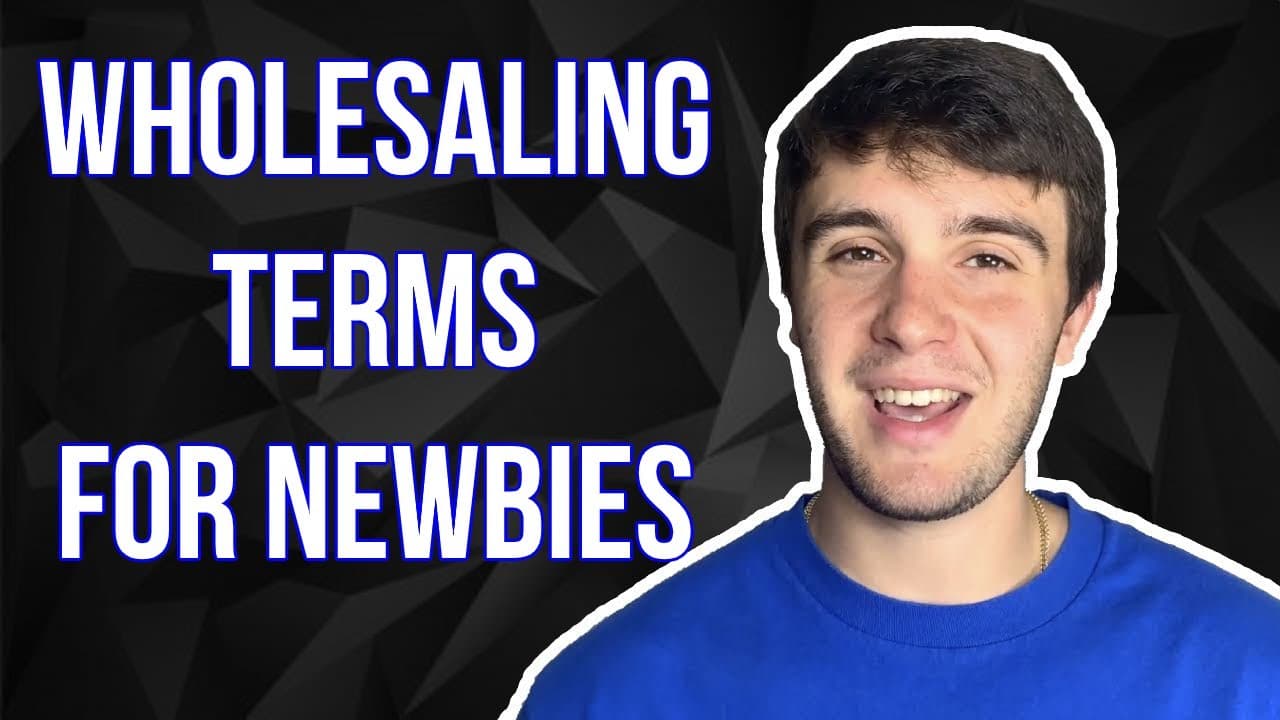
Wholesaling Real Estate Terms & Lingo for Beginners
TL;DR
Learn the language of real estate wholesaling to effectively communicate with experienced investors and understand important terms and concepts.
Transcript
so you want to learn real estate wholesaling before we start learning real estate wholesaling we got to learn a couple things it's like moving to spain if you move to spain you're going to have to learn the language there if you move to mexico you're going to have to learn the language there so real estate wholesaling has their own language it's ca... Read More
Key Insights
- 🔰 Real estate wholesaling has its own unique language and terminology that can be overwhelming for beginners.
- ❓ Understanding real estate lingo is essential for effective communication and success in the industry.
- 🍉 Important terms to know include title and title insurance, due diligence period, contingencies, proof of funds, MLS, closing, closing costs, and comparables.
- 🥶 Wholesalers rely on cash buyers, motivated sellers, and marketing strategies like bandit signs, cold calling, direct mail, and SMS text blasting.
- 👻 Virtual wholesaling allows investors to conduct business remotely, while driving for dollars helps identify distressed properties.
- 🤩 Other key concepts include assignment of contract, double closing, bird dogs, and skip tracing.
- 🤑 Having a solid understanding of real estate contracts, underwriting, and financing options like hard money loans and FHA loans is crucial for wholesalers.
- 🎯 Wholesalers often target motivated sellers, absentee owners, and properties in foreclosure or probate.
Install to Summarize YouTube Videos and Get Transcripts
Explore YouTube Video Summarizer or Get YouTube Transcript Extractor
Questions & Answers
Q: What is title and title insurance in real estate wholesaling?
Title and title insurance ensure that the buyer is the rightful owner of the property without any disputes or liens. It is a crucial step in the closing process to protect the buyer's investment.
Q: What is the due diligence period in real estate wholesaling?
The due diligence period is a specific timeframe where the buyer can thoroughly examine the property and renegotiate or back out of the contract if any issues are found. It allows the buyer to ensure the property meets their requirements.
Q: What are contingencies in real estate wholesaling?
Contingencies are conditions that must be met for a transaction to proceed. For example, a buyer may include a contingency stating that the sale is contingent upon the approval of an inspection. This allows the buyer to back out if certain conditions are not met.
Q: What is proof of funds in real estate wholesaling?
Proof of funds is a statement from a financial institution verifying that the buyer has enough funds to complete the purchase. It is important for wholesalers to ensure their cash buyers have the necessary funds to close the deal.
Q: What is the MLS in real estate wholesaling?
The MLS (Multiple Listing Service) is a database used by licensed real estate agents to list properties on the market. It is a valuable resource for both buyers and sellers to search for properties and gather information.
Q: What is closing in real estate wholesaling?
Closing is the final meeting between the buyer and seller where all necessary paperwork is completed, funds are exchanged, and the transaction is finalized. It is the last step before the property officially changes ownership.
Q: What are closing costs in real estate wholesaling?
Closing costs are the expenses associated with completing the sale of a property. They typically include fees for title insurance, taxes, property fees, and other miscellaneous charges. These costs are typically paid by both the buyer and seller.
Q: What are comparables in real estate wholesaling?
Comparables, also known as comps, are similar properties in the same area that have recently sold. They are used by real estate investors to determine the value of a property based on similar sales in the vicinity.
Summary & Key Takeaways
-
Real estate wholesaling has its own language, including terms and terminology that can be confusing for beginners.
-
Understanding real estate lingo is crucial for effective communication and success in the wholesaling industry.
-
Key terms to know include title and title insurance, due diligence period, contingencies, proof of funds, MLS, closing, closing costs, and comparables.
Read in Other Languages (beta)
Share This Summary 📚
Summarize YouTube Videos and Get Video Transcripts with 1-Click
Try YouTube Summary with ChatGPT & Claude or YouTube Transcript Generator
Explore More Summaries from Flip With Rick 📚


Summarize YouTube Videos and Get Video Transcripts with 1-Click
Try YouTube Summary with ChatGPT & Claude or YouTube Transcript Generator