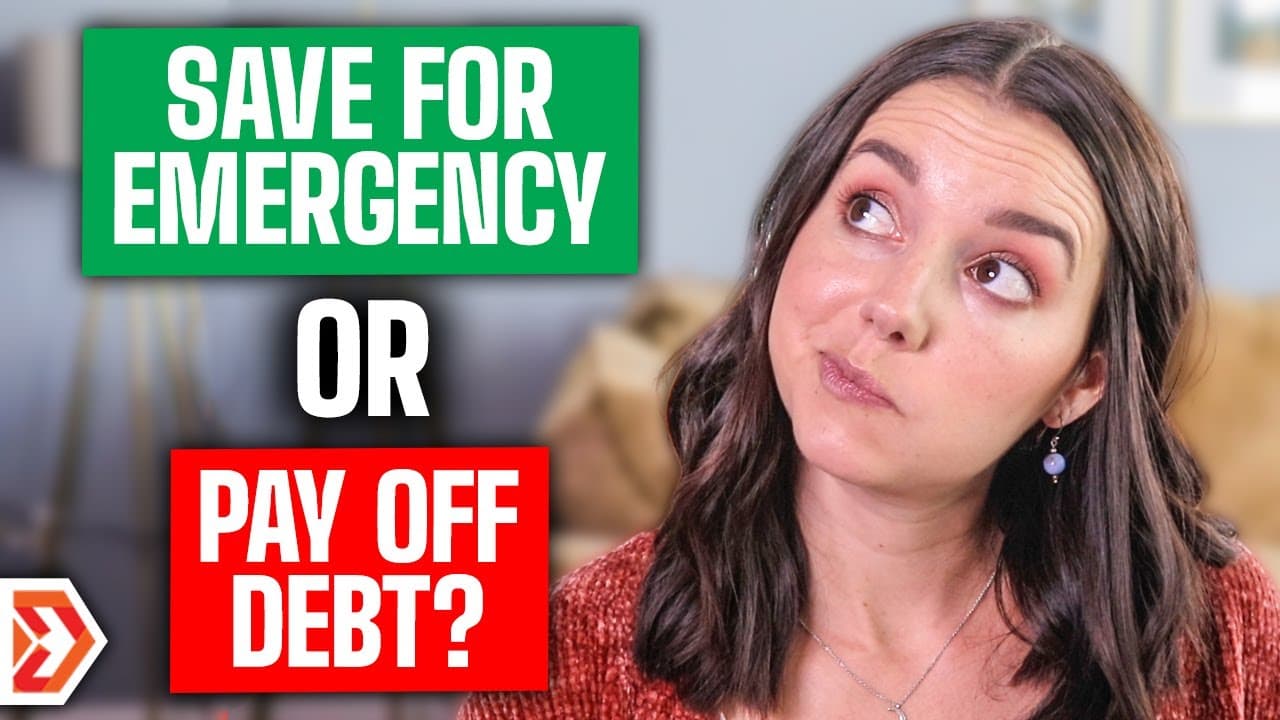
Should I Build an Emergency Fund or Pay Off Debt First?
TL;DR
Always prioritize building an emergency fund before paying off debt. Aim for 2-3 months' worth of living expenses while in debt and 6 months or more when debt-free. This safety net helps prevent further debt in case of emergencies, such as job loss or unexpected expenses.
Transcript
a lot of people get tripped up on whether or not they should start with the emergency fund or continuing to pay off debt I'm going to answer this question and a lot of common questions I get about this particular scenario in this video hey guys it's Justine with debt free Millennials the channel to help you crush your debt and live payment free now... Read More
Key Insights
- 🚨 Prioritizing the emergency fund over paying off debt prevents further debt and provides a safety net for emergencies.
- 🚙 Basic living expenses, such as rent/mortgage, utilities, groceries, and car-related expenses, should be covered by the emergency fund.
- 🍳 Breaking down the emergency fund into incremental goals makes it more manageable and less overwhelming.
- 🤑 Money is energy - focusing all extra money towards one goal, such as the emergency fund, can create significant impact.
- 🈷️ The starter emergency fund should aim for 2-3 months of living expenses in debt and 6 months or more when debt-free.
- 🏛️ Paying only the minimums on debt while building the emergency fund may feel scary, but it is a smarter approach to avoid further debt.
- 🚨 A $1,000 emergency fund is often not enough to cover basic emergencies like car repairs or phone replacements.
Install to Summarize YouTube Videos and Get Transcripts
Explore YouTube Video Summarizer or Get YouTube Transcript Extractor
Questions & Answers
Q: Should I focus on paying the minimums on my debt while building the emergency fund?
While it may feel scary, prioritizing the emergency fund is crucial. Adding more to your debt while trying to build the emergency fund can lead to depletion of the fund when emergencies occur, causing further debt.
Q: Why aim for 2-3 months of living expenses for the starter emergency fund?
A $1,000 emergency fund is not enough to cover basic emergencies, such as car repairs or expensive phone replacements. Having 2-3 months of living expenses provides a sense of safety and ensures adequate coverage.
Q: Where should I keep my emergency fund?
Keep the emergency fund in an easily accessible or liquid account, such as a high-yield savings account. These accounts offer higher interest rates compared to traditional savings or money market accounts.
Q: How much should I aim for in my emergency fund?
Aim for 2-3 months of living expenses if you are still in debt. When debt-free, aim for a fully funded emergency fund with 6 months or more worth of living expenses, depending on personal comfort levels and financial goals.
Summary & Key Takeaways
-
It is important to prioritize the emergency fund before paying off debt to prevent further debt and cover basic living expenses in case of emergencies.
-
Basic living expenses include rent or mortgage, utilities, groceries, car-related expenses, and internet and cell phone plans.
-
The size of the emergency fund depends on individual comfort levels and financial goals, but generally 2-3 months of living expenses in debt and 6 months or more when debt-free.
Read in Other Languages (beta)
Share This Summary 📚
Summarize YouTube Videos and Get Video Transcripts with 1-Click
Try YouTube Summary with ChatGPT & Claude or YouTube Transcript Generator
Explore More Summaries from Debt Free Millennials 📚




Summarize YouTube Videos and Get Video Transcripts with 1-Click
Try YouTube Summary with ChatGPT & Claude or YouTube Transcript Generator