Is Racial Profiling Now Legal in the U.S.?
TL;DR
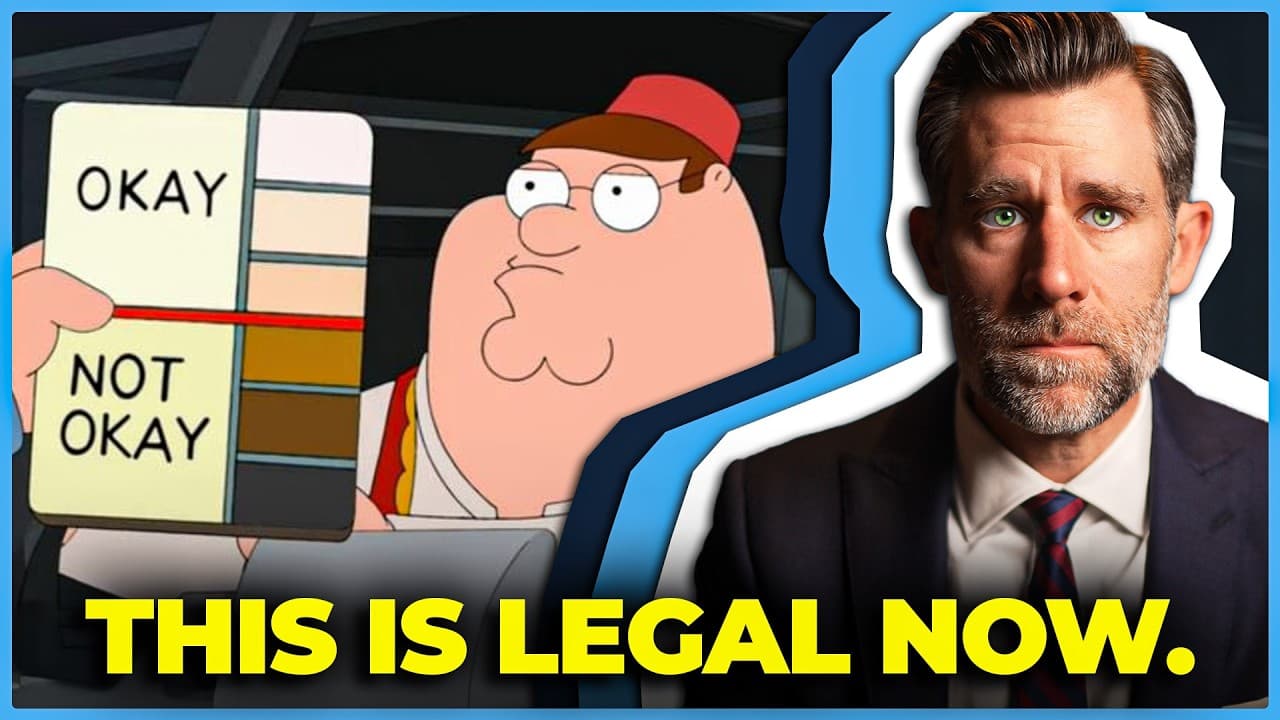
The Supreme Court has temporarily allowed ICE to use racial profiling as a factor in immigration enforcement, sparking controversy and fear among Latino communities. This decision follows a shadow docket order and could lead to increased detentions based on race and ethnicity until a full case is heard by the court.
Transcript
This is horrible, but Trump and the Supreme Court are really making America great again for racism. Now the feds can just pull you over for looking Latino. Sorry, brown people. You should have just chosen not to look brown. I'm out of words other than disgusting and furious. The upshot is that we're going to be living in a world where masked federa... Read More
Key Insights
- The Supreme Court issued a shadow docket order allowing ICE to use racial profiling in immigration enforcement.
- Justice Kavanagh supported the decision, citing reasonable suspicion as a low standard for detentions.
- The ruling allows ICE to target individuals based on race, language, and work location.
- The decision is temporary but signals potential future rulings in favor of the Trump administration.
- Critics argue the decision contradicts constitutional protections against unreasonable searches and seizures.
- Justice Sotomayor dissented, highlighting the harm to innocent individuals and communities.
- The ruling has led to fear and decreased public participation in daily activities among targeted communities.
- The case continues in lower courts, but the Supreme Court's stance suggests a challenging path for plaintiffs.
Install to Summarize YouTube Videos and Get Transcripts
Explore YouTube Video Summarizer or Get YouTube Transcript Extractor
Questions & Answers
Q: How does the Supreme Court's ruling affect ICE's enforcement practices?
The Supreme Court's ruling allows ICE to use racial profiling as a factor in immigration enforcement, enabling agents to detain individuals based on race, language, and work location. This temporary decision lifts an injunction against these practices, potentially leading to increased detentions among Latino communities until a full case is heard.
Q: What is the significance of the shadow docket order in this case?
The shadow docket order is significant because it allows the Supreme Court to make a quick decision without full briefing or oral arguments. In this case, it temporarily permits ICE to use racial profiling in detentions, sparking controversy and fear among affected communities. It indicates the court's potential leanings in future rulings on similar issues.
Q: What are the constitutional concerns raised by the Supreme Court's decision?
Critics argue that the decision contradicts Fourth Amendment protections against unreasonable searches and seizures by allowing racial profiling as a basis for detentions. Justice Sotomayor's dissent highlights the harm to innocent individuals and communities, emphasizing the need for more particularized and objective suspicion in law enforcement practices.
Q: How did Justice Kavanagh justify the decision to allow racial profiling?
Justice Kavanagh justified the decision by emphasizing that reasonable suspicion is a low standard for detentions in immigration enforcement. He argued that factors like race and language can be relevant when combined with other circumstances, despite critics' concerns about the potential for widespread abuse and harm to innocent individuals.
Q: What impact has the ruling had on Latino communities?
The ruling has led to fear and decreased public participation in daily activities among Latino communities, as individuals worry about being detained based on their appearance or language. Reports indicate that people are avoiding work, school, and public spaces, highlighting the significant social and economic impact of the decision on these communities.
Q: What are the next steps for the plaintiffs in this legal case?
The case continues in lower courts, where the merits will be fully considered. However, the Supreme Court's stance in the shadow docket order suggests a challenging path for plaintiffs seeking to protect their Fourth Amendment rights. They face potential barriers in proving standing and success on the merits, given the court's current leanings.
Q: How does this ruling compare to previous Supreme Court decisions on similar issues?
This ruling contrasts with previous decisions that required more particularized suspicion for detentions. Justice Sotomayor's dissent cites case law where factors like ethnicity and location were deemed insufficient for reasonable suspicion. The current decision suggests a shift in legal precedent, potentially allowing broader discretion in immigration enforcement.
Q: What are the broader implications of the Supreme Court's decision for immigration enforcement?
The decision could set a precedent for increased use of racial profiling in immigration enforcement, potentially leading to more aggressive detentions based on appearance and language. It raises concerns about the erosion of constitutional protections and the potential for similar practices to be extended to other areas of law enforcement, affecting civil liberties more broadly.
Summary & Key Takeaways
-
The Supreme Court's shadow docket order permits ICE to use racial profiling in immigration enforcement, igniting fears of increased detentions among Latino communities. Justice Kavanagh's concurrence supports the decision, emphasizing reasonable suspicion as a standard. Critics, including Justice Sotomayor, argue it undermines constitutional protections.
-
The decision temporarily lifts an injunction against using race, language, and work location as factors for detentions, signaling potential future rulings favoring the Trump administration. The case continues in lower courts, but the Supreme Court's stance suggests a challenging path for plaintiffs seeking to protect Fourth Amendment rights.
-
The ruling has led to fear and decreased public participation in daily activities among targeted communities. Critics highlight the decision's contradiction with constitutional protections against unreasonable searches and seizures, while the Supreme Court's stance indicates a potential shift in legal precedent for immigration enforcement.
Read in Other Languages (beta)
Share This Summary 📚
Summarize YouTube Videos and Get Video Transcripts with 1-Click
Try YouTube Summary with ChatGPT & Claude or YouTube Transcript Generator
Explore More Summaries from LegalEagle 📚




Summarize YouTube Videos and Get Video Transcripts with 1-Click
Try YouTube Summary with ChatGPT & Claude or YouTube Transcript Generator