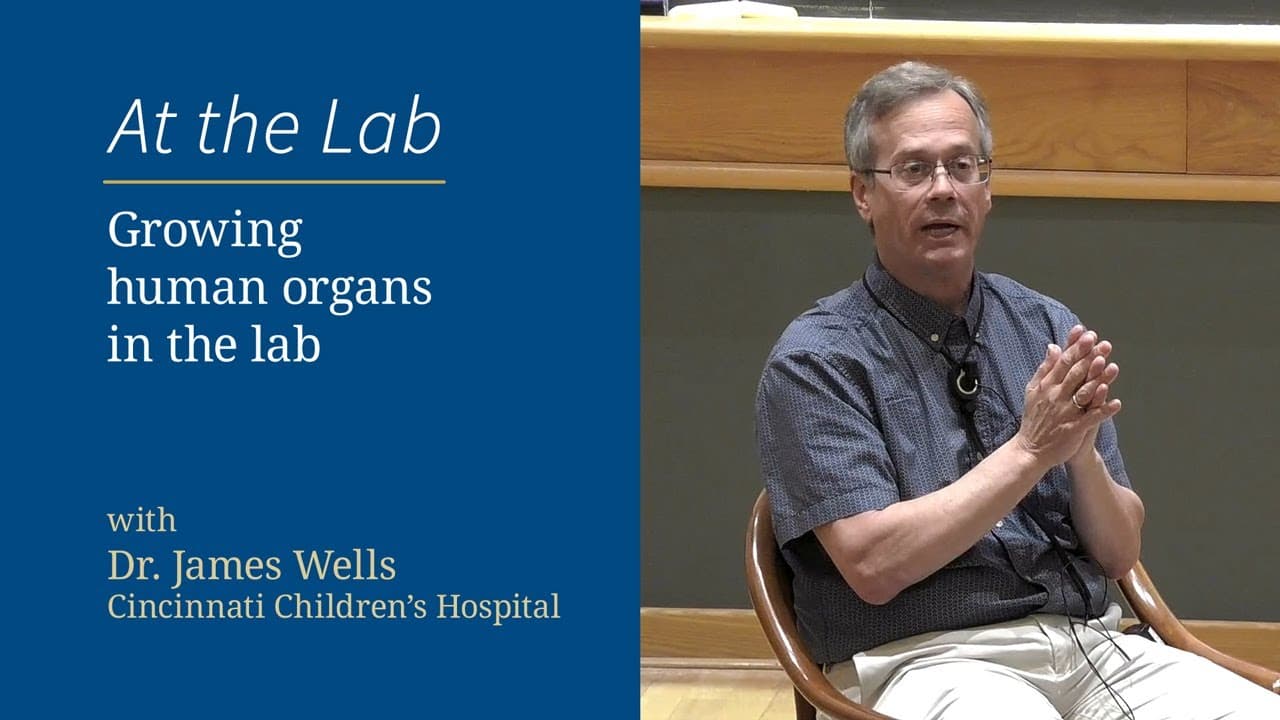
Growing human organs in the lab
TL;DR
Stem cells can now create organoids for medical advancements.
Transcript
Well, it's never good to start a talk when you've become speechless by a very generous and a fantastic introduction. And John and Bruce and Terry, I really appreciate the invitation. And I'm going to wander around. Podiums kind of make me feel a little bit hemmed in. So this is just a general sort of overview about what I want to talk to you today.... Read More
Key Insights
- Stem cell technology has advanced to the point where it's possible to create patient-specific stem cells from just a few drops of blood, which can then be used to grow various types of tissues in the lab.
- Organoids, which are miniature versions of organs, have been successfully developed from pluripotent stem cells and can mimic many functions of actual human organs.
- Organoids are valuable for diagnosing diseases, as seen in cases where they helped identify subtle pathologies that were initially missed in patients.
- The use of organoids in drug discovery and testing is transformative, allowing for preclinical testing on human-like tissues, which can improve the success rate of drugs in humans.
- Stem cell-derived organoids are being explored as potential sources for therapeutic tissue replacements, addressing the shortage of organs available for transplantation.
- There are ongoing clinical trials using stem cell-derived tissues for various diseases, including diabetes, heart disease, and Parkinson's, showcasing the potential of these technologies in treating major health conditions.
- Ethical considerations around stem cell technologies are crucial, with discussions focusing on cost, accessibility, and the potential for misuse in areas like reproductive technologies.
- The field of organoid research has expanded significantly, with numerous labs worldwide exploring their potential in understanding and treating a range of diseases.
Install to Summarize YouTube Videos and Get Transcripts
Explore YouTube Video Summarizer or Get YouTube Transcript Extractor
Questions & Answers
Q: How have stem cells revolutionized the creation of human tissues?
Stem cells have revolutionized the creation of human tissues by enabling the development of organoids, which are miniature versions of human organs grown in the lab. These stem cells can be patient-specific, derived from simple blood samples, and coaxed into forming various tissue types. This advancement allows for personalized medical treatments, better drug testing, and the potential for creating therapeutic tissue replacements.
Q: What are organoids and how are they created?
Organoids are miniature, simplified versions of organs that are created from pluripotent stem cells in a laboratory setting. These stem cells are treated with specific chemical cues to differentiate into various cell types, forming structures that mimic the function and architecture of real organs. Organoids can be used for research, diagnostics, and testing new drugs, providing a closer approximation to human physiology than traditional models.
Q: What are some practical applications of organoids in medicine?
Organoids have several practical applications in medicine, including disease diagnostics, drug discovery, and therapeutic tissue replacements. They can help identify subtle pathologies in patients, test the efficacy and safety of drugs before clinical trials, and potentially serve as a renewable source of cells and tissues for transplantation. These applications are transforming precision medicine and improving patient outcomes across various diseases.
Q: How is the field addressing ethical concerns related to stem cell and organoid research?
The field addresses ethical concerns by engaging in ongoing discussions about the implications of stem cell and organoid research. Key issues include the cost and accessibility of treatments, the potential for unregulated therapies, and the ethical considerations of creating reproductive cells or synthetic embryos. Scientists emphasize transparency, self-monitoring, and collaboration with regulatory bodies to ensure responsible advancement of these technologies.
Q: What challenges remain in the development and application of organoids?
Challenges in the development and application of organoids include scaling up production to meet therapeutic demands, ensuring regulatory compliance for clinical use, and creating more complex organoids to treat intricate diseases. Additionally, addressing ethical and cost-related issues is crucial to ensure equitable access to these advanced medical technologies. Ongoing research and collaboration are needed to overcome these hurdles and fully realize the potential of organoids.
Q: How have organoids contributed to drug discovery and testing?
Organoids have significantly contributed to drug discovery and testing by providing a more accurate model of human tissue response compared to traditional animal models. They allow researchers to test the efficacy and safety of drugs on human-like tissues, increasing the likelihood of successful outcomes in clinical trials. This approach accelerates the drug development process and enhances the precision of treatments for various diseases.
Q: What is the potential impact of organoids on organ transplantation?
Organoids have the potential to greatly impact organ transplantation by providing a renewable source of cells and tissues for therapeutic use. This could alleviate the critical shortage of donor organs and reduce waiting times for patients in need of transplants. By creating patient-specific tissues, organoids also minimize the risk of rejection and improve the overall success rates of transplantation procedures, offering new hope for patients with organ failure.
Q: What future directions do researchers envision for the field of organoids?
Future directions for the field of organoids include advancing the complexity and functionality of organoids to better replicate full organ systems, integrating organoids into personalized medicine for tailored treatments, and exploring new therapeutic applications. Researchers aim to refine the production processes, address ethical considerations, and expand the use of organoids in regenerative medicine, ultimately improving patient care and outcomes across a wide range of medical conditions.
Summary & Key Takeaways
-
The development of organoids from pluripotent stem cells marks a significant advancement in biomedical science, allowing for the creation of miniature organs that mimic the function of actual human organs. These organoids are used for diagnostics, drug testing, and potential therapeutic applications.
-
Organoids have been instrumental in diagnosing previously undetected pathologies, as well as in the preclinical testing of drugs, offering a more accurate representation of human responses than traditional animal models. This has led to improved clinical outcomes for patients.
-
The potential for organoids to serve as sources for therapeutic tissue replacements is immense, addressing the critical shortage of organs for transplantation. However, ethical considerations, such as cost and the potential for misuse, must be carefully managed as the field progresses.
Read in Other Languages (beta)
Share This Summary 📚
Summarize YouTube Videos and Get Video Transcripts with 1-Click
Try YouTube Summary with ChatGPT & Claude or YouTube Transcript Generator
Explore More Summaries from Cold Spring Harbor Laboratory 📚




Summarize YouTube Videos and Get Video Transcripts with 1-Click
Try YouTube Summary with ChatGPT & Claude or YouTube Transcript Generator