How to Optimize Product Pages for Google Search
TL;DR
To improve search ranking for similar products, use internal linking and canonical tags to guide Google's crawler. Ensure the main product page is prioritized by setting it as the canonical version. Both internal linking and canonical tags are effective methods to guide search engines in understanding the primary content focus.
Transcript
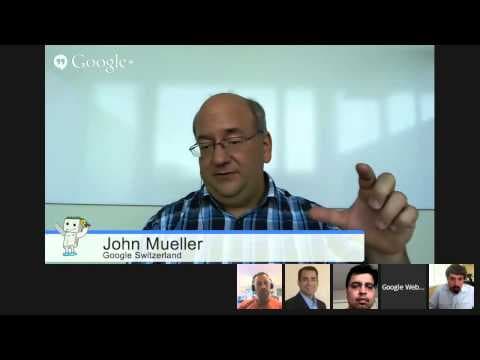
all right welcome everyone to today's Google Webmaster central office hours hangouts my name is John Mueller I'm a webmaster trends analyst here at Google in Switzerland and part of what we do are these webmaster office hours hangouts where webmasters and publishers can jump in and ask anything that's on there now regards to search and their websit... Read More
Key Insights
- Internal linking helps guide Google's crawler to prioritize certain pages.
- Canonical tags can designate a primary page among similar content.
- JavaScript can be used to prevent indexing of unwanted content.
- Google's URL removal tool hides URLs from search results but doesn't affect indexing.
- Fake news can disrupt search results, requiring direct communication with Google.
- Core updates are not about fixing broken content but improving relevance.
- Homepage links often have higher authority due to external linking patterns.
- Nofollow tags are optional for transparency sections linked across articles.
Install to Summarize YouTube Videos and Get Transcripts
Explore YouTube Video Summarizer or Get YouTube Transcript Extractor
Questions & Answers
Q: How to prioritize a product page for search engines?
To prioritize a product page, use internal linking to direct Google's crawler to it and set it as the canonical version if there are similar pages. This helps Google understand which page should be prioritized and indexed as the main content focus, improving its search ranking.
Q: What is the role of canonical tags in SEO?
Canonical tags help designate a primary page among similar content, guiding search engines to index the correct version. By setting a canonical tag on a product page, webmasters can ensure that search engines recognize it as the main page, which helps in consolidating ranking signals and avoiding duplicate content issues.
Q: Can JavaScript prevent unwanted content indexing?
Yes, JavaScript can be used to prevent unwanted content from being indexed by search engines. By implementing JavaScript that serves a noindex meta tag for specific conditions, webmasters can control which content is indexed, helping to prevent the indexing of duplicate or irrelevant content by Google's crawler.
Q: How effective is Google's URL removal tool?
Google's URL removal tool is effective for temporarily hiding URLs from search results. However, it does not affect the actual indexing of the pages. This tool can be useful for managing search visibility, especially for URLs that should not appear in search results due to privacy or content issues.
Q: How does fake news affect search visibility?
Fake news can disrupt search visibility by appearing in search results, potentially overshadowing accurate content. This can be particularly challenging for sites that focus on factual reporting. Addressing this issue may require direct communication with Google to report inaccuracies and seek resolution.
Q: What are Google's core updates focused on?
Google's core updates focus on improving the relevance of search results rather than fixing broken content. These updates assess the overall relevance and quality of websites, prompting webmasters to enhance their content to align with current user expectations and search intent, rather than addressing specific broken elements.
Q: Why do homepage links have higher authority?
Homepage links often have higher authority because they are typically the most linked-to page on a website, both internally and externally. This linking pattern results in higher PageRank for the homepage, making it a key factor in determining the importance and relevance of other pages linked from it.
Q: Are nofollow tags necessary for transparency sections?
Nofollow tags are generally unnecessary for transparency sections linked across articles. Google is adept at recognizing the context and relevance of pages within a website, so using nofollow on internal links to transparency sections is usually not required, as it does not significantly impact the understanding of site structure.
Summary & Key Takeaways
-
Google's Webmaster Central office hours provide insights into optimizing search results. Internal linking and canonical tags are effective for managing similar product pages. JavaScript can help in preventing unwanted content from being indexed, and Google's URL removal tool is useful for hiding URLs from search results.
-
Fake news can affect search visibility, and Google's core updates focus on relevance rather than fixing broken content. The homepage often has higher authority due to external links, and nofollow tags are generally unnecessary for transparency sections linked across articles.
-
Understanding Google's crawling and indexing processes is crucial for effective SEO. Using tools like the URL removal tool and canonical tags can help manage search visibility, while JavaScript offers solutions for preventing unwanted indexing. Communication with Google can address issues like fake news affecting search results.
Read in Other Languages (beta)
Share This Summary 📚
Summarize YouTube Videos and Get Video Transcripts with 1-Click
Try YouTube Summary with ChatGPT & Claude or YouTube Transcript Generator
Explore More Summaries from Google Search Central 📚


Summarize YouTube Videos and Get Video Transcripts with 1-Click
Try YouTube Summary with ChatGPT & Claude or YouTube Transcript Generator