How Does Ecological Approach Aid Skill Learning?
TL;DR
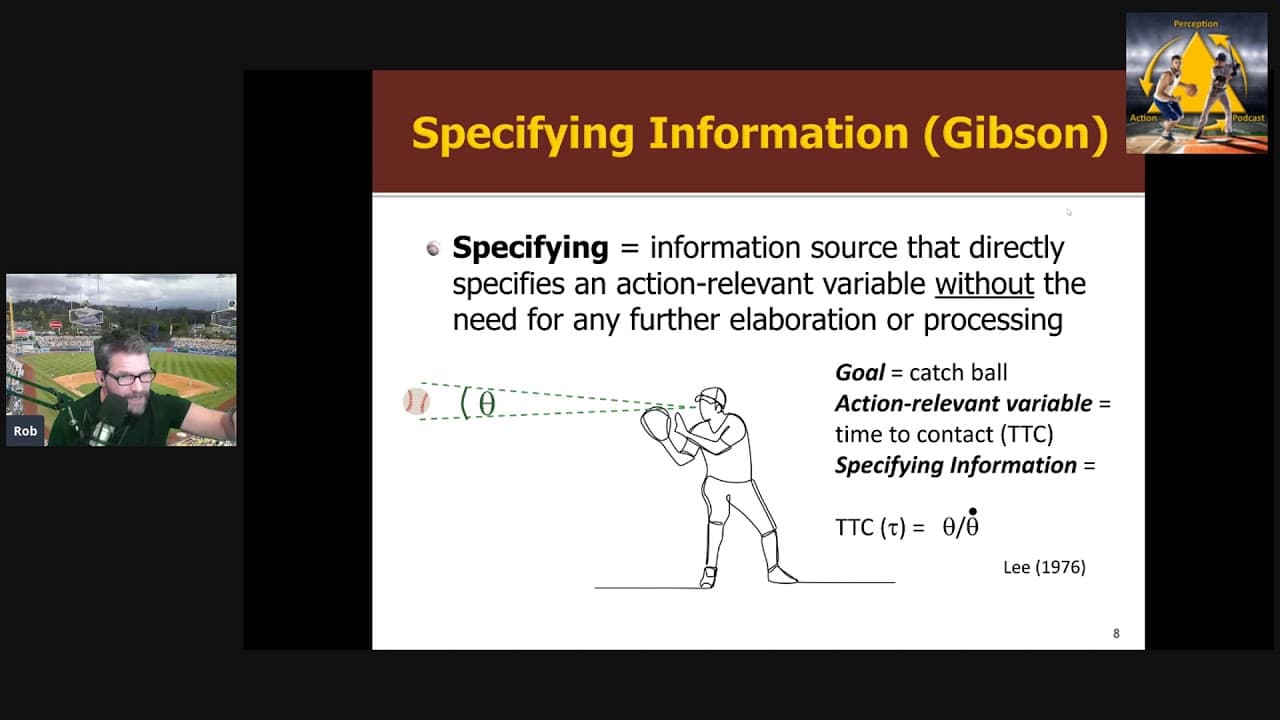
The ecological approach to skill acquisition emphasizes using specifying information directly from the environment to control actions without further processing. This contrasts with the information processing approach, which relies on internal models and calculations. Learning occurs through direct interaction with the environment, changing the information sources used, and calibrating control laws.
Transcript
hi everyone this is rob gray from asu and the perception action podcast again in this video i want to continue on talking about some of the key terminology and ideas within the ecological approach to skill acquisition in this video i want to focus on the idea of information in contrast what we mean by the different types of information and the diff... Read More
Key Insights
- The ecological approach focuses on using specifying information directly from the environment to guide actions.
- Specifying information sources provide all necessary details for action without further processing.
- In contrast, the information processing approach relies on internal models and indirect perception.
- Learning involves changing the information sources used and calibrating control laws.
- Specifying information sources are higher-order variables that combine lower-order data.
- The concept of tau illustrates specifying information by providing time-to-contact without further calculations.
- Variability in practice is crucial for learning and shifting attention to specifying information sources.
- Direct learning is about changing the relationship with the environment rather than accumulating knowledge.
Install to Summarize YouTube Videos and Get Transcripts
Explore YouTube Video Summarizer or Get YouTube Transcript Extractor
Questions & Answers
Q: How does the ecological approach to skill acquisition differ from the information processing approach?
The ecological approach to skill acquisition emphasizes using specifying information directly from the environment to guide actions, without the need for internal processing or calculations. In contrast, the information processing approach relies on internal models and indirect perception, where the brain computes necessary variables from cues. The ecological approach focuses on direct interaction with the environment and using higher-order variables like tau for action control.
Q: What is specifying information in the ecological approach?
Specifying information in the ecological approach refers to environmental information sources that directly provide all necessary details for guiding actions without further processing. These sources are often higher-order variables that combine lower-order data, allowing individuals to control actions based on direct perception. An example is the concept of tau, which provides time-to-contact information, enabling precise action control without additional calculations.
Q: Why is variability important in the ecological approach to learning?
Variability is crucial in the ecological approach to learning because it promotes the shift of attention to specifying information sources. By introducing variability in practice, learners are encouraged to explore different information sources, recalibrate their control laws, and adopt new strategies for skill acquisition. This variability helps prevent reliance on non-specifying information and fosters the development of more effective, flexible skill execution.
Q: What role does tau play in the ecological approach?
Tau is a key concept in the ecological approach, representing a specifying information source that provides time-to-contact information without the need for further calculations. It is a higher-order variable derived from the angular size and its rate of change, allowing individuals to control actions like braking or catching a ball based on direct perception. Tau exemplifies how specifying information sources can guide precise action control in dynamic environments.
Q: How does learning occur in the ecological approach?
Learning in the ecological approach occurs through direct interaction with the environment, where individuals change the information sources they use, calibrate their control laws, and adapt their strategies based on experience. This process, known as direct learning, focuses on altering the relationship with the environment rather than accumulating knowledge. Learners become attuned to specifying information sources, enabling more efficient and effective skill execution.
Q: How does the ecological approach view memory in skill acquisition?
The ecological approach views memory in skill acquisition as a change in the relationship with the environment rather than the accumulation of knowledge or memories. It suggests that learning involves attuning to different information sources, adjusting control laws, and calibrating actions based on experience. This approach emphasizes the dynamic interaction with the environment, where memory is seen as the ability to recall how to relate to the environment for effective action control.
Q: What is the importance of higher-order variables in the ecological approach?
Higher-order variables are crucial in the ecological approach because they represent specifying information sources that provide all necessary details for action control without further processing. These variables combine lower-order data, allowing individuals to perceive and act based on direct information from the environment. Higher-order variables like tau enable precise, efficient action control, highlighting the ecological approach's focus on direct perception and online control.
Q: How does the ecological approach suggest improving skill learning?
The ecological approach suggests improving skill learning by emphasizing variability in practice, which encourages learners to shift their attention to specifying information sources. By introducing diverse practice scenarios, individuals are prompted to explore different information sources, recalibrate their control laws, and adopt new strategies for skill acquisition. This approach fosters adaptability and flexibility, enabling learners to develop more effective, efficient skill execution in dynamic environments.
Summary & Key Takeaways
-
The ecological approach to skill acquisition emphasizes the use of specifying information directly from the environment to guide actions without the need for internal processing. This method contrasts with the information processing approach, which relies on internal models and indirect perception. Learning occurs through direct interaction with the environment, changing the information sources used, and calibrating control laws, with variability in practice being a key factor.
-
Specifying information sources provide all necessary details for action, allowing for direct perception and online control. These sources are higher-order variables that combine lower-order data, such as the concept of tau, which provides time-to-contact information without the need for further calculations. This approach suggests that learning is about changing the relationship with the environment rather than accumulating knowledge.
-
Variability in practice is crucial for learning in the ecological approach, as it encourages the shift of attention to specifying information sources. By introducing variability, learners are pushed to educate their attention to different information sources, recalibrate their control laws, and adopt new strategies for skill acquisition. This process is described as direct learning, which focuses on changing the way individuals relate to their environment.
Read in Other Languages (beta)
Share This Summary 📚
Summarize YouTube Videos and Get Video Transcripts with 1-Click
Try YouTube Summary with ChatGPT & Claude or YouTube Transcript Generator
Explore More Summaries from Rob Gray 📚



Summarize YouTube Videos and Get Video Transcripts with 1-Click
Try YouTube Summary with ChatGPT & Claude or YouTube Transcript Generator