Products
Features
YouTube Video Summarizer
Summarize YouTube videos
Web & PDF Highlighter
Highlight web pages & PDFs
Chat with PDF
Ask any PDF questions with AI
Ask AI Clone
Chat with your highlights & memories
Audio Transcriber
Transcribe audio files to text
Glasp Reader
Read and highlight articles
Kindle Highlight Export
Export your Kindle highlights
Idea Hatch
Hatch ideas from your highlights
Integrations
Obsidian Plugin
Notion Integration
Pocket Integration
Instapaper Integration
Medium Integration
Readwise Integration
Snipd Integration
Hypothesis Integration
Apps & Extensions
Chrome Extension
Safari Extension
Edge Add-ons
Firefox Add-ons
iOS App
Android App
Discover
Discover
Ideas
Discover new ideas and insights
Articles
Curated articles and insights
Books
Book recommendations by great minds
Posts
Essays and notes from readers
Quotes
Inspiring quotes collection
Videos
Curated videos and summaries
Explore Glasp
Glasp Newsletter
Weekly insights and updates
Glasp Talk
Interview series with great minds
Glasp Blog
Latest news and articles
Glasp Use Cases
Learn how others use Glasp
Build & Support
Glasp API
Access Glasp's API for developers
MCP Connector
Connect Glasp to Claude & ChatGPT
Community
Glasp Reddit Community
Students
Student discount and benefits
FAQs
Frequently Asked Questions
AboutPricing
DashboardLog inSign up

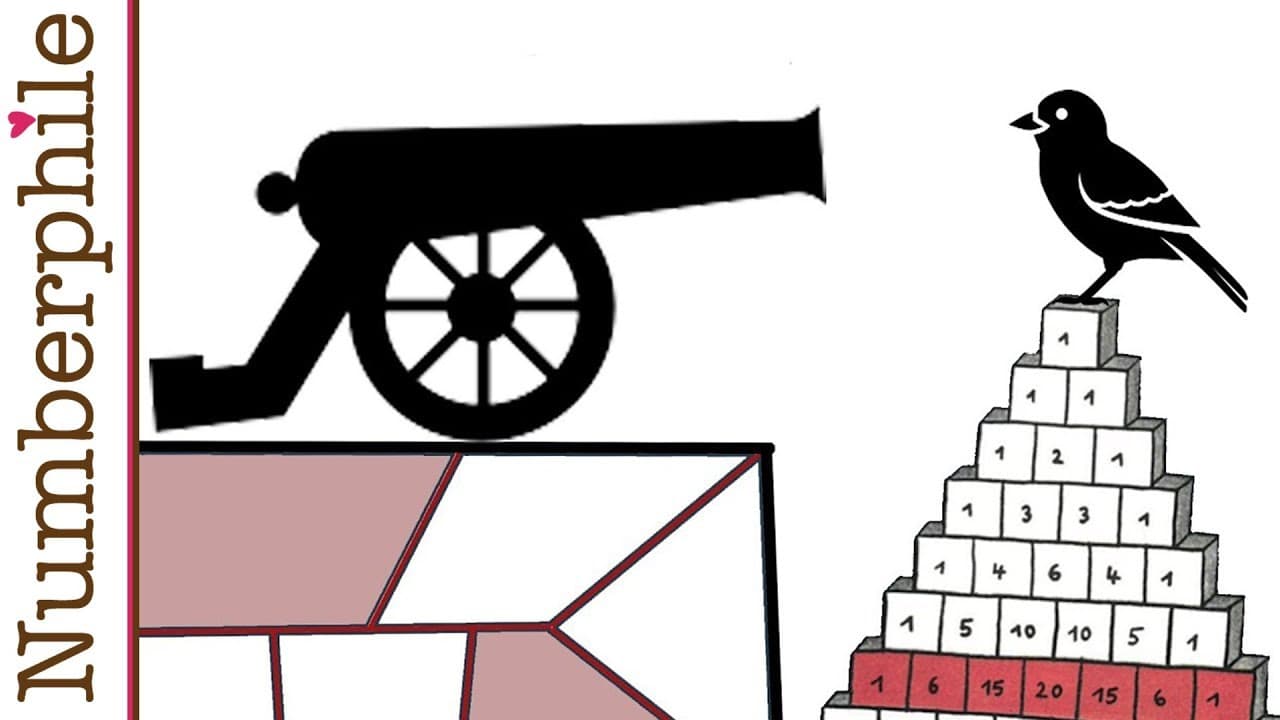
Cannons and Sparrows - Numberphile
517.7K views
•
January 22, 2018
by
Numberphile
YouTube video player
Cannons and Sparrows - Numberphile

TL;DR

This video discusses the problem of cutting a polygon into equal area and equal perimeter pieces and explores the solutions for different numbers of pieces.

Transcript

The video you're about to watch was described to me as firing cannons at sparrows. The sparrow being the pretty simple mathematical problem we're about to tell you about, and the cannon being the heavy artillery, the mathematical machinery, that has been used to try to conquer it. Now in the middle of the video we will encounter some of that heavy ... Read More

Key Insights

  • 🕰️ The problem of cutting a polygon into equal area and equal perimeter pieces becomes more complex as the number of pieces increases.
  • 🔨 The concept of optimal transport and equivariant obstruction theory are mathematical tools used to study the problem.
  • ✊ The problem has been solved for prime power values, indicating that polygons with those specific numbers of pieces can be cut according to the specified conditions.

Install to Summarize YouTube Videos and Get Transcripts

Explore YouTube Video Summarizer or Get YouTube Transcript Extractor

Questions & Answers

Q: What was the initial problem presented in the video?

The initial problem was to cut a polygon into a certain number of pieces with equal area and equal perimeter.

Q: How was the problem solved for the cases of two and three pieces?

For two pieces, the polygon was cut with a straight line that rotated continuously, ensuring equal area while the perimeter varied. For three pieces, a map from the space of configurations of three points to the space of three numbers was used to determine if equal perimeters were achieved.

Q: What is the significance of the values that have been solved for in the problem?

The values that have been solved for are the prime powers, indicating that the problem can be solved for polygons with those specific number of pieces.

Q: Are there still open questions in this mathematical problem?

Yes, the problem remains unsolved for certain numbers such as 6, 10, 12, 14, 15, and 21.

Summary & Key Takeaways

  • The video introduces a mathematical problem where a polygon needs to be cut into a specific number of pieces with equal area and equal perimeter.

  • The problem is initially solved for the cases of two and three pieces, but becomes more complex for larger numbers of pieces.

  • The concept of optimal transport and equivariant obstruction theory is introduced as mathematical tools used to explore the problem.


Read in Other Languages (beta)

English

Share This Summary 📚

Summarize YouTube Videos and Get Video Transcripts with 1-Click

Download browser extensions on:

Try YouTube Summary with ChatGPT & Claude or YouTube Transcript Generator

Explore More Summaries from Numberphile 📚
What Is Circle Inversion and How Does It Work? thumbnail
What Is Circle Inversion and How Does It Work?
Numberphile
What Is the Stern-Brocot Sequence and Its Significance? thumbnail
What Is the Stern-Brocot Sequence and Its Significance?
Numberphile
Vampire Numbers - Numberphile thumbnail
Vampire Numbers - Numberphile
Numberphile
Predators and Prey - Numberphile thumbnail
Predators and Prey - Numberphile
Numberphile
New Largest Known Prime Number - Numberphile thumbnail
New Largest Known Prime Number - Numberphile
Numberphile
What Are Euclid's Limitations on Geometric Constructions? thumbnail
What Are Euclid's Limitations on Geometric Constructions?
Numberphile

Summarize YouTube Videos and Get Video Transcripts with 1-Click

Download browser extensions on:

Try YouTube Summary with ChatGPT & Claude or YouTube Transcript Generator

Apps & Extensions

  • Chrome Extension
  • Safari Extension
  • Edge Add-ons
  • Firefox Add-ons
  • iOS App
  • Android App

Key Features

  • YouTube Video Summarizer
  • Web & PDF Summarizer
  • Web & PDF Highlighter
  • Chat with PDF
  • Ask AI Clone
  • Audio Transcriber
  • Glasp Reader
  • Kindle Highlight Export
  • Idea Hatch

Integrations

  • Obsidian Plugin
  • Notion Integration
  • Pocket Integration
  • Instapaper Integration
  • Medium Integration
  • Readwise Integration
  • Snipd Integration
  • Hypothesis Integration

More Features

  • APIs
  • MCP Connector
  • Blog & Post
  • Embed Links
  • Image Highlight
  • Personality Test
  • Quote Shots

Company

  • About us
  • Blog
  • Community
  • FAQs
  • Job Board
  • Newsletter
  • Pricing
Terms

•

Privacy

•

Guidelines

© 2026 Glasp Inc. All rights reserved.