Attack of the SHONGOLOLO!
TL;DR
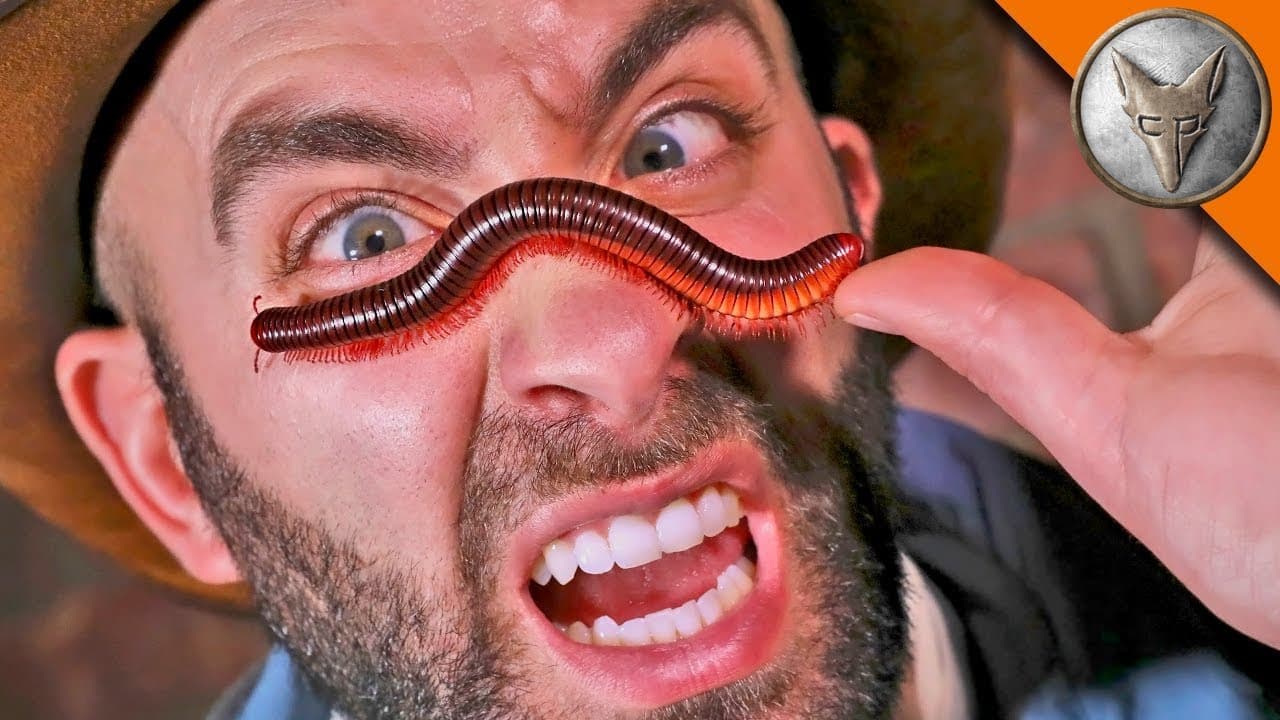
Coyote Peterson and his crew search for and find the red and black millipede, also known as the Shongololo, in South Africa's Tuinskloof Game Reserve.
Transcript
(fast music) - Oh, Shongololo.
- Got one? - This is the one we're looking for, the red and black millipede. Wow they are big. As the rumble of thunder echoed through the mountains and flashes of lightning illuminated the sky, heavy rains poured down saturating the wilds of South Africa. Tonight we are honkered down at the Tuinskloof Game Reserve wa... Read More
Key Insights
- 🇿🇦 South Africa's Tuinskloof Game Reserve is home to diverse wildlife, including the red and black millipede.
- 😪 Red coloration in millipedes serves as a warning to predators, suggesting potential toxicity.
- 🦿 Millipedes have around 400 legs, but no species has a thousand legs as the name suggests.
- 🍳 These creatures are vital for nutrient recycling in ecosystems, helping break down decaying matter.
- ❓ Millipedes are susceptible to extreme temperatures and drowning in excessive rainfall.
- 😪 The red and black millipede is fascinating to observe, with its unique movements and sensory structures.
- 🥺 The millipede's exoskeleton shedding process can lead to the appearance of white "dead" millipedes.
Install to Summarize YouTube Videos and Get Transcripts
Explore YouTube Video Summarizer or Get YouTube Transcript Extractor
Questions & Answers
Q: What is the significance of the red coloration of the red and black millipede?
The red coloration serves as a warning to potential predators that the millipede may be toxic. Although the exact toxicity of this species is unknown, its coloration suggests that it is not safe to consume.
Q: How many legs does a millipede have?
Contrary to its name, no millipede species has a thousand legs. The one featured in the video has around 400 legs, with each segment having two pairs of legs.
Q: How do millipedes contribute to the ecosystem?
Millipedes play a crucial role in the ecosystem by breaking down decomposing plant matter, including leaves, mushrooms, and dead animals. They help recycle nutrients and return them to the environment.
Q: Why do millipedes come out in large numbers after rainfall?
When it rains and moistens the soil, millipedes emerge from underneath leaf litter to feed, lay eggs, and fulfill their ecological role. Moist conditions are favorable for their activity.
Summary & Key Takeaways
-
Coyote Peterson, a wildlife explorer, and his crew are in South Africa's Tuinskloof Game Reserve, waiting for a storm to pass so they can search for the red and black millipede.
-
They venture out into the rain-soaked wilderness and quickly find a black millipede, but it is not the specific species they are looking for.
-
After some more searching, they locate two red and black millipedes, the ones they were searching for, and study them up close.
Read in Other Languages (beta)
Share This Summary 📚
Summarize YouTube Videos and Get Video Transcripts with 1-Click
Try YouTube Summary with ChatGPT & Claude or YouTube Transcript Generator
Explore More Summaries from Brave Wilderness 📚
Summarize YouTube Videos and Get Video Transcripts with 1-Click
Try YouTube Summary with ChatGPT & Claude or YouTube Transcript Generator