10. Introduction to Neuroscience I

Transcript
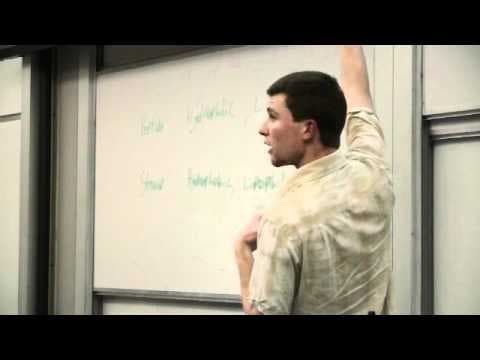
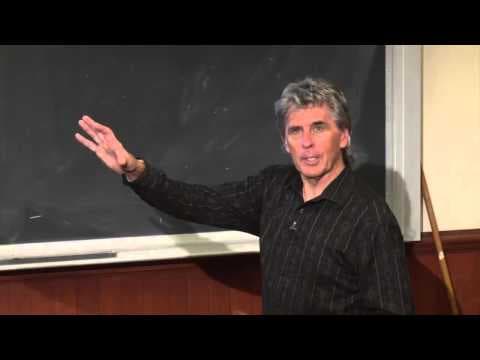
[MUSIC PLAYING] Stanford University. --out by now, I am not Dr. Sapolsky. You probably got some cues from the beard and other things. My name is Nathan. I'm a graduate student. I'm a fourth year PhD student in the neuroscience program. And I'm going to be giving you the introductory lecture today on, basically how the brain works. And just to get a... Read More
Install to Summarize YouTube Videos and Get Transcripts
Explore YouTube Video Summarizer or Get YouTube Transcript Extractor
Summary
In this lecture, Nathan, a graduate student at Stanford University, provides an introductory overview of how the brain works. He discusses the different approaches taken by various sciences to understand why a chicken crossed the road and introduces the field of neuroscience, which focuses on understanding the brain and its role in behavior. Nathan explains the different parts of the central nervous system (brain and spinal cord) and provides a general overview of the brain, including the brain stem, cerebellum, cortex, limbic system, and hypothalamus. He also introduces the different types of cells in the brain, including neurons and glia, and explains how neurons communicate with each other through electrical signals and chemical neurotransmitters.
Questions & Answers
Q: What is the central nervous system?
The central nervous system refers to the brain and spinal cord.
Q: What are the different parts of the brain?
The brain is divided into several parts, including the brain stem, cerebellum, cortex, limbic system, hippocampus, amygdala, hypothalamus, and pituitary gland.
Q: What functions are associated with the frontal lobe?
The frontal lobe is involved in planning actions, controlling movement, and sending connections down the spinal cord to control different parts of the body.
Q: How is the sensory touch information processed in the brain?
The parietal lobe receives and processes sensory touch information from different parts of the body. Different regions of the parietal lobe are specialized for different parts of the body.
Q: What functions are associated with the temporal lobe?
The temporal lobe is involved in receiving auditory information and plays a role in memory formation.
Q: What part of the brain is responsible for processing visual information?
The occipital lobe, located at the back of the brain, is responsible for processing visual information.
Q: What is the limbic system and what functions does it control?
The limbic system is a collection of structures in the brain involved in emotions, learning, and memory. Two important structures within the limbic system are the hippocampus, responsible for memory formation, and the amygdala, involved in fear and anxiety.
Q: What are the different types of cells in the brain?
The two main types of cells in the brain are neurons and glia. Neurons are specialized cells that send and receive electrical signals, while glia support and protect neurons.
Q: How do neurons communicate with each other?
Neurons communicate with each other through electrical signals called action potentials and chemical signals called neurotransmitters. When an action potential reaches the axon terminal, neurotransmitters are released from vesicles and bind to receptors on the postsynaptic neuron, triggering an immediate effect.
Q: What is the role of the presynaptic neuron and the postsynaptic neuron?
The presynaptic neuron is the signaling neuron, while the postsynaptic neuron is the neuron that receives the signal. The synapse is the junction where these neurons connect and communicate.
Q: How does an action potential initiate and propagate along a neuron?
An action potential starts at the axon hillock, where the decision to fire or not fire is made. Once initiated, the action potential travels along the axon until it reaches the axon terminal, where neurotransmitters are released.
Takeaways
Nathan's lecture provides a broad introduction to how the brain works. The central nervous system consists of the brain and spinal cord, and the brain is divided into different parts such as the brain stem, cerebellum, cortex, limbic system, and more. Different parts of the brain are specialized for different functions. Neurons are the main type of cell in the brain and communicate with each other through electrical signals and chemical neurotransmitters. Understanding the basics of neuronal communication and the different structures in the brain is important for further study in neuroscience.
Read in Other Languages (beta)
Share This Summary 📚
Summarize YouTube Videos and Get Video Transcripts with 1-Click
Try YouTube Summary with ChatGPT & Claude or YouTube Transcript Generator
Explore More Summaries from Stanford 📚
Summarize YouTube Videos and Get Video Transcripts with 1-Click
Try YouTube Summary with ChatGPT & Claude or YouTube Transcript Generator