What Are Primordial Black Holes and Their Role in Dark Matter?
TL;DR
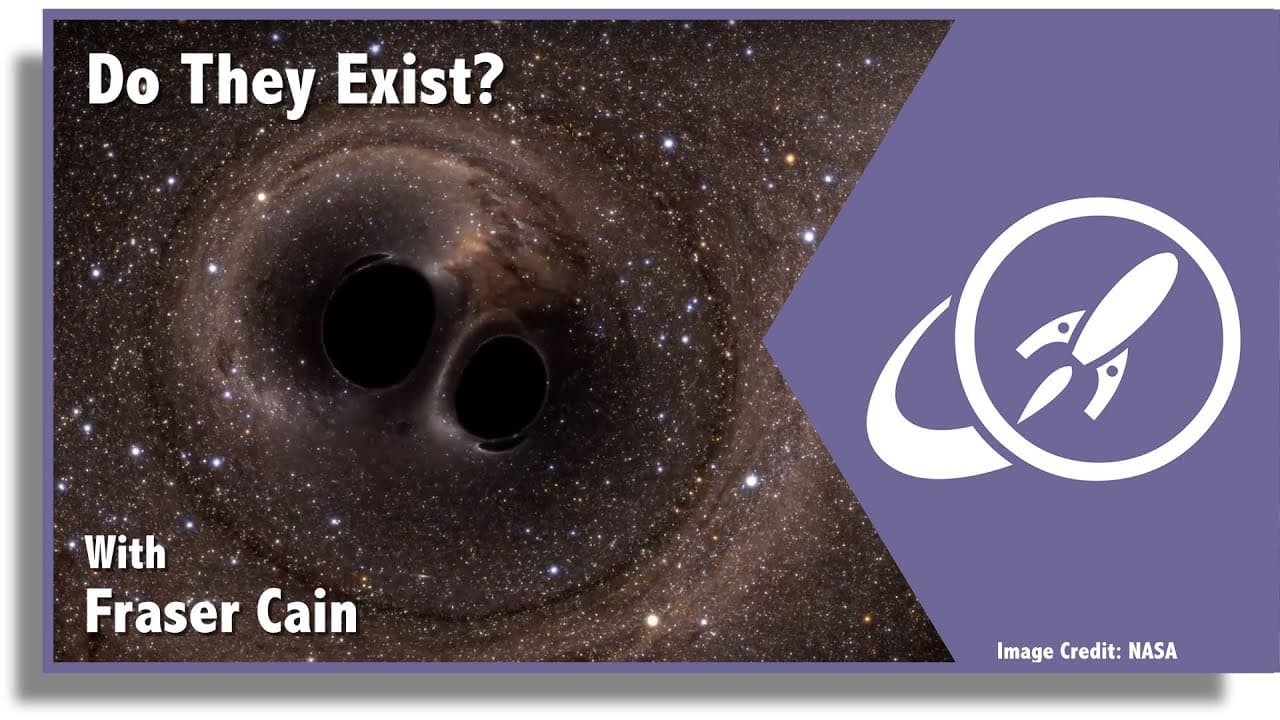
Primordial black holes are theorized to have formed in the early universe and may help explain dark matter, which constitutes about 27% of the universe's mass. Astronomers are actively searching for them using techniques such as gravitational lensing, monitoring for Hawking radiation, and gravitational wave analysis. Their presence could unlock key mysteries about the cosmos.
Transcript
Black holes are already mind-bending enough. Matter and energy compressed into a region so dense that the escape velocity exceeds the speed of light. Places where space and time are tangled up so much that even if you could go faster than light speed, you’d still end up at the singularity. Astronomers know of two kinds of black holes in the Univer... Read More
Key Insights
- 🖤 Black holes come in different sizes, with their mass determining the size of their event horizon.
- 🖤 Primordial black holes are theorized to have formed in the early universe from density fluctuations, and their existence could explain the nature of dark matter.
- 🖤 Astronomers have been searching for primordial black holes using techniques such as gravitational lensing, detection of their disappearance through Hawking radiation, or the analysis of gravitational waves.
Install to Summarize YouTube Videos and Get Transcripts
Explore YouTube Video Summarizer or Get YouTube Transcript Extractor
Questions & Answers
Q: How are stellar-mass black holes formed?
Stellar-mass black holes are formed when massive stars run out of fuel, causing their cores to implode under the force of gravity, creating a dense region from which nothing, not even light, can escape.
Q: Are supermassive black holes formed through the merger of stellar-mass black holes?
One theory suggests that supermassive black holes are formed through the merging of smaller black holes over time, gradually accumulating billions of solar masses.
Q: How can astronomers detect primordial black holes?
Primordial black holes can be detected through methods like gravitational lensing, where their gravity distorts light from distant objects. They can also be detected through their disappearance via Hawking radiation or through the detection of gravitational waves generated by their collisions.
Q: Can primordial black holes explain the nature of dark matter?
One hypothesis proposes that primordial black holes could be responsible for dark matter, as their abundance and lack of interaction with regular matter align with the properties of dark matter. Further research and detection are required to confirm this possibility.
Summary & Key Takeaways
-
Black holes are formed when massive stars collapse under their own gravity, but the origins of supermassive black holes, found at the centers of galaxies, are still not fully understood.
-
Primordial black holes, theorized to have formed in the early universe, could potentially explain dark matter, which constitutes a significant portion of the universe's mass.
-
Astronomers are searching for primordial black holes through various methods like gravitational lensing, detecting their disappearance through Hawking radiation, and analyzing gravitational waves.
Read in Other Languages (beta)
Share This Summary 📚
Summarize YouTube Videos and Get Video Transcripts with 1-Click
Try YouTube Summary with ChatGPT & Claude or YouTube Transcript Generator
Explore More Summaries from Fraser Cain 📚


Summarize YouTube Videos and Get Video Transcripts with 1-Click
Try YouTube Summary with ChatGPT & Claude or YouTube Transcript Generator