Q&A 108: Why Are There Meteor Showers Every Year? And More, Featuring Paul Geithner from JWST
TL;DR
Astronomer Fraser Cain answers questions about meteor showers, 3D printing telescopes, space station as a staging area, refueling the James Webb Space Telescope, lunar and Martian regolith, and more.
Transcript
it's question show time your questions my answers as always wherever you are on my channel question pops in your brain just write it down gather them up and I'll answer them here it's too cold and windy outside to use our outside green screen so we're gonna use our inside green screen this week now I've got a different format for our guest question... Read More
Key Insights
- 🛀 Meteor showers are caused by comets' debris trails intersecting with the Earth's orbit.
- 👷 3D printing technology can revolutionize telescope construction by reducing launch costs and increasing efficiency.
- 🏋️ The challenges of designing telescopes for SpaceX's Starship include ensuring proper functionality and managing weight constraints.
- 🥶 The current funding model for telescopes involves countries, international collaborations, or space agencies, with researchers granted access to observation time for free.
- 🖤 While raw materials for telescopes exist on the Moon and Mars, the lack of infrastructure makes local manufacturing impractical at present.
- 🛰️ The International Space Station's specific orbit and limitations make it challenging to use as a space dock for constructing telescopes.
- 👾 Refueling the James Webb Space Telescope in space is feasible but would require a complex mission.
Install to Summarize YouTube Videos and Get Transcripts
Explore YouTube Video Summarizer or Get YouTube Transcript Extractor
Questions & Answers
Q: How are meteor showers formed?
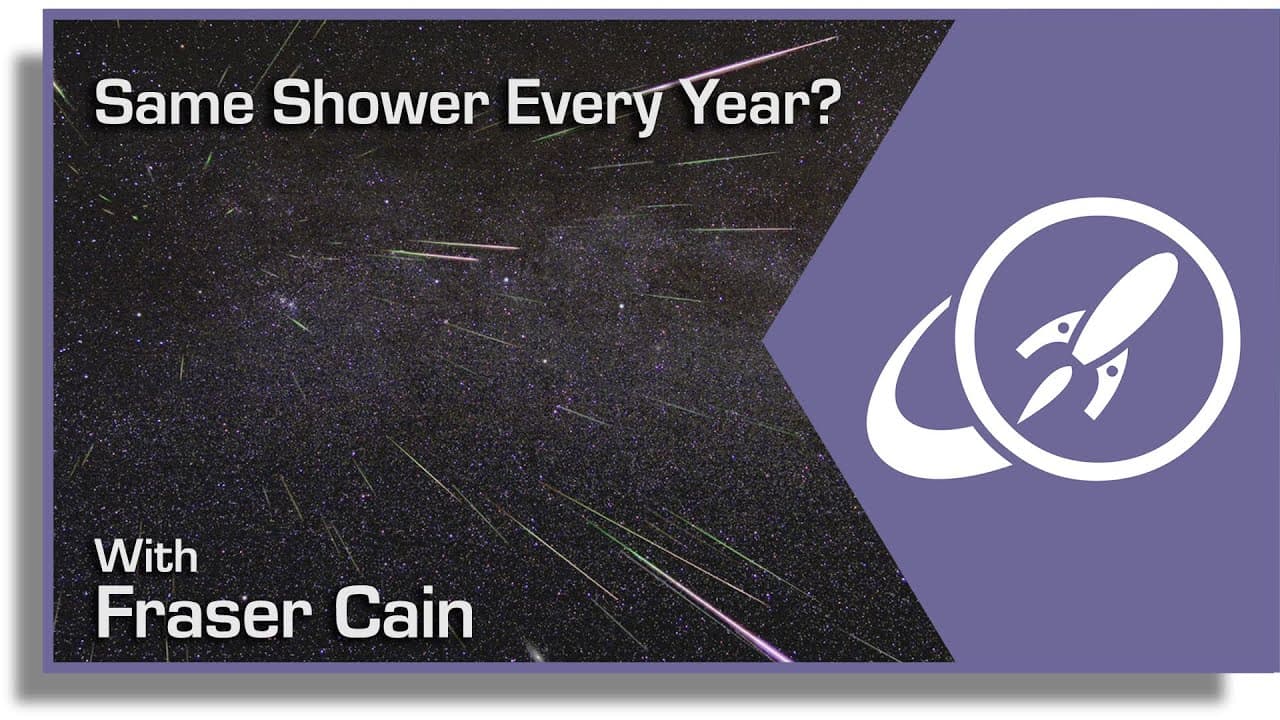
Meteor showers are primarily caused by the debris trails left by comets as they orbit the Sun. When the Earth passes through these trails, the debris burns up in our atmosphere, creating a meteor shower.
Q: Can 3D printing be used to construct telescopes?
Yes, 3D printing technology can be utilized to manufacture telescope components, such as trusses and frame parts. This approach can reduce the number of launches required and make telescopes more efficient and cost-effective.
Q: Can telescopes be designed specifically for SpaceX's Starship?
Telescopes can be designed to fit inside the Starship's 9-meter launch fairing, but there are challenges associated with ensuring the components work properly and are light enough for launch. It may be more practical to design telescopes according to the industry standard 5-meter launch fairing.
Q: How are telescopes funded in the scientific community?
Telescopes are typically funded by countries, international collaborations, or space agencies. Researchers can apply for observation time, and if approved, they can access the telescope's data for free. While some telescopes are privately funded, this model is not common.
Q: Can telescopes be built using lunar or Martian regolith?
The Moon and Mars have sufficient raw materials, such as iron, aluminum, and silicon, to build telescopes. However, the lack of infrastructure and the high cost of transporting materials from these celestial bodies currently make it impractical to manufacture telescopes there.
Q: Can the International Space Station be used as a staging area for building telescopes?
While the International Space Station (ISS) could potentially be used as a base for assembling telescopes, its specific orbit poses challenges for moving the completed telescopes to their desired location. Additionally, the ISS is not designed for long-term projects like telescope construction.
Q: Can the James Webb Space Telescope be refueled in space?
The James Webb Space Telescope (JWST) could potentially be refueled by a robotic spacecraft in the future. JWST has provisions for refueling, as fuel is required for station-keeping and momentum management. Retrofitting more fuel onto JWST would require a complex mission, but it is not impossible.
Q: Is it possible to observe the Earth's reflection on the Moon?
Yes, it is possible to observe the Earth's reflection on the Moon. The phenomenon, known as earthshine, occurs when sunlight is reflected off the Earth onto the Moon's surface. It is often visible in photographs or by adjusting the exposure settings.
Summary & Key Takeaways
-
Meteor showers are caused by the trails of debris left behind by comets as they orbit the Sun. The Earth passes through these trails at the same time every year, resulting in meteor showers.
-
3D printing telescopes and using robotic arms for assembly can reduce the number of launches and make telescopes more powerful and cost-effective.
-
The SpaceX Starship, with its larger launch fairing, could potentially accommodate bigger telescopes. However, it is important to consider the cost and complexity of building a spacecraft that is still in development.
-
The use of private funds to pay for access to telescopes is not common in the scientific community. Observatories are typically funded by countries, international collaborations, or space agencies, and their data is freely available to approved researchers.
-
While the Moon and Mars have sufficient raw materials for building telescopes, manufacturing them locally is currently impractical due to the lack of infrastructure. However, as research stations and 3D printers become available on these celestial bodies, it may be possible to construct telescopes there in the future.
-
Using the International Space Station as a staging area for assembling space telescopes is challenging due to different orbits and the complexity of moving these telescopes to their desired location.
Read in Other Languages (beta)
Share This Summary 📚
Summarize YouTube Videos and Get Video Transcripts with 1-Click
Try YouTube Summary with ChatGPT & Claude or YouTube Transcript Generator
Explore More Summaries from Fraser Cain 📚

Summarize YouTube Videos and Get Video Transcripts with 1-Click
Try YouTube Summary with ChatGPT & Claude or YouTube Transcript Generator