10 Places in the Solar System Where Alien Life is Possible
TL;DR
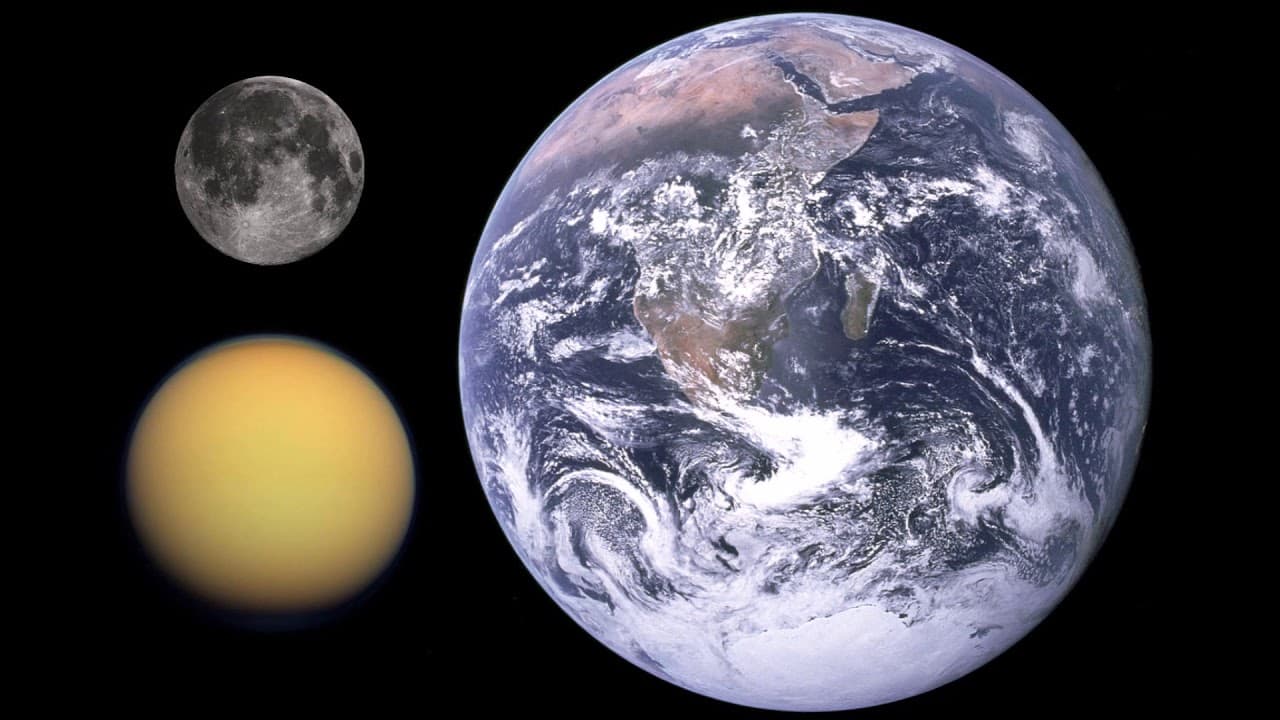
Life may be possible in various locations in our solar system, including Venus, Pluto, Triton, the moons of Uranus, space itself, Titan, Enceladus, Ganymede, Mars, and Europa.
Transcript
One could argue that almost any body in the solar system is habitable so long as you have the technology to colonize it. But that would involve this solar system’s elephant in the room, which is our civilization. For the sake of this list, I leave us off it; we know that life on earth is possible. But as we’ve learned more about our solar system, i... Read More
Key Insights
- 🥮 Other than Earth, various locations in our solar system have the potential to support life, including planets (Venus and Mars), moons (Pluto, Triton, the moons of Uranus, Titan, Enceladus, Ganymede, and Europa), and even space itself.
- 🤩 Evidence of liquid water and organic compounds are key indicators for potential habitable environments.
- 🛟 While microbial life is more likely, the possibility of more advanced forms of life cannot be ruled out.
- 🛟 Further exploration, sample return missions, and in-depth studies are needed to confirm the presence of life in these locations.
Install to Summarize YouTube Videos and Get Transcripts
Explore YouTube Video Summarizer or Get YouTube Transcript Extractor
Questions & Answers
Q: What conditions on Venus may allow for airborne microbial life?
In Venus' upper atmosphere, there exists a temperate and cool zone that may be conducive to the existence of airborne microbial life. This life would likely be different from earthly life, but it could potentially use sulfuric acid-resistant S8 molecules and ultraviolet light from the sun as energy sources.
Q: Why is Mars considered a potential place for life?
Despite being cold and dry on the surface, Mars has a history of liquid water, and subsurface aquifers may still exist. The detection of methane in the Martian atmosphere also hints at the possibility of active biological processes.
Q: What sets Europa apart as the top candidate for potential life?
Europa has a subsurface liquid water ocean that interacts with its surface, providing the necessary ingredients for life. Discolorations on Europa's surface cracks, similar to organisms found on Earth, hint at the presence of microbial life beneath the icy exterior.
Q: Can life exist in space itself?
While it is more challenging for life to arise in the cold vacuum of space, organisms can potentially survive and adapt in space. Natural panspermia, where life travels through space on its own or through spacecraft, could allow life to flourish beyond planetary surfaces.
Summary & Key Takeaways
-
Venus, despite its harsh conditions on the surface, may have a temperate and cool upper atmosphere where airborne microbial life could potentially exist.
-
Pluto, once considered inhospitable, may have a subsurface water ocean, providing potential environments for life not only on Pluto but also on other similar objects in the Kuiper Belt.
-
Triton, a moon of Neptune, may have a subsurface ocean rich in ammonia and water, potentially harboring life.
-
The moons of Uranus, such as Titania, Oberon, and Umbriel, may have conditions suitable for life, including the presence of liquid water under their surfaces.
-
Space itself could potentially support life, as organisms might adapt and survive in the vacuum of space.
-
Titan, Saturn's moon, offers two possibilities for life: on its surface, where liquid hydrocarbons exist, and beneath its surface, where a liquid water ocean high in ammonia might be present.
-
Enceladus, Saturn's moon, ejects water into space, indicating the presence of a subsurface water ocean that might support life.
-
Ganymede, Jupiter's moon, has multiple oceans separated by layers of water ice, providing potential habitats for different forms of life.
-
Mars, with its past history of liquid water and the presence of methane, is a prime candidate for potential microbial life.
-
Europa, one of Jupiter's moons, is considered the most likely place in our solar system to harbor life, with a subsurface liquid water ocean, energy from tidal flexing, and possible microbial organisms observed in its surface cracks.
Read in Other Languages (beta)
Share This Summary 📚
Summarize YouTube Videos and Get Video Transcripts with 1-Click
Try YouTube Summary with ChatGPT & Claude or YouTube Transcript Generator
Explore More Summaries from John Michael Godier 📚

Summarize YouTube Videos and Get Video Transcripts with 1-Click
Try YouTube Summary with ChatGPT & Claude or YouTube Transcript Generator