How Can Blockchain Scalability Be Improved?
TL;DR
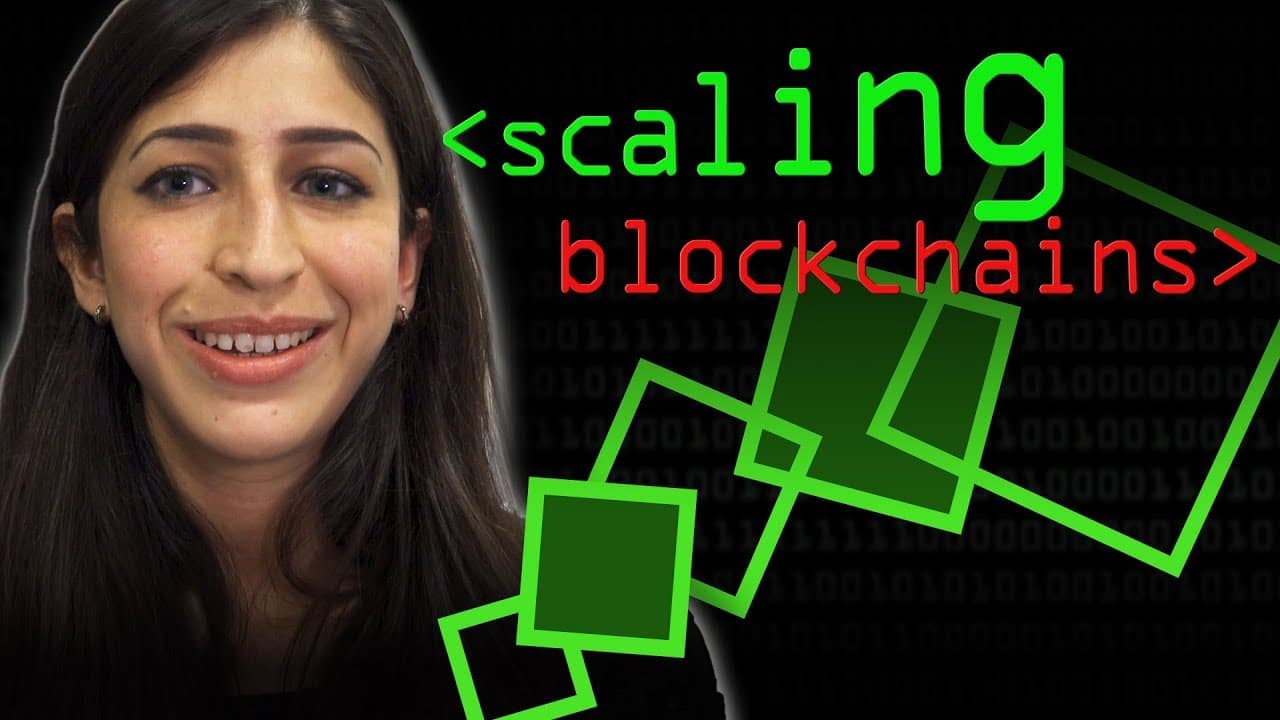
Blockchain technology, including Bitcoin, struggles with scalability, limiting transaction throughput and increasing latency. Researchers are investigating solutions like consensus protocols and sharding to enhance performance, aiming to handle more transactions efficiently while maintaining security and integrity.
Transcript
I'm going to talk about the issue of Scalability in Bitcoin but before that I will Provide Some Background on Bitcoins and Then We'll Slowly Build it Up to the point where We can See the Issues in Bitcoin Scalability and what Is? Being Done in Current Blockchain Designs to Address These issues in Scalability the key Metrics that, we are Looking at ... Read More
Key Insights
- 💱 Blockchain's public verifiability, transparency, and integrity make it suitable beyond digital currencies.
- 👤 Scalability in Bitcoin involves handling a large number of users and transactions, limiting throughput to around 7 transactions per second with slow latency.
- 🍽️ Consensus protocols like Practical Byzantine fault tolerance (PBFT) are being explored to address scalability and forking issues in blockchain systems.
- 😵 Sharding, dividing transactions among multiple committees, is a potential solution for scalability but presents challenges in handling cross-blockchain transactions.
Install to Summarize YouTube Videos and Get Transcripts
Explore YouTube Video Summarizer or Get YouTube Transcript Extractor
Questions & Answers
Q: What are the key properties of blockchain that distinguish it from traditional databases?
The key properties are public verifiability, transparency, and integrity. Public verifiability allows anyone to verify the state of data updates, while integrity ensures that the data is not corrupt and accurate.
Q: Is scalability only a concern for blockchain systems like Bitcoin?
Scalability is a concern for both Bitcoin and centralized systems like Google or Facebook. However, the decentralized nature of blockchain networks adds complexity to achieving scalability.
Q: How are transactions validated in blockchain systems?
Transactions are validated by proving ownership and authenticity. Alice must prove she owns the bitcoins she wants to send and signs the transaction using her private key. Nodes then validate the transaction by confirming her ownership and ensuring no double spending occurred.
Q: How does consensus work in blockchain systems like Bitcoin?
Consensus is reached through mining, where nodes solve a hash puzzle or provide proof of work. Miners who successfully solve the puzzle can write the transaction to the blockchain. This ensures agreement among the nodes on the validity of the transaction.
Summary & Key Takeaways
-
Bitcoin, introduced in 2008 by Satoshi Nakamoto, has gained significant interest and value, but scalability remains a challenge.
-
The key properties of blockchain are public verifiability, transparency, and integrity, making it appealing for applications beyond digital currencies.
-
Scalability relates to the ability to handle a large number of users and transactions, and both Bitcoin and centralized systems like Google or Facebook face scalability constraints.
Read in Other Languages (beta)
Share This Summary 📚
Summarize YouTube Videos and Get Video Transcripts with 1-Click
Try YouTube Summary with ChatGPT & Claude or YouTube Transcript Generator
Explore More Summaries from Computerphile 📚





Summarize YouTube Videos and Get Video Transcripts with 1-Click
Try YouTube Summary with ChatGPT & Claude or YouTube Transcript Generator