Launching Rockets With Electricity
TL;DR
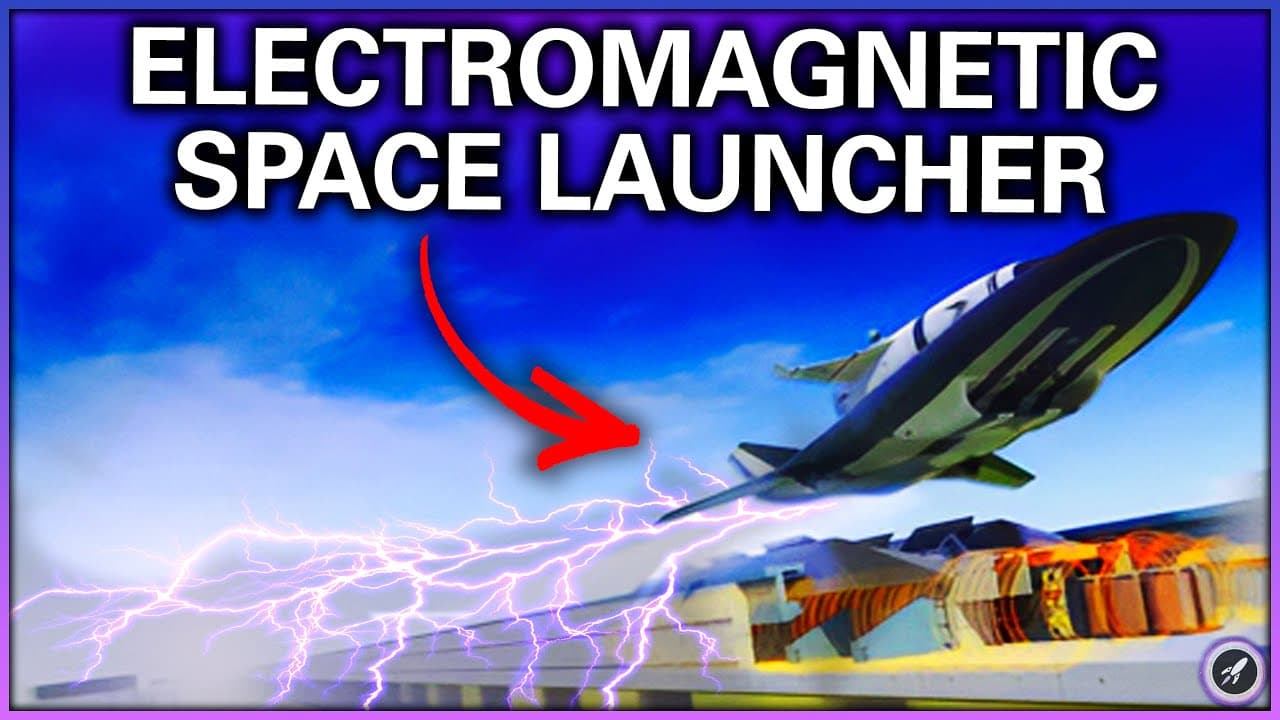
Electromagnetic launch systems, once a staple of science fiction, are now being explored as a viable means of launching payloads into space using the power of electricity.
Transcript
I'm sure you're familiar with the idea of an electromagnetic launch system this is where you use the power of electricity to accelerate a mass and look it's a stable in science fiction and scientists and Engineers have been working on this problem for decades you can go back into NASA archives and see technical papers on electromagnetic launch syst... Read More
Key Insights
- 😘 Electromagnetic launch systems have a troubled past but are now being revisited due to advancements in low-temperature superconductors.
- 😒 The use of high-temperature superconductors and the quench launcher concept provide solutions for efficient, reusable, and cost-effective launch systems.
- 👾 The commercialization of space and the need for raw materials in space exploration drive the development of electromagnetic launch systems.
- 😘 Electromagnetic launch systems offer the potential for lower cost per pound to orbit and enable the movement of payloads between planets and celestial bodies.
- 👨🔬 The physics and engineering challenges associated with electromagnetic launch systems require significant research and development efforts.
- 🗺️ The success of these systems would revolutionize space travel, facilitate lunar missions, and open up possibilities for asteroid mining and interplanetary travel.
- 👾 Different approaches to space travel, such as colonization and in-space construction, can benefit from electromagnetic launch systems.
Install to Summarize YouTube Videos and Get Transcripts
Explore YouTube Video Summarizer or Get YouTube Transcript Extractor
Questions & Answers
Q: Why have traditional electromagnetic launch systems, such as railguns, been unsuccessful?
Traditional systems faced challenges such as rail wear, restrike issues, and the need for robustness to withstand high energies and forces. These issues hindered their efficiency and reusability.
Q: How do low-temperature superconductors contribute to the development of electromagnetic launch systems?
Low-temperature superconductors offer the ability to store a significant amount of power, making them suitable for creating powerful electromagnets in launch systems. Their quenching properties allow for controlled release of energy for propulsion.
Q: What advantages does the quench launcher approach offer compared to traditional railguns?
The quench launcher operates as a non-contact system, utilizing high-temperature superconductors in a pre-powered state. This approach improves efficiency, reduces rail wear issues, and enables repeatable and reusable launches.
Q: What are the potential applications of electromagnetic launch systems beyond Earth?
These systems can be deployed on the moon or in space, providing a means of cost-effective launching for payloads and raw materials. They could support future lunar and interplanetary missions and even enable mining and resource extraction from asteroids.
Summary & Key Takeaways
-
Electromagnetic launch systems have a troubled past, with over-promising and under-delivering in terms of efficiency and reusability.
-
The traditional railgun approach faced challenges such as rail wear and damages caused by high energies and forces.
-
The use of low-temperature superconductors and the development of the quench launcher concept offer potential solutions for efficient and reusable electromagnetic launch systems.
Read in Other Languages (beta)
Share This Summary 📚
Summarize YouTube Videos and Get Video Transcripts with 1-Click
Try YouTube Summary with ChatGPT & Claude or YouTube Transcript Generator
Explore More Summaries from Fraser Cain / Universe Today Podcast 📚




Summarize YouTube Videos and Get Video Transcripts with 1-Click
Try YouTube Summary with ChatGPT & Claude or YouTube Transcript Generator