Are Israel/Palestine Campus Protests at UCLA and Columbia Legal Under the First Amendment?
TL;DR
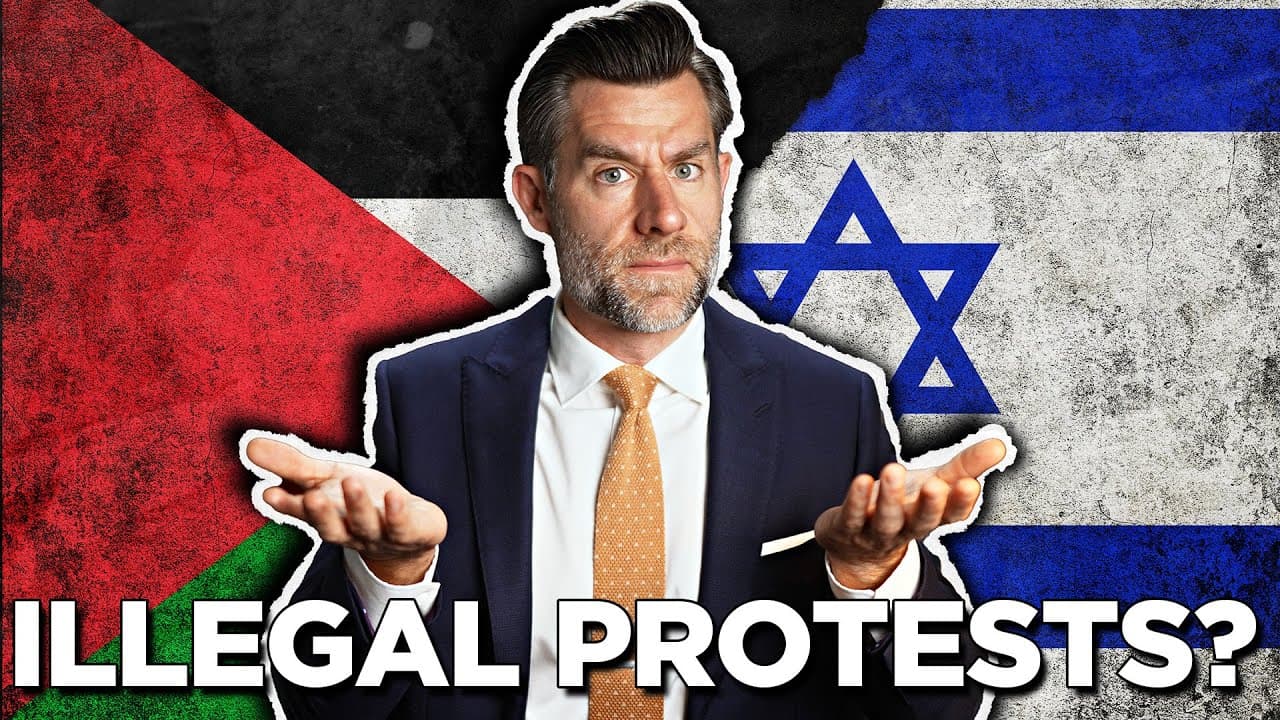
Israel/Palestine campus protests may receive First Amendment protection, but legality depends on government involvement, the type of forum, and whether restrictions are content-neutral or content-based. UCLA dismantled its Royce Quad encampment after safety and access concerns, while Columbia’s private status places student rights under its conduct code. The UCLA, Columbia, and Erwin Chemerinsky home protests show why each setting requires a different legal analysis. Read on for the distinctions.
Transcript
- Today we finally settle the debate about Israel-Palestine protests on college campuses. Look, I'm a lawyer. I'm not an idiot. Now, these protests have been all over the news, whether it's Columbia in New York, UCLA in Los Angeles, or in the backyard of Dean Chemerinsky's home. For example, on the night of April 30th at the campus of UCLA, pro-Pal... Read More
Key Insights
- The First Amendment protects speech, press, assembly, and petitioning the government.
- Government actions are content-neutral if they regulate speech incidentally for a separate purpose.
- Content-based regulations require strict scrutiny, proving they advance a compelling government interest.
- Public forums are categorized as traditional, designated, limited, or non-public, affecting speech restrictions.
- UCLA's protest restrictions were framed as content-neutral for campus safety.
- Columbia University, as a private institution, does not provide First Amendment protections on campus.
- Protests in private homes, even of government officials, do not have First Amendment protections.
- Laws like Texas Senate Bill 18 protect student speech but can conflict with content-based regulations.
Install to Summarize YouTube Videos and Get Transcripts
Explore YouTube Video Summarizer or Get YouTube Transcript Extractor
Questions & Answers
Q: Are Israel/Palestine campus protests legal under the First Amendment?
They can be protected, but there is no blanket answer covering every campus protest. The analysis depends on whether the institution or actor is governmental, what type of forum is involved, and whether a restriction targets the protest’s content or regulates its time, place, or manner.
Q: How does the First Amendment apply to protests at public and private universities?
The First Amendment restricts government actors and entities, so it applies directly to actions by public universities such as UCLA. Private universities such as Columbia generally govern student protest rights through their institutional conduct codes rather than the First Amendment.
Q: What is the difference between content-neutral and content-based protest restrictions?
A content-neutral restriction regulates speech incidentally for a purpose separate from its message, such as protecting safety or access. It must be narrowly tailored to serve a significant government interest and leave alternative communication channels open, while a content-based restriction faces strict scrutiny and must be the least restrictive means of advancing a compelling interest.
Q: How do public-forum categories affect campus protest rights?
First Amendment analysis distinguishes traditional, designated, limited, and non-public forums. Traditional forums such as parks and sidewalks receive the strongest speech protection, while restrictions increase in forums reserved for narrower or non-public uses.
Q: Why did UCLA declare the Royce Quad protest encampment unlawful?
Chancellor Gene Block said the encampment created unsafe conditions, breached policy, and damaged UCLA’s ability to carry out its mission. Reports also said some students were accosted or prevented from reaching class, and law enforcement dismantled the encampment on May 2 after a nine-hour standoff that produced more than 200 arrests.
Q: Did the violence at UCLA eliminate protesters’ First Amendment rights?
The violence did not create a simple all-or-nothing answer about First Amendment protection. UCLA framed its response around safety, access, and campus operations, while UCLA and the California Governor’s Office launched investigations into the slow response to the April 30 attack, which significantly injured at least 16 protesters.
Q: Why was Columbia University’s protest analyzed differently from UCLA’s?
Columbia is a private university, so its students generally rely on the university’s conduct code rather than direct First Amendment protection. Police entered a campus building after protesters occupied, vandalized, and blockaded it and the university requested assistance.
Q: Do protesters have First Amendment rights inside UC Berkeley law dean Erwin Chemerinsky’s home?
A private home is not a public forum, even when its owner is a government official or it hosts a school-related event. Protesters who interrupted the April 12 private dinner at Erwin Chemerinsky’s home could not claim a First Amendment right to remain after being asked to leave.
Summary & Key Takeaways
-
Protests at UCLA and Columbia University highlight the complexities of First Amendment rights on campuses. UCLA's actions were content-neutral, focusing on safety, while Columbia, as a private institution, follows its conduct code. Legal outcomes depend on the forum and regulation type.
-
The First Amendment restricts government actions, not private entities, making university settings complex for protest rights. UCLA's measures were justified by safety concerns, but Columbia's private status means students rely on the university's conduct code.
-
Protests at private homes, like the UC Berkeley dean's, lack First Amendment protection. Content-neutral regulations like those at UCLA focus on safety, while Texas laws protect speech but face challenges regarding content-based restrictions.
Read in Other Languages (beta)
Share This Summary 📚
Summarize YouTube Videos and Get Video Transcripts with 1-Click
Try YouTube Summary with ChatGPT & Claude or YouTube Transcript Generator
Explore More Summaries from LegalEagle 📚
Summarize YouTube Videos and Get Video Transcripts with 1-Click
Try YouTube Summary with ChatGPT & Claude or YouTube Transcript Generator