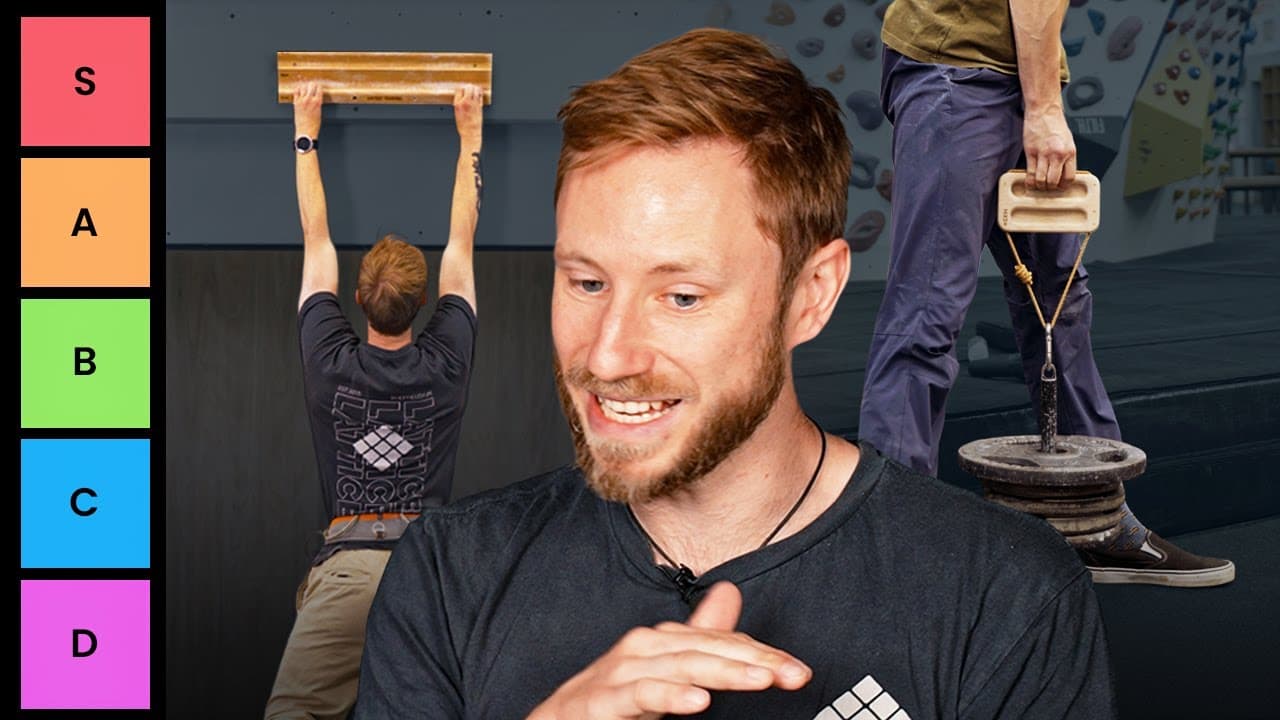
Best & Worst Grip Strength Exercises
TL;DR
Experts rank various finger strength exercises for climbers.
Transcript
Read and summarize the transcript of this video on Glasp Reader (beta).
Key Insights
- Max hangs are highly effective for building maximum finger strength and are versatile across different grip positions.
- Minimum edge training is beneficial for specific climbing needs but can be aggressive on joints, making it less suitable for beginners.
- The Anderson Brothers' method offers high volume training but may not be ideal for those who can climb regularly.
- Emil's 'two times a day' protocol is less effective than combining frequency hangs with other methods like max hangs.
- Block lifts or no-hangs offer versatility and are excellent for training various grip types, though they may not translate as directly to climbing performance.
- Density hangs are useful for tendon adaptation and can serve as a pre-performance routine to enhance recruitment.
- Digital feedback tools like Tindex could revolutionize finger training by gamifying the process and providing real-time data.
- Board climbing is considered the best overall method for developing finger strength and climbing skills, though it carries a higher risk of injury.
Install to Summarize YouTube Videos and Get Transcripts
Explore YouTube Video Summarizer or Get YouTube Transcript Extractor
Questions & Answers
Q: What is the most effective method for building maximum finger strength?
Max hangs are considered the most effective method for building maximum finger strength. They are versatile, can be applied across various grip positions, and are suitable for all levels of climbers. The method involves hanging for short durations to build maximum strength without causing much fatigue.
Q: Why is minimum edge training not recommended for everyone?
Minimum edge training is not recommended for everyone because it can be aggressive on the joints, especially for those with hypermobility. It is more suited for high-level athletes who need to adapt to small ledges. The training can lead to tweaky fingers and requires careful application to avoid injury.
Q: What are the drawbacks of the Anderson Brothers' method?
The Anderson Brothers' method involves high-volume training with multiple grip types, making it less suitable for those who can climb regularly. It can replace a climbing session but might not be as effective as more targeted methods like max hangs or repeaters. The method is considered old-school and complex.
Q: How does Emil's 'two times a day' protocol compare to other methods?
Emil's 'two times a day' protocol, while popularized for its tendon health benefits, is less effective than incorporating frequency hangs with other methods like max hangs. Research suggests that the frequency doesn't need to be as high, and most climbers can benefit from less frequent but more targeted training.
Q: What are the benefits of block lifts or no-hangs?
Block lifts or no-hangs offer versatility in training various grip types and are excellent for those who can't hang from a wall setup. They are beneficial for warming up, coming back from injury, and training new grip types. However, they may not translate as directly to climbing performance as other methods.
Q: Why are density hangs recommended for tendon adaptation?
Density hangs are recommended for tendon adaptation because they involve long-duration hangs that are believed to benefit tendon thickness and strength. They are useful for building robustness in grip positions and can be incorporated into a pre-performance routine to enhance recruitment.
Q: What potential do digital feedback tools have in finger training?
Digital feedback tools like Tindex have the potential to revolutionize finger training by gamifying the process. They offer real-time data, allowing climbers to set specific goals and measure progress. This method could provide better buy-in and engagement, making training more effective and enjoyable.
Q: Why is board climbing considered the best method for finger strength?
Board climbing is considered the best method for finger strength because it simultaneously develops climbing skills and finger strength. It provides a comprehensive workout that is engaging and enjoyable. However, it carries a higher risk of injury due to the intensity and potential for foot slips and snatchy moves.
Summary & Key Takeaways
-
The video ranks various finger strength training methods based on effectiveness, athlete buy-in, and applicability. Max hangs are considered the gold standard for developing maximum strength, while block lifts offer versatility. Minimum edge training is more specific but risky for joints.
-
Old-school methods like the Anderson Brothers' routine provide high volume but are less applicable for those who can climb regularly. Newer methods, such as Emil's 'two times a day' protocol, are less effective than combining frequency hangs with other exercises.
-
Density hangs and digital tools like Tindex show promise for future training methodologies. Board climbing remains the top choice for developing finger strength and overall climbing skills, although it presents a higher injury risk.
Read in Other Languages (beta)
Share This Summary 📚
Summarize YouTube Videos and Get Video Transcripts with 1-Click
Try YouTube Summary with ChatGPT & Claude or YouTube Transcript Generator
Explore More Summaries from Lattice Training 📚
Summarize YouTube Videos and Get Video Transcripts with 1-Click
Try YouTube Summary with ChatGPT & Claude or YouTube Transcript Generator