The Secret to Happy, Well-Behaved Dogs: No Treats Necessary
TL;DR
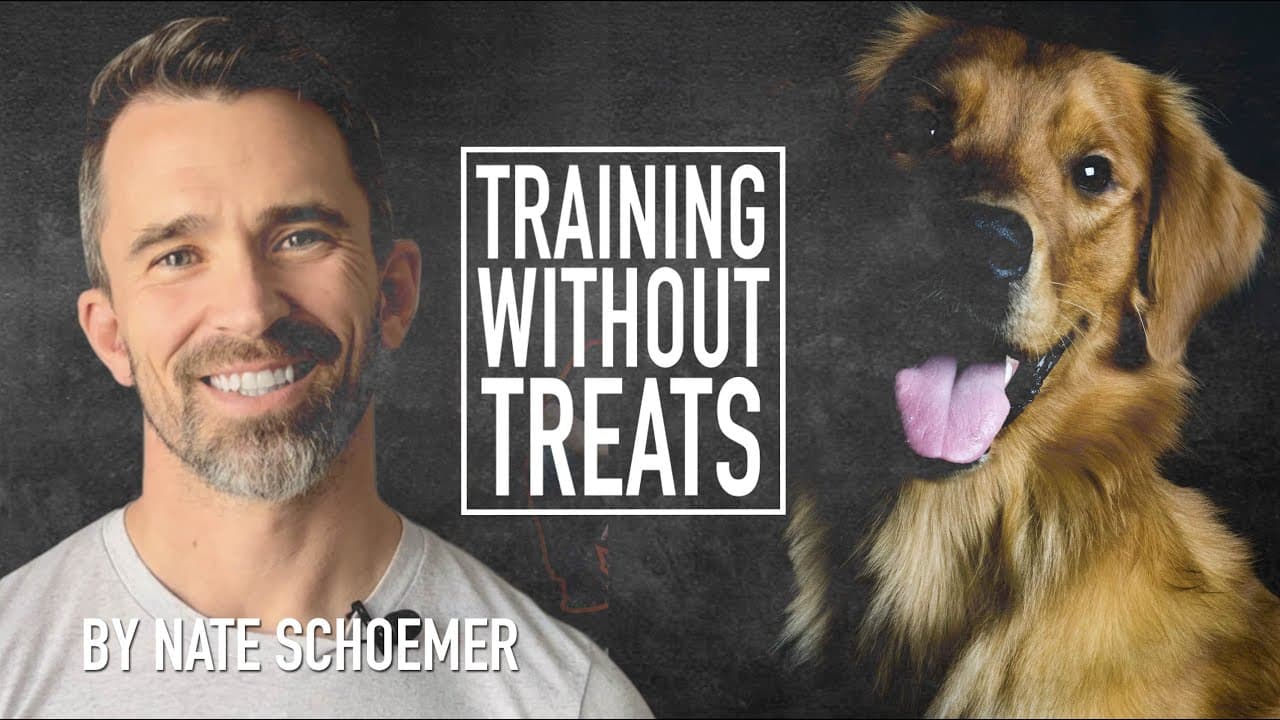
Learn how to train dogs without relying on treats.
Transcript
in all of your videos you're just giving the dog or puppy a bunch of treats how about training without rewards or this would be great if my dog is food motivated but he's not how can i train my dog if he doesn't care about food now these are common questions that i'm often asked and it's understandable considering people don't want to carry around ... Read More
Key Insights
- Understanding motivation is crucial in dog training; dogs are driven by pleasant or unpleasant stimuli, or self-reinforcing behaviors.
- Four motivational tools in dog training include food, toys, affection, and force, with balanced training being the most effective approach.
- Avoidance and escape training involve using pressure to motivate dogs, but balanced training is preferred for better results.
- Increasing a dog's food drive can be achieved by making them work for their food instead of free feeding.
- Continual reinforcement is recommended when teaching new behaviors, rewarding every correct action initially.
- The three-stage process for reducing treat dependency involves gradually spacing out rewards and introducing verbal praise.
- Free shaping helps dogs understand that their behavior affects their environment, promoting proactive behavior.
- Random rewards keep dogs motivated, similar to a slot machine, ensuring they continue to perform desired behaviors.
Install to Summarize YouTube Videos and Get Transcripts
Explore YouTube Video Summarizer or Get YouTube Transcript Extractor
Questions & Answers
Q: How can I train my dog without using treats?
Training a dog without treats involves understanding their motivation and utilizing tools like toys, affection, and force. Balanced training, which combines these elements, is the most effective method. Avoidance and escape training can also be used, but balanced training is preferred for achieving better results and a more well-behaved dog.
Q: What is the three-stage process for reducing treat dependency?
The three-stage process for reducing treat dependency starts with continual reinforcement, rewarding every correct behavior. In stage two, rewards are spaced out, and verbal praise is introduced. Stage three involves using a mix of marking and rewarding, verbal praise, or no reward, while still providing random rewards to maintain motivation.
Q: How can I increase my dog's food drive?
To increase a dog's food drive, make them work for every meal instead of free feeding. Use meal times as training sessions, offering food as a reward for performing desired behaviors. If the dog isn't interested, put them away without feeding and try again later, ensuring they only receive food for working.
Q: What is free shaping in dog training?
Free shaping is a technique where the trainer doesn't have a specific behavior in mind but rewards the dog for performing desirable actions. This method helps dogs understand that their behavior affects their environment, promoting proactive behavior and making them more likely to comply with commands even without visible rewards.
Q: Why is balanced training preferred over avoidance or escape training?
Balanced training is preferred because it combines various motivational tools like food, toys, affection, and force, leading to more effective and well-rounded results. While avoidance or escape training can be used, balanced training is more humane and fosters a stronger bond between the dog and trainer, resulting in better-behaved dogs.
Q: How does random rewarding help in dog training?
Random rewarding keeps dogs motivated to perform desired behaviors by maintaining the possibility of receiving a reward. It's similar to a slot machine; the uncertainty of when a reward will come keeps the dog engaged and willing to work, ensuring they continue to comply with commands even without consistent rewards.
Q: What role does motivation play in dog training?
Motivation is crucial in dog training as it drives dogs to perform behaviors. Dogs are motivated by pleasant stimuli, avoidance of unpleasant stimuli, or self-reinforcing behaviors. Understanding and leveraging these motivations through tools like food, toys, affection, and force is essential for effective training and achieving desired results.
Q: What is continual reinforcement in dog training?
Continual reinforcement is a technique used when teaching a new behavior, where the dog is rewarded for every correct action. This method helps the dog associate the behavior with a positive outcome, making it more likely to repeat the behavior. Once the dog consistently performs the behavior, rewards can be gradually spaced out.
Summary & Key Takeaways
-
Dog training without treats is possible by understanding motivation and using tools like food, toys, affection, and force. Balanced training, which combines these elements, is the most effective method for achieving well-behaved dogs.
-
To train dogs without treats, it's important to increase their food drive by making them work for every meal. This ensures they value food as a reward and are motivated to perform desired behaviors.
-
The three-stage process for reducing treat dependency involves continual reinforcement, spacing out rewards, and eventually using verbal praise or no reward at all, while still offering random rewards to maintain motivation.
Read in Other Languages (beta)
Share This Summary 📚
Summarize YouTube Videos and Get Video Transcripts with 1-Click
Try YouTube Summary with ChatGPT & Claude or YouTube Transcript Generator
Explore More Summaries from Nate Schoemer 📚


Summarize YouTube Videos and Get Video Transcripts with 1-Click
Try YouTube Summary with ChatGPT & Claude or YouTube Transcript Generator