How Does Distance in Space Affect Our View of Time?
TL;DR
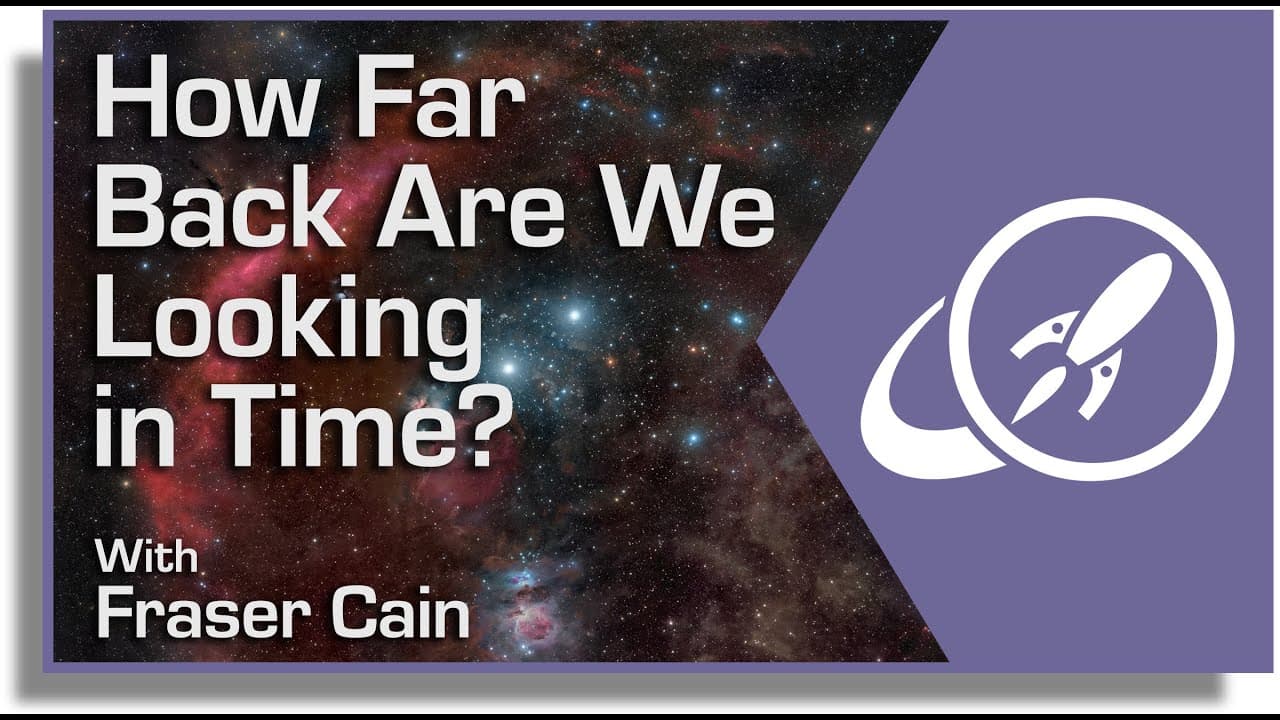
The further away an object is in space, the older the light we see from it. For instance, light from the Moon takes about 1.28 seconds to reach Earth, while light from the Sun takes 8 minutes and 20 seconds. This means when we observe distant celestial bodies, we're actually viewing them as they were in the past, potentially millions or billions of years ago.
Transcript
the universe is a magic time window allowing us to peer into the past the further out we look the further back in time we see despite our brains telling us things we see happen at the instant we view them light moves at a mere 300,000 km/s which makes for a really weird time delay at Great distances now let's say you're talking with a friend who's ... Read More
Key Insights
- 🙂 Objects further away in space appear as they were in the past due to the time it takes for light to reach us.
- 🙂 Light from the closest star, Proxima Centauri, takes more than 4.2 years to reach us, meaning they are unaware of current events on Earth.
- 🙂 Quasars, feeding supermassive black holes, are visible billions of light years away, showcasing the immense scale of the universe.
Install to Summarize YouTube Videos and Get Transcripts
Explore YouTube Video Summarizer or Get YouTube Transcript Extractor
Questions & Answers
Q: Why is there a time delay when viewing objects in space?
The time delay is caused by the finite speed of light. As light travels from distant objects to us, it takes time for it to reach our eyes or telescopes.
Q: How long does it take for light to travel from the moon to the Earth?
It takes approximately 1.28 seconds for light to travel from the moon to the Earth, resulting in a slight delay in what we see.
Q: Are we seeing the sun as it is?
No, when we look at the sun, we are actually seeing how it appeared more than 8 minutes ago, due to the time it takes for light to travel from the sun to Earth.
Q: What is the significance of the 13.8 billion-year-old cosmic microwave background radiation?
The cosmic microwave background radiation is the oldest light in the universe, allowing us to study the early stages of its formation.
Summary & Key Takeaways
-
Light travels at a speed of 300,000 km/s, creating a time delay when viewing objects at great distances.
-
The further away an object is in space, the further back in time we are looking.
-
Examples include the moon (1.28 seconds delay), the sun (8 minutes and 20 seconds delay), and Andromeda Galaxy (2.5 million light years away).
Read in Other Languages (beta)
Share This Summary 📚
Summarize YouTube Videos and Get Video Transcripts with 1-Click
Try YouTube Summary with ChatGPT & Claude or YouTube Transcript Generator
Explore More Summaries from Fraser Cain 📚

Summarize YouTube Videos and Get Video Transcripts with 1-Click
Try YouTube Summary with ChatGPT & Claude or YouTube Transcript Generator