What Was the Impact of the American Revolution?
TL;DR
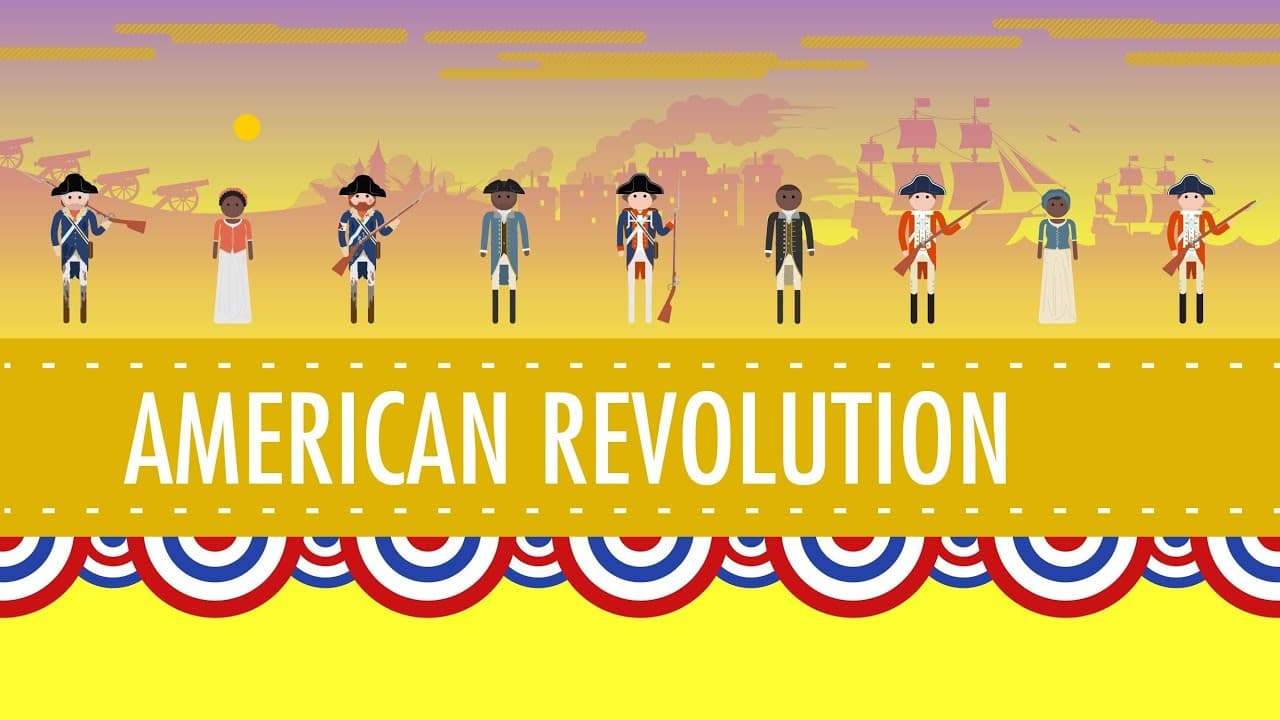
The American Revolution led to independence from Britain but did not drastically change societal structures. The war did not end slavery, improve women's rights, or displace the elite. However, it introduced revolutionary ideas about equality and liberty, influencing future democratic movements. The rhetoric of equality and inalienable rights laid the groundwork for gradual social changes.
Transcript
Hi, I’m John Green; this is Crash Course U.S. History. There are two kinds of revolutions: those where things DO change and those where things don’t change. Like, not to get all Crash Course Mathematics on you or anything, but a Revolution is a 360 degree turn, which leaves you back where you started. That’s what happened with the French Revolution... Read More
Key Insights
- The American Revolution led to independence from Britain but maintained existing social hierarchies.
- The British strategy was to capture cities, while Americans held the countryside, leading to eventual victory.
- The Battle of Saratoga was a turning point, securing French support for the American cause.
- Slavery persisted post-revolution, with some slaves gaining freedom by fighting for the British.
- Native Americans largely sided with the British, hoping to protect their lands, but faced brutal repercussions.
- Women gained little from the revolution, though the idea of Republican Motherhood emphasized their educational role.
- The revolution sparked ideas of religious freedom, separating church and state, exemplified by Jefferson's efforts.
- Economic changes included a decline in indentured servitude and the rise of paid labor in the North.
Install to Summarize YouTube Videos and Get Transcripts
Explore YouTube Video Summarizer or Get YouTube Transcript Extractor
Questions & Answers
Q: What was the main British strategy during the American Revolutionary War?
The British strategy focused on capturing major cities to force the colonists into submission. They successfully took cities like Boston, New York, and Charleston. However, the Americans maintained control of the countryside, leveraging home-field advantages, knowledge of the terrain, and guerrilla tactics, eventually leading to British defeat.
Q: How did the American Revolution affect slavery?
The American Revolution did not end slavery; in fact, it continued in the southern states. Some slaves gained freedom by fighting for the British, who offered emancipation to those who deserted their masters. The northern states gradually abolished slavery post-revolution, but the process was slow, with some states still having slaves decades later.
Q: What role did Native Americans play in the Revolutionary War?
Native Americans were divided during the Revolutionary War, with many tribes siding with the British, hoping to protect their lands from colonial expansion. The Iroquois Confederacy split, with some supporting the British and others the Americans. Post-war, Native Americans faced harsh treatment from American forces, losing lands and rights.
Q: What was the impact of the American Revolution on women's rights?
Women's rights saw little improvement following the American Revolution. While some women participated in the war effort, they remained largely confined to traditional roles. The concept of Republican Motherhood emerged, emphasizing women's role in educating future citizens, but they were still denied voting rights and property ownership.
Q: How did the American Revolution influence religious freedom?
The American Revolution advanced religious freedom by ending the Church of England's dominance in America. Figures like Thomas Jefferson advocated for the separation of church and state, exemplified by Virginia's Bill for Establishing Religious Freedom. This laid the foundation for religious diversity and freedom in the new nation.
Q: What economic changes resulted from the American Revolution?
Post-revolution, the American economy saw a decline in apprenticeship and indentured servitude, with a shift towards paid labor, especially in the North. The South, however, continued to rely on slavery, which was reinvigorated by the invention of the cotton gin. These changes contributed to the regional economic divide that would later intensify.
Q: What were some key battles of the American Revolutionary War?
Key battles included the Battle of Trenton, where Washington's surprise attack on Hessians boosted American morale, and the Battle of Saratoga, which secured French support. The decisive Battle of Yorktown in 1781, where British General Cornwallis surrendered, effectively ended the war in favor of the American forces.
Q: How did the American Revolution promote ideas of equality?
The revolution introduced the notion that all men are created equal, challenging traditional social hierarchies. This idea, articulated in the Declaration of Independence, inspired movements for greater equality and liberty, although full realization required further struggle. The rhetoric of equality influenced not only America but also global democratic movements.
Summary & Key Takeaways
-
The American Revolution resulted in political independence from Britain but did not significantly alter the societal structure. Slavery continued, women's roles remained unchanged, and the elite retained power. However, the revolution introduced new ideas about equality and liberty, setting the stage for future democratic movements.
-
Key battles like Saratoga and Yorktown were pivotal, with French support proving crucial to American success. The war's outcome was influenced by strategic advantages such as knowledge of local terrain and guerrilla tactics, despite British control of major cities.
-
The revolution's most lasting impact was ideological, promoting concepts of equality and religious freedom. These ideas challenged traditional hierarchies and inspired future social and political changes, although full implementation took time and further struggle.
Read in Other Languages (beta)
Share This Summary 📚
Summarize YouTube Videos and Get Video Transcripts with 1-Click
Try YouTube Summary with ChatGPT & Claude or YouTube Transcript Generator
Explore More Summaries from CrashCourse 📚

Summarize YouTube Videos and Get Video Transcripts with 1-Click
Try YouTube Summary with ChatGPT & Claude or YouTube Transcript Generator