How to Fold World Record Paper Airplanes
TL;DR
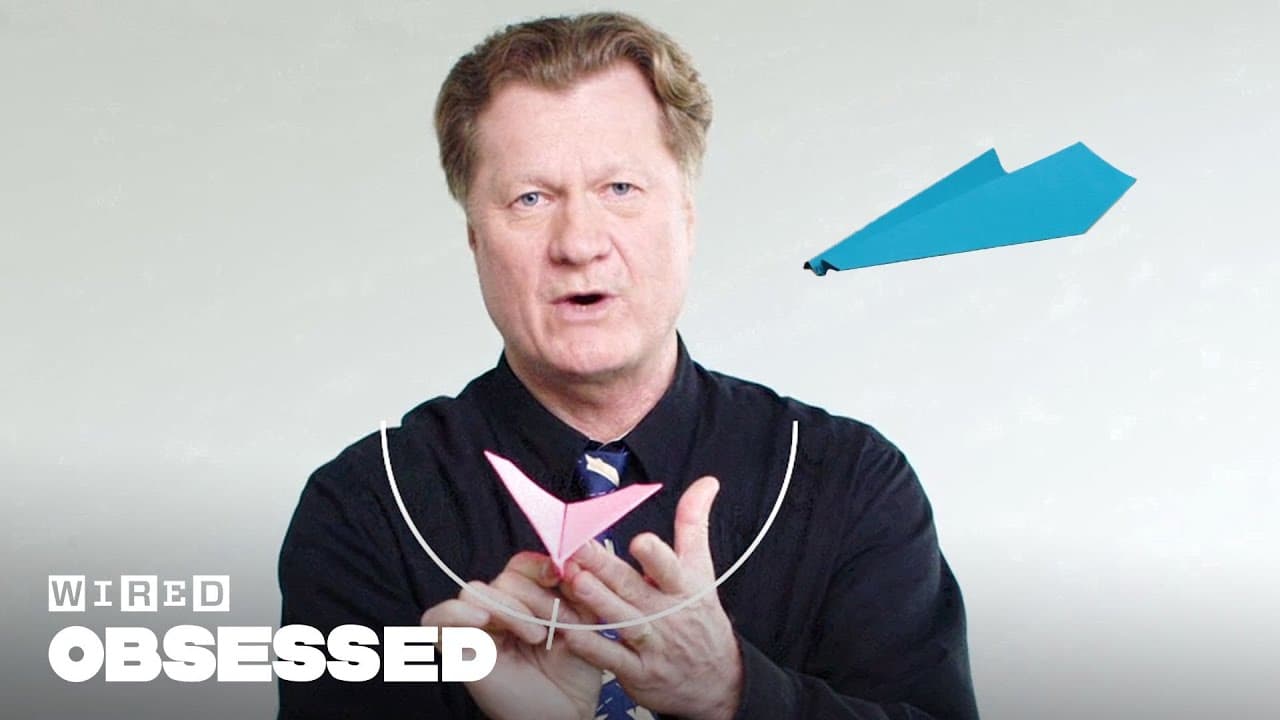
John Collins, known as 'The Paper Airplane Guy,' shares his techniques for creating high-performance paper airplanes. He set a world record with a plane that flew 226 feet 10 inches. Using regular paper, precise folding, and understanding aerodynamics, anyone can make planes that perform exceptionally well.
Transcript
there are paper airplanes and then there are john collins's paper airplanes marvels that return to sender sideways and somersaulting a plane that seems to fly like a bat and one that soars and soars i'm john collins the paper airplane guy for decades collins has been perfecting the art and science of the paper airplane i just love figuring out how ... Read More
Key Insights
- John Collins is renowned for designing high-performance paper airplanes.
- Collins set a world record for distance with his paper airplane, flying 226 feet 10 inches.
- The key to a successful paper airplane is precise folding and symmetry.
- Collins' planes are made using standard 8.5 by 11-inch paper.
- Understanding aerodynamics, such as dihedral angles and center of gravity, enhances flight performance.
- Collins incorporates origami techniques into his paper airplane designs.
- The boomerang plane can circle back due to its unique center of gravity and lift alignment.
- Experimentation and adjustment are crucial for optimizing paper airplane performance.
Install to Summarize YouTube Videos and Get Transcripts
Explore YouTube Video Summarizer or Get YouTube Transcript Extractor
Questions & Answers
Q: How does John Collins create high-performance paper airplanes?
John Collins creates high-performance paper airplanes by combining precise folding techniques with an understanding of aerodynamics. He uses standard 8.5 by 11-inch paper and focuses on symmetry and accuracy in folds. By adjusting the center of gravity and employing concepts like dihedral angles, he enhances the flight capabilities of his planes.
Q: What is the world record set by John Collins' paper airplane?
John Collins' paper airplane set a world record by flying 226 feet 10 inches. This was achieved using a glider design with wide wings, launched at a level angle to climb and flare during flight. The previous record was 207 feet 4 inches, making Collins' achievement a significant milestone in paper airplane flight.
Q: What materials does John Collins use for his paper airplanes?
John Collins uses regular 8.5 by 11-inch, 20-pound paper for his paper airplanes. He emphasizes that no special or top-secret paper is needed, and the key to success lies in the folding precision and understanding of flight dynamics rather than the material itself.
Q: What are the key aerodynamic principles in Collins' paper airplanes?
Key aerodynamic principles in Collins' paper airplanes include dihedral angles, which stabilize flight, and the adjustment of the center of gravity relative to the center of lift. These principles help maintain flight stability and performance, allowing the planes to glide smoothly and achieve impressive distances.
Q: How does the boomerang paper airplane work?
The boomerang paper airplane works by having its center of gravity very close to the center of lift, combined with specific dihedral angles. This configuration allows the plane to circle back or loop depending on its initial throw angle. The design requires precise adjustments to achieve the desired flight path.
Q: What role does origami play in Collins' paper airplane designs?
Origami plays a significant role in Collins' paper airplane designs by providing advanced folding techniques that enhance the structural integrity and aesthetic appeal of the planes. Collins spent years studying origami to incorporate its principles into his paper airplane designs, resulting in innovative and high-performance models.
Q: Why is experimentation important in paper airplane design?
Experimentation is crucial in paper airplane design because it allows for the fine-tuning of folding techniques and flight adjustments. Each flight serves as a test to identify areas for improvement, such as balance and stability. Through trial and error, designers can optimize their planes for better performance.
Q: What is the significance of the dihedral angle in paper airplanes?
The dihedral angle is significant in paper airplanes because it provides stability during flight. By angling the wings upward, the lifting surface is positioned over the plane's center of gravity, helping to correct any lateral tilts and maintain a steady flight path. This is essential for achieving consistent and controlled glides.
Summary & Key Takeaways
-
John Collins, 'The Paper Airplane Guy,' has perfected the art of folding paper airplanes to achieve remarkable flight distances. His world record plane, thrown by Joe Ayub, flew 226 feet 10 inches. Collins emphasizes precise folding, understanding aerodynamics, and using regular paper to create high-performance planes.
-
Collins' paper airplane designs leverage origami techniques and aerodynamics principles, such as dihedral angles and center of gravity adjustments. His boomerang plane showcases unique flight patterns, capable of circling back or looping. Mastery involves continuous experimentation and adjustment for optimal performance.
-
Collins demonstrates that with precise folding and understanding of flight mechanics, anyone can create paper airplanes with impressive capabilities. His approach combines simplicity with scientific principles, allowing enthusiasts to transform ordinary paper into extraordinary flying machines.
Read in Other Languages (beta)
Share This Summary 📚
Summarize YouTube Videos and Get Video Transcripts with 1-Click
Try YouTube Summary with ChatGPT & Claude or YouTube Transcript Generator
Explore More Summaries from WIRED 📚






Summarize YouTube Videos and Get Video Transcripts with 1-Click
Try YouTube Summary with ChatGPT & Claude or YouTube Transcript Generator