What Can We Learn from Helen Keller's Education Journey?
TL;DR
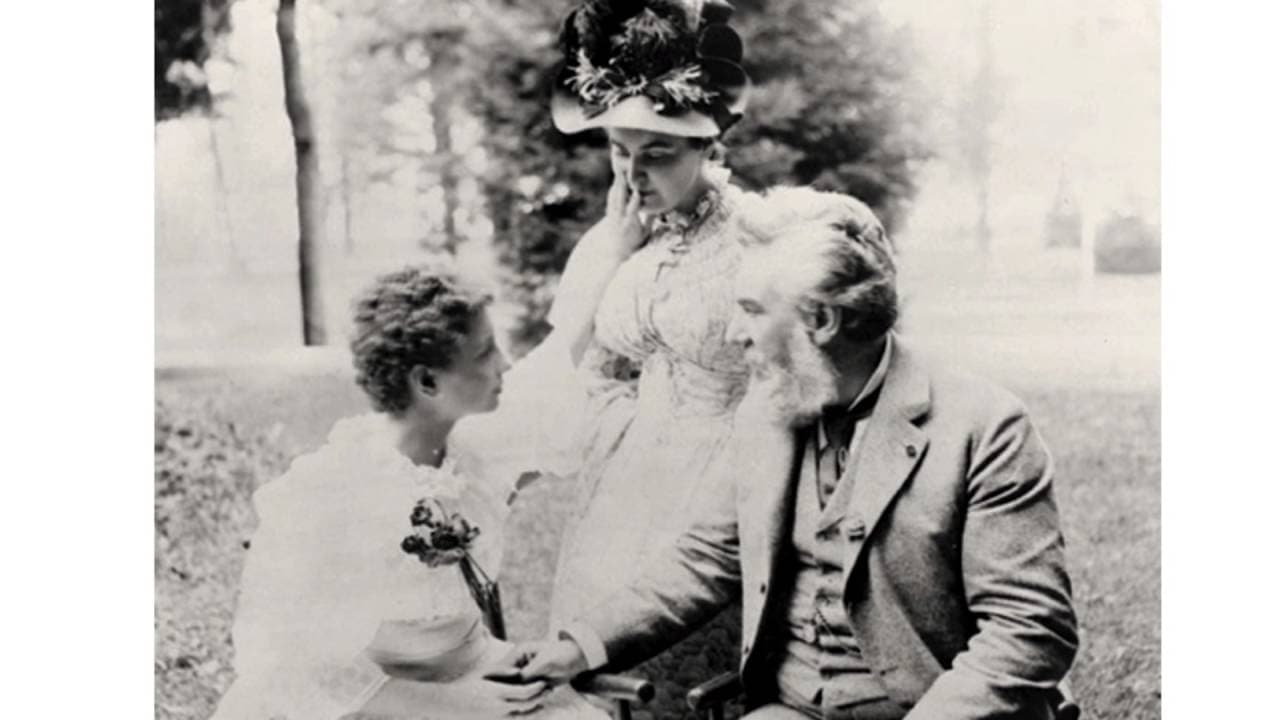
Helen Keller's educational success, aided by Annie Sullivan and Alexander Graham Bell, demonstrates the power of curiosity-driven teaching and self-generated questioning. Their story reveals that personalized instruction and persistent exploration are essential for effective learning, emphasizing the importance of fostering inquiry in both science and the humanities.
Transcript
my father had a favorite saying the difficult we do immediately The Impossible takes a little longer the second phrase appealed to me as a kid I suppose because of its heroic ring that appeal has endured again and again I seen Intrepid persevering innovators achieve wonderful things regarded as impossible this year's theme of the IE the 21st centur... Read More
Key Insights
- 👨🔬 The story of Alexander Graham Bell, Helen Keller, and Annie Sullivan exemplifies the practical value of curiosity-driven research and the interconnectedness of science and the humanities.
- 🤔 Science and education should encourage self-generated questioning, thinking, and actively scrutinizing evidence to attain understanding.
- 🔬 Science, like language learning, requires persistent effort and the mastery of instruments, literature, and culture.
- 🔬 Science is distinct from many other human activities due to its patient pursuit of truth and understanding.
- ❓ Failure and exploration of unorthodox paths are vital components of scientific progress.
- 🎓 Science education should embrace an adventurous and exploratory approach that fosters personal innovative experiences.
- 🆕 The focus of science education should be on asking interesting questions, casting the familiar in a new light, and offering fresh views that stir thoughts and emotions.
Install to Summarize YouTube Videos and Get Transcripts
Explore YouTube Video Summarizer or Get YouTube Transcript Extractor
Questions & Answers
Q: How did Alexander Graham Bell become involved in the education of the deaf?
Alexander Graham Bell became involved in the education of the deaf because both his mother and his wife were deaf, and his family had a history of teaching speech to the deaf. He founded his own school in Boston and devoted many years to the education of the deaf.
Q: What was Annie Sullivan's role in Helen Keller's education?
Annie Sullivan was Helen Keller's teacher, and she played a crucial role in empowering Helen through language. Despite having no teaching experience and suffering from the effects of trauma, Sullivan was able to teach Helen to read, write, and communicate through her innovative approach of spelling idiomatic English into Helen's hand.
Q: Why is curiosity-driven research important in science?
Curiosity-driven research allows scientists to discover new knowledge and understand the vocabulary and grammar of nature. It enables them to decipher messages left by nature and read the answers that nature is willing to give. It is a practical and essential investment that yields ideas and understanding.
Q: How is science education often at odds with the exploratory character of research?
Science education, particularly in introductory courses, often presents a frozen body of dogma, with a focus on finding one right answer through a correct procedure. This approach inhibits students and restricts personal innovative experiences. Instead, science education should encourage personal freedom, innovative thinking, and a focus on asking interesting questions and offering fresh perspectives.
Summary & Key Takeaways
-
This content explores the story of an impossible educational triumph achieved by Alexander Graham Bell, Helen Keller, and Annie Sullivan, emphasizing the practical value of curiosity-driven research and the interconnection between science and the humanities.
-
The story showcases the role of Annie Sullivan in empowering Helen Keller through language, highlighting the importance of self-generated questioning and thinking in education.
-
The content also argues for the inclusion of curiosity-driven research and an exploratory approach in science education, as well as the recognition of science as a social enterprise.
Read in Other Languages (beta)
Share This Summary 📚
Summarize YouTube Videos and Get Video Transcripts with 1-Click
Try YouTube Summary with ChatGPT & Claude or YouTube Transcript Generator
Explore More Summaries from Harvard University 📚

Summarize YouTube Videos and Get Video Transcripts with 1-Click
Try YouTube Summary with ChatGPT & Claude or YouTube Transcript Generator