Why Do Cats Like Catnip?
TL;DR
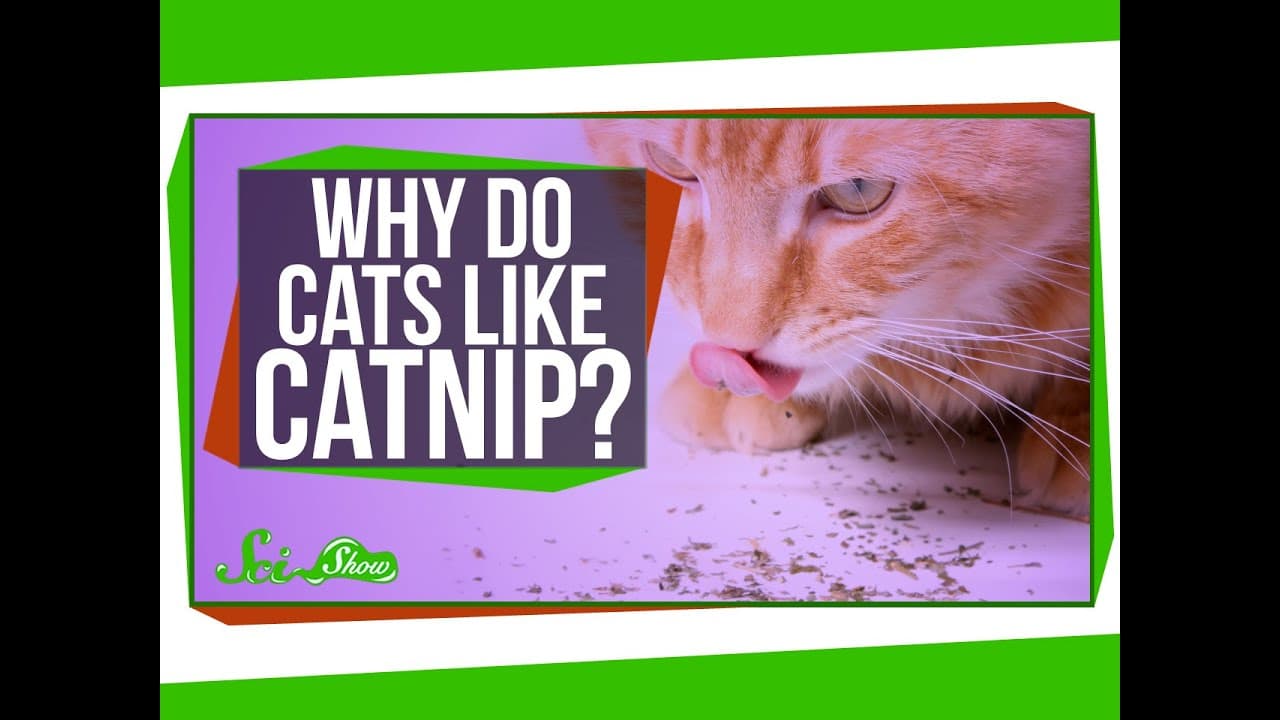
Catnip contains a molecule called nepetalactone that is similar to a cat's natural pheromones, which stimulates their brain, leading to peculiar behaviors. However, not all cats are affected by catnip.
Transcript
♪ INTRO ♪ Ever seen a cat dip into some recreational catnip? It usually makes the cat act a little strange. It rubs up against the catnip, rolls in it, and paws it. It's clearly enjoying itself. And all because of a compound that's a little too similar to its natural biological signals. Catnip, AKA Nepeta Cataria, is a plant that's a memer of the m... Read More
Key Insights
- 😺 Catnip contains nepetalactone, a compound that attracts cats and triggers peculiar behaviors.
- 😺 Nepetalactone bonds with receptors in a cat's brain, stimulating areas involved in scent, emotions, decisions, and sexual response.
- 😺 Only about half to three-quarters of cats respond to catnip, which is genetically determined.
- ❓ Kittens do not usually respond to catnip until they reach sexual maturity.
- 😺 Other plants, like silver vine, can also attract cats by producing pheromone-like molecules.
- 😺 Catnip and other cat-attracting plants are generally safe for cats and not addictive.
- 😺 Over time, cats can become less sensitive to catnip with frequent exposure.
Install to Summarize YouTube Videos and Get Transcripts
Explore YouTube Video Summarizer or Get YouTube Transcript Extractor
Questions & Answers
Q: Why do cats react to catnip?
Cats react to catnip because the compound nepetalactone in catnip mimics their natural pheromones. When this compound enters their nose, it triggers receptors in the brain and stimulates various areas, leading to the exhibited behaviors.
Q: Do all cats respond to catnip?
No, only about 50 to 70% of cats respond to catnip. The response to catnip is genetic, and scientists are still studying the specific gene and the brain reactions involved.
Q: Can kittens respond to catnip?
Generally, kittens do not respond to catnip until they reach sexual maturity at around six months old. This is because the brain receptors related to sexual response are not fully developed until that age.
Q: Why do big cats like lions and jaguars respond to catnip?
Big cats also respond to catnip because they have similar receptors and pheromones as domestic cats. However, other animals that do not share these pheromones or receptors are not affected by catnip.
Summary & Key Takeaways
-
Catnip, or Nepeta Cataria, is a plant from the mint family that contains a compound called nepetalactone that attracts cats.
-
Cats react to catnip by sniffing, licking, chewing, rubbing against it, meowing, or drooling. The effects last for about 15 minutes.
-
The molecule nepetalactone bonds with receptors in a cat's nose, stimulating areas of the brain involved in scent processing, emotions, decisions, and sexual response.
Read in Other Languages (beta)
Share This Summary 📚
Summarize YouTube Videos and Get Video Transcripts with 1-Click
Try YouTube Summary with ChatGPT & Claude or YouTube Transcript Generator
Explore More Summaries from SciShow 📚

Summarize YouTube Videos and Get Video Transcripts with 1-Click
Try YouTube Summary with ChatGPT & Claude or YouTube Transcript Generator