How to Teach Your Dog the Place Command.
TL;DR
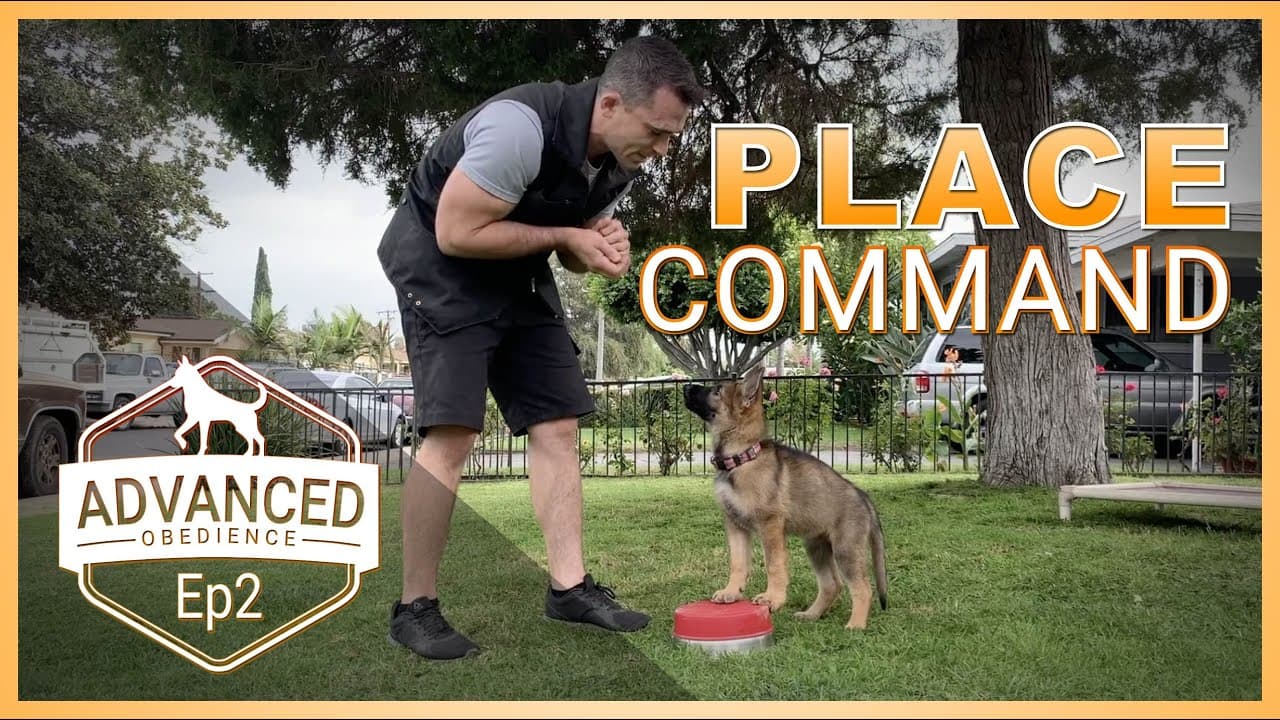
Learn how to teach your dog the place command using a bowl.
Transcript
okay guys today I'm gonna be introducing the place command and for me the place command is a bulb you can see in the back a bowl that I place upside down and my goal or my intentions are to get her to place her front paws on the bowl and what I'm gonna do after that when she understands it a little bit more she's never done it so we'll see how she ... Read More
Key Insights
- The place command involves training a dog to put its front paws on a bowl, which helps with rear-end awareness.
- Using a bowl with rubber traction, like those made by Kong, makes it easier for dogs to maintain their position.
- The exercise can assist in teaching dogs the flip finish, where they pivot into heel position from a sit front.
- Different dogs may respond differently to the place command; patience and encouragement are key to success.
- The place command can be a foundation for more advanced obedience exercises and is beneficial for service dog training.
- Using larger targets like horse bowls can be helpful for beginners, providing an easier platform for dogs to learn on.
- Dogs retain the place command well over time, making it a lasting part of their training repertoire.
- Pivoting exercises enhance a dog's ability to move its rear end independently, important for various training scenarios.
Install to Summarize YouTube Videos and Get Transcripts
Explore YouTube Video Summarizer or Get YouTube Transcript Extractor
Questions & Answers
Q: What is the purpose of the place command?
The place command is designed to help dogs develop rear-end awareness by training them to place their front paws on a designated target, such as a bowl. This exercise is foundational for more advanced commands, helping dogs learn to pivot their back end while maintaining stability with their front paws.
Q: Why is rubber traction important in the place command?
Rubber traction on the bowl or target used in the place command is important because it provides the dog with better grip and stability. This makes it easier for dogs to maintain their position without slipping, which is particularly useful when they are learning to pivot their rear end.
Q: How does the place command benefit service dog training?
The place command benefits service dog training by enhancing the dog's precision and control. It helps dogs develop the ability to move their rear end independently, which is crucial for tasks that require specific positioning, such as the flip finish. This command lays the groundwork for more complex obedience skills needed in service work.
Q: What challenges might trainers face with the place command?
Trainers might face challenges such as dogs being hesitant to place their paws on the bowl or target. Some dogs may try to avoid the target altogether. Patience and encouragement are essential, and trainers may need to adjust the type of target or use additional luring techniques to help the dog understand the command.
Q: Can the place command be used for advanced obedience?
Yes, the place command can be used as a foundation for advanced obedience training. It is particularly useful for teaching dogs the flip finish, where they pivot into heel position from a sit front. This command helps improve the dog's overall body awareness and control, which are key components of advanced training.
Q: What type of bowls are recommended for the place command?
Bowls with rubber traction, such as those made by Kong, are recommended for the place command. These bowls provide better grip for the dog's paws, making it easier for them to maintain their position. Larger bowls or horse bowls can be used for beginners as they offer a bigger target and are typically made of rubber.
Q: How do dogs retain the place command over time?
Dogs retain the place command well over time because it becomes a part of their training repertoire. Once a dog has learned the command, it tends to remember it even after long periods without practice. This retention is due to the foundational nature of the command, which is reinforced through consistent training and application.
Q: What is the role of pivoting in the place command?
Pivoting is a key component of the place command, as it helps dogs learn to move their rear end independently while keeping their front paws stable on the target. This skill is important for various training scenarios, including advanced obedience exercises like the flip finish, where precise movement and control are required.
Summary & Key Takeaways
-
The place command is a foundational exercise that involves teaching a dog to place its front paws on a bowl. This exercise helps with body awareness, particularly the dog's ability to pivot its rear end independently, which is crucial for advanced obedience training.
-
Different dogs may have varying levels of ease with the place command. Trainers may need to use different types of bowls or targets to accommodate the dog's learning style. Larger bowls with rubber traction are recommended for beginners to make the exercise easier.
-
The place command is not only useful for basic obedience but also serves as a stepping stone for teaching more complex commands like the flip finish. This exercise is particularly beneficial for service dog training, enhancing precision and control in various tasks.
Read in Other Languages (beta)
Share This Summary 📚
Summarize YouTube Videos and Get Video Transcripts with 1-Click
Try YouTube Summary with ChatGPT & Claude or YouTube Transcript Generator
Explore More Summaries from Nate Schoemer 📚


Summarize YouTube Videos and Get Video Transcripts with 1-Click
Try YouTube Summary with ChatGPT & Claude or YouTube Transcript Generator