P Thread Thread Library
TL;DR
This video explores the implementation and advantages of using the Pthread library for thread management in different operating systems.
Transcript
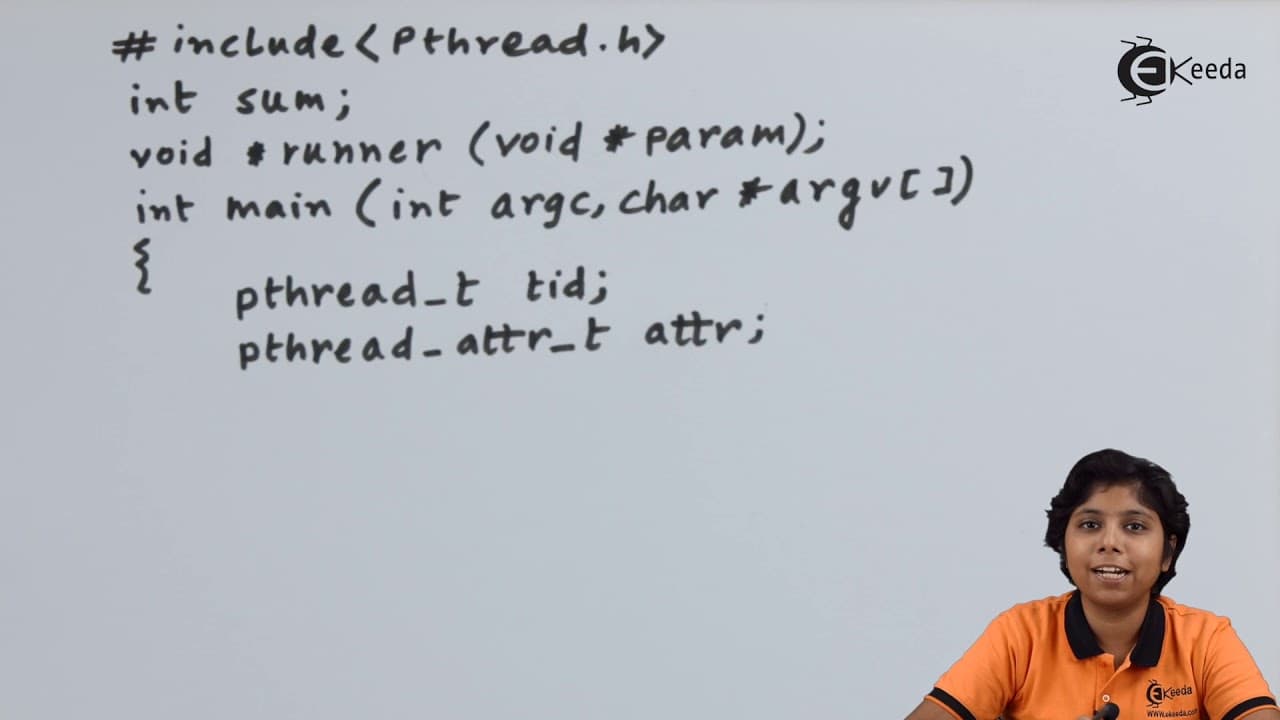
click the bell icon to get latest videos from akira hello friends today we are going to discuss about a thread library known as p thread how it is implemented including an example of c program and then what are the advantages of using the P thread and how actually patron can be performed in different operating system P thread is a POSIX standard fo... Read More
Key Insights
- 🧵 Pthread is a thread management library that follows the POSIX standard and is used for creating and managing threads in various operating systems.
- 🇲🇰 Implementations of Pthread vary across operating systems, with Linux, Mac OSX, and Solaris supporting it natively.
- 🥳 Windows does not have native support for Pthread, but third-party implementations can be used.
- 😫 Pthread allows for the creation of multiple threads with their own set of attributes, such as stack size and scheduling operations.
- 🧵 The pthread_create function is used to create and begin the execution of a separate thread in Pthread.
- 👪 The pthread_join function enables the parent thread to wait for the termination of a child thread.
- 👻 Pthread allows for the sharing of data between threads using global variables.
Install to Summarize YouTube Videos and Get Transcripts
Explore YouTube Video Summarizer or Get YouTube Transcript Extractor
Questions & Answers
Q: What is Pthread and how is it implemented in different operating systems?
Pthread is a POSIX standard API for thread management. Its implementation depends on the operating system, and various Linux, Mac OSX, and Solaris systems support it. Windows does not natively support Pthreads, but there are third-party implementations available.
Q: How do you create and begin the execution of a separate thread using Pthread?
A new thread can be created using the pthread_create function, providing the thread ID, the function to be executed, and any necessary parameters. The thread is then started and runs concurrently with the main thread.
Q: How does the parent thread wait for the termination of a child thread in Pthread?
The parent thread can wait for the termination of a child thread using the pthread_join function. This function allows the parent thread to pause until the specified child thread finishes execution.
Q: How can the parent thread access data shared with the child thread in Pthread?
The parent and child threads can share data by using global variables. Once the child thread completes its execution, it returns a value that can be used by the parent thread to access and utilize the shared data.
Summary & Key Takeaways
-
Pthread is a POSIX standard for defining an API for creating and managing threads, with implementations varying across different operating systems.
-
Pthread allows the creation of multiple threads that can execute concurrently, with each thread having its own set of attributes.
-
A C program example demonstrates how to use Pthread to create a multi-threaded program that performs the summation of non-negative integers received as command line arguments.
Read in Other Languages (beta)
Share This Summary 📚
Summarize YouTube Videos and Get Video Transcripts with 1-Click
Try YouTube Summary with ChatGPT & Claude or YouTube Transcript Generator
Explore More Summaries from Ekeeda 📚




Summarize YouTube Videos and Get Video Transcripts with 1-Click
Try YouTube Summary with ChatGPT & Claude or YouTube Transcript Generator